Hydrochloric Acid → HCID 67134844, compound
Reaction equation

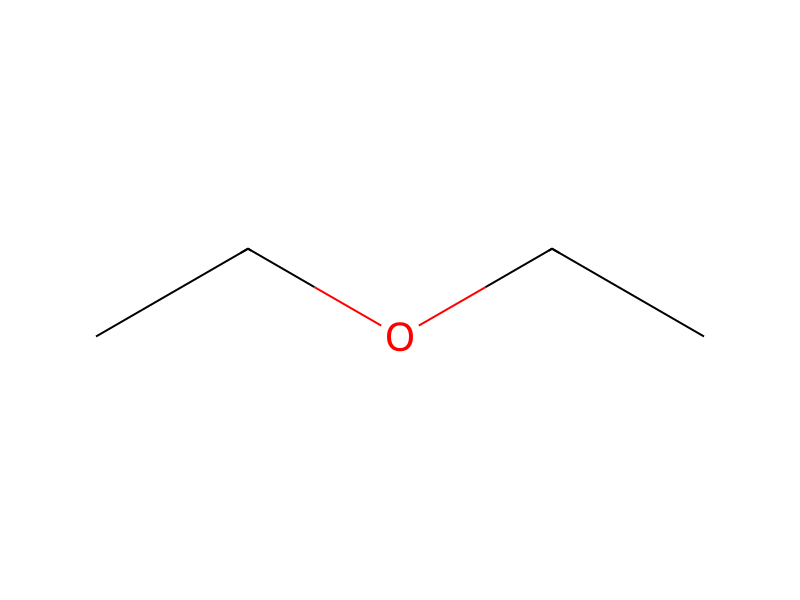
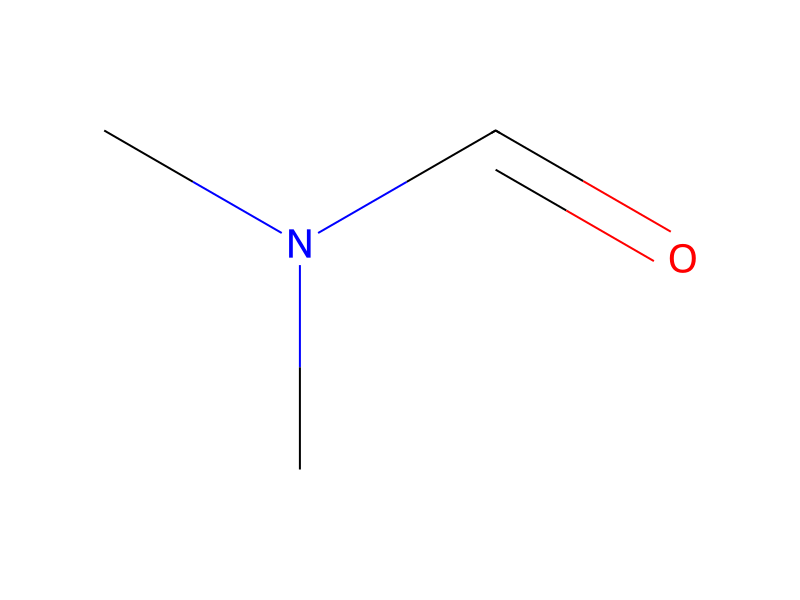
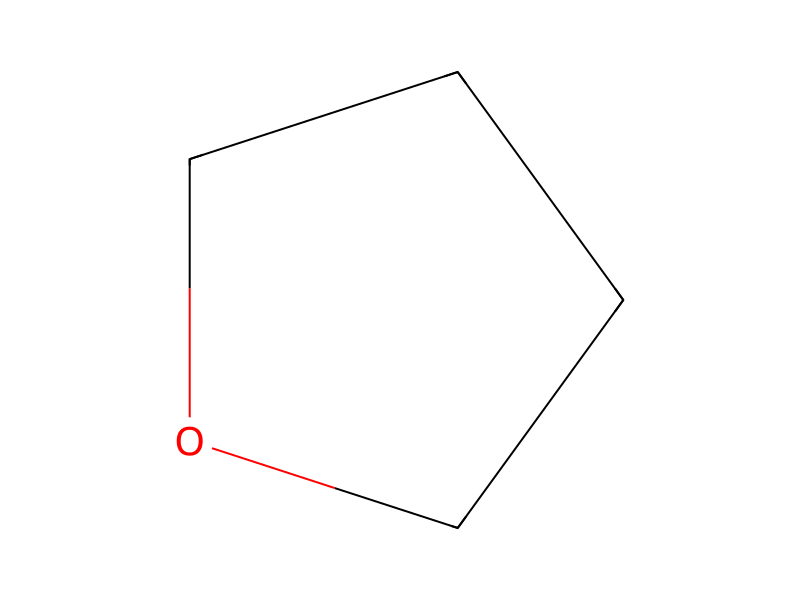
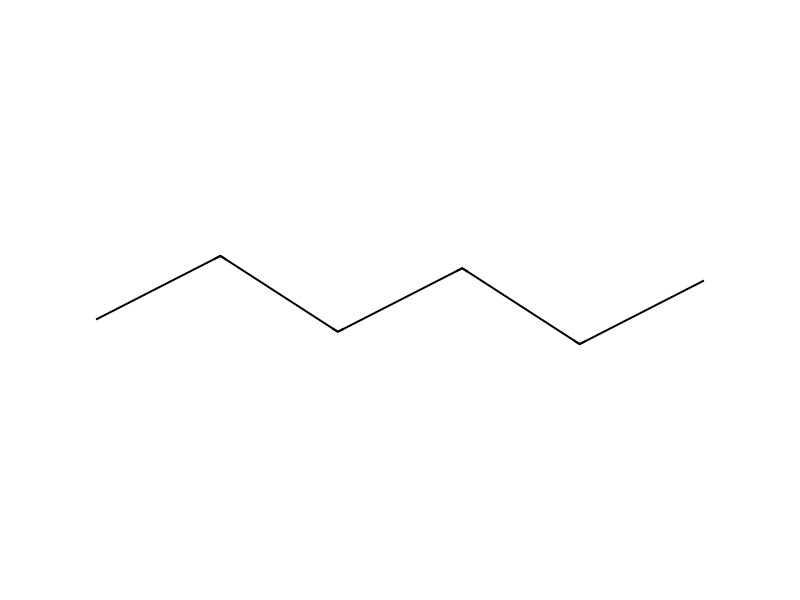
[CH:1]([O:4][C:5](=[O:13])[NH:6][C@H:7]([CH2:11][CH3:12])[CH2:8][C:9]#N)([CH3:3])[CH3:2].[H-].[Na+].C[O:17]CCl.CC(C[AlH]C[CH:26]([CH3:28])C)C.Cl.C([Mg]Cl)=C.N1C=CN=C1.Cl[C:40]1[CH:45]=[CH:44][CH:43]=[CH:42][C:41]=1[Si:46]([C:54]([CH3:57])([CH3:56])[CH3:55])([C:48]1[CH:53]=[CH:52][CH:51]=[CH:50][CH:49]=1)Cl>C1COCC1.CCOCC.CN(C=O)C.CCCCCC>[CH:1]([O:4][C:5](=[O:13])[NH:6][C@H:7]([CH2:11][CH3:12])[CH2:8][CH:9]([O:17][Si:46]([C:54]([CH3:57])([CH3:56])[CH3:55])([C:48]1[CH:53]=[CH:52][CH:51]=[CH:50][CH:49]=1)[C:41]1[CH:42]=[CH:43][CH:44]=[CH:45][CH:40]=1)[CH:26]=[CH2:28])([CH3:3])[CH3:2]Participants
Reactant 8



Product 1

Reagents, catalysts & solvents 4
Procedure
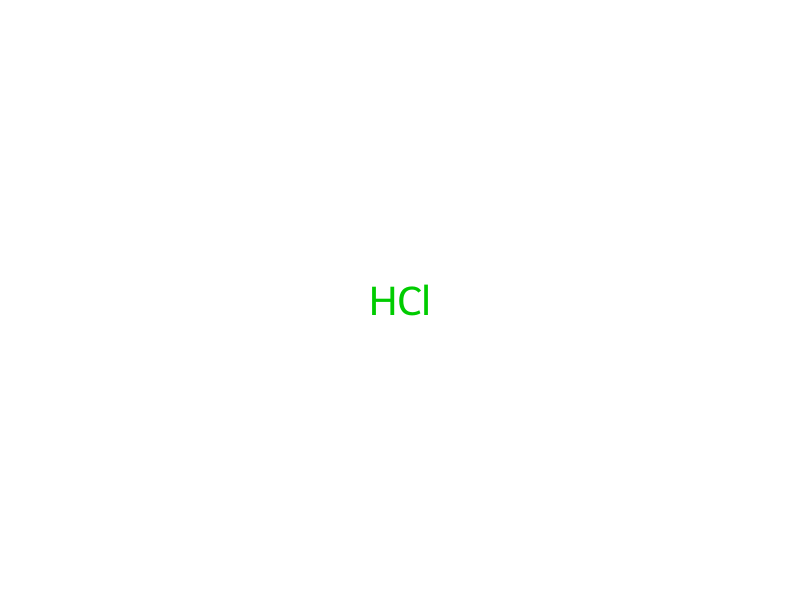
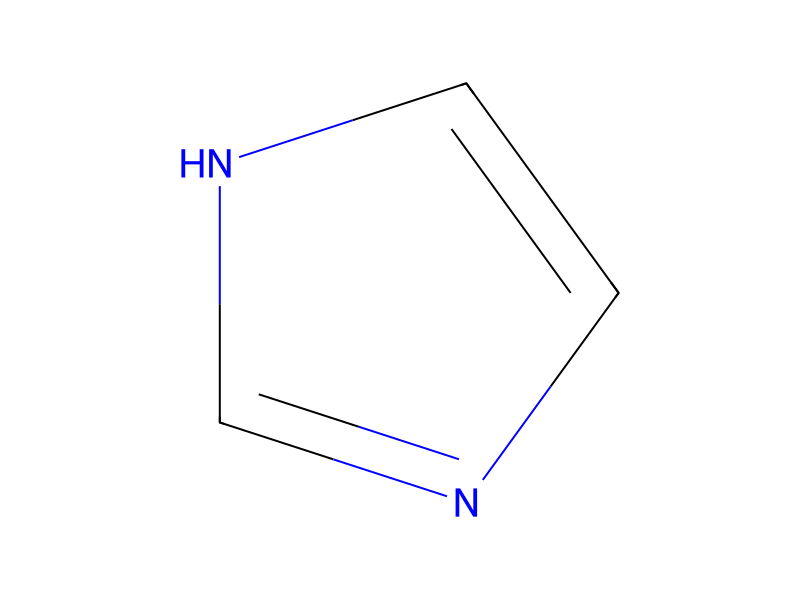
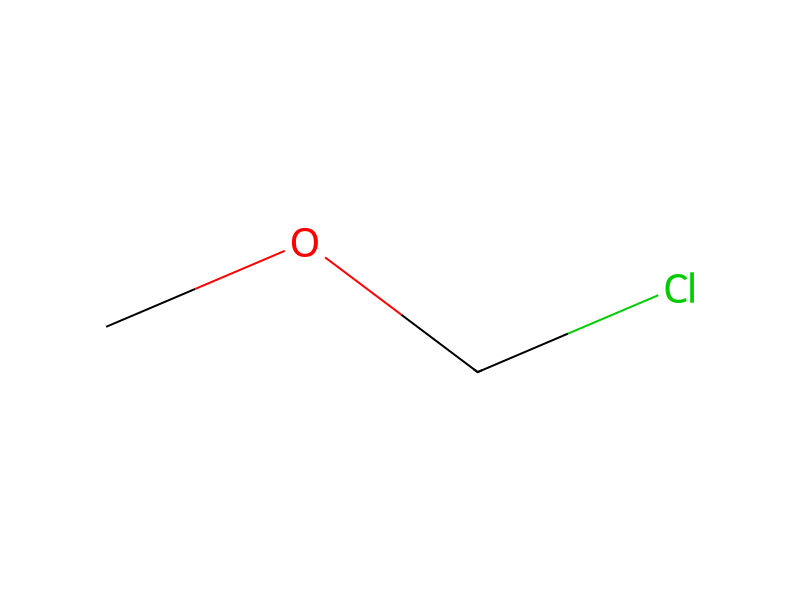
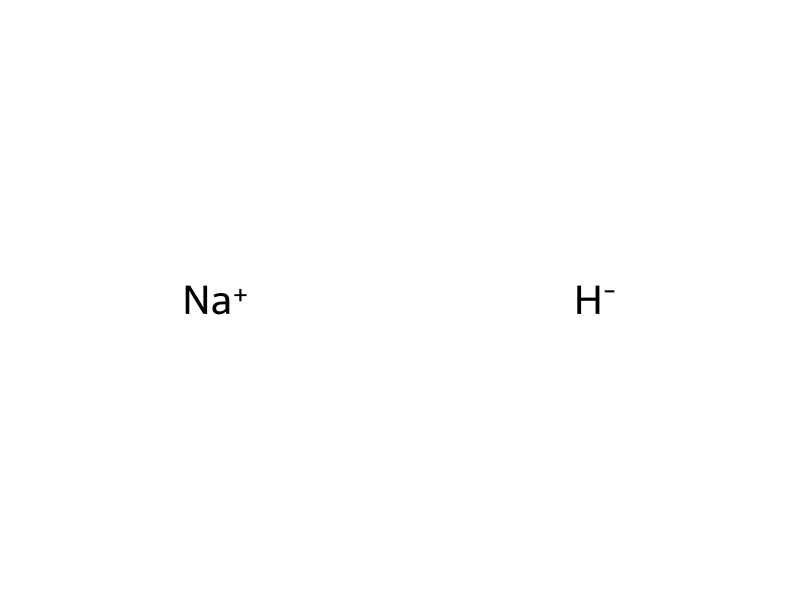
To a suspension of ((R)-2-cyano-1-ethyl-ethyl)-carbamic acid isopropyl ester (20 mmol; 3.68 g) and sodium hydride (60% dispersion in mineral oil, 40 mmol; 1.60 g) in THF (80 mL) is added chloromethyl methyl ether at 0° C. The reaction mixture is stirred at room temperature for 15 hours. The reaction mixture is quenched with brine and saturated aqueous ammonium chloride solution, and extracted three times with Et2O. The combined organic layer is washed with brine, dried over Na2SO4, filtered, concentrated under reduced pressure. To a solution of the obtained residue (5.75 g) in Et2O (200 ml) is added 1.0 M n-hexane solution of DIBAL (25 mmol; 25 ml) dropwise over 10 minutes at −78° C. under N2. The solution is stirred for 1 hour at the same temperature, then warmed to −60° C. for 3 hours. Another 15 mL of DIBAL (1.0 M in n-hexane) is added after 18.5 hours. After stirring for additional 2 hours, the reaction mixture is quenched by careful addition of 2 ml of MeOH then immediately poured on saturated aqueous ammonium chloride solution in a separatory funnel. Shake the mixture and leave until it reaches room temperature. Aqueous 1M HCl is added to reach a pH of 2. The solution is extracted three times with Et2O and the combined organic layer is washed with aqueous 1M HCl/brine (1:1) solution and saturated aqueous NaHCO3/brine (1:1) solution, dried over Na2SO4, filtered and concentrated under reduced pressure. To a solution of the obtained residue (4.27 g) in THF (87 ml) is added 1.44 M THF solution (19 mmol; 13.2 mL) of vinylmagnesium chloride under N2 at −78° C. After stirring for 1.5 hours, another 1.44 M THF solution (38 mmol; 26.4 ml) of vinylmagnesium chloride is added in 1.5 hours to the reaction mixture at the same temperature. After stirring for additional 1 hour, another 1.44 M THF solution (19 mmol; 13.2 mL) of vinylmagnesium chloride is added to the reaction mixture at room temperature. The solution is quenched by water, saturated aqueous ammonium chloride solution, aqueous 0.1 M HCl and then aqueous 1 M HCl, and extracted twice with EtOAc. The combined organic layer is washed with brine, dried over Na2SO4, filtered, and concentrated under reduced pressure. To a solution of the obtained residue (4.44 g) and imidazole (42.5 mmol; 2.89 g) in DMF (50 mL) is added chloro tert-butyldiphenylchlorosilane (34 mmol; 9.35 g) at room temperature under nitrogen. After stirring for 2 hours at 60° C., the reaction is cooled down to ambient temperature, then quenched with saturated aqueous ammonium chloride solution and extracted twice with EtOAc. The combined organic layer is washed with brine, dried over Na2SO4, filtered, and concentrated under reduced pressure. A mixture of the obtained residue (13.4 g), acetic acid (100 mL) and water (20 mL) is stirred at 60° C. for 3 hours. The mixture is concentrated under reduced pressure and then diluted with Et2O and aqueous sodium hydroxide solution. The product is extracted three times with Et2O. The combined organic layer is washed with brine, dried over Na2SO4, filtered, and concentrated under reduced pressure. The residue is purified by column chromatography on silica gel (n-hexane/EtOAc) to give [(1R)-3-(tert-butyl-diphenyl-silanyloxy)-1-ethyl-pent-4-enyl]-carbamic acid isopropyl ester (3.43 g, 42% in 5 steps) as a diastereomeric mixture; ESI-MS m/z: 454 [M++1], Retention time 5.51 min (condition C).
Workup
- customThe reaction mixture is quenched with brine and saturated aqueous ammonium chloride solution
- extractionextracted three times with Et2O
- washThe combined organic layer is washed with brine
- dry with materialdried over Na2SO4
- filtrationfiltered
- concentrationconcentrated under reduced pressure
- stirringThe solution is stirred for 1 hour at the same temperature
- temperaturewarmed to −60° C. for 3 hours
- stirringAfter stirring for additional 2 hours
- customthe reaction mixture is quenched by careful addition of 2 ml of MeOH
- additionthen immediately poured on saturated aqueous ammonium chloride solution in a separatory funnel
- customShake the mixture and leave until it
- customreaches room temperature
- extractionThe solution is extracted three times with Et2O
- washthe combined organic layer is washed with aqueous 1M HCl/brine (1:1) solution and saturated aqueous NaHCO3/brine (1:1) solution
- dry with materialdried over Na2SO4
- filtrationfiltered
- concentrationconcentrated under reduced pressure
- stirringAfter stirring for 1.5 hours
- stirringAfter stirring for additional 1 hour
- customThe solution is quenched by water, saturated aqueous ammonium chloride solution, aqueous 0.1 M HCl
- extractionaqueous 1 M HCl, and extracted twice with EtOAc
- washThe combined organic layer is washed with brine
- dry with materialdried over Na2SO4
- filtrationfiltered
- concentrationconcentrated under reduced pressure
- stirringAfter stirring for 2 hours at 60° C.
- temperaturethe reaction is cooled down to ambient temperature
- customquenched with saturated aqueous ammonium chloride solution
- extractionextracted twice with EtOAc
- washThe combined organic layer is washed with brine
- dry with materialdried over Na2SO4
- filtrationfiltered
- concentrationconcentrated under reduced pressure
- additionA mixture of the obtained residue (13.4 g), acetic acid (100 mL) and water (20 mL)
- stirringis stirred at 60° C. for 3 hours
- concentrationThe mixture is concentrated under reduced pressure
- additiondiluted with Et2O and aqueous sodium hydroxide solution
- extractionThe product is extracted three times with Et2O
- washThe combined organic layer is washed with brine
- dry with materialdried over Na2SO4
- filtrationfiltered
- concentrationconcentrated under reduced pressure
- customThe residue is purified by column chromatography on silica gel (n-hexane/EtOAc)
Sources & evidence
- ORD record
- ord-fbd5a73f0b864701aab5a980c85eb44e
- Source dataset
- uspto-grants-2014_06
- Patent number
- US08759365B2
Reaction notes
Loading…