Propylene Oxide → Propylene Oxide
Reaction equation

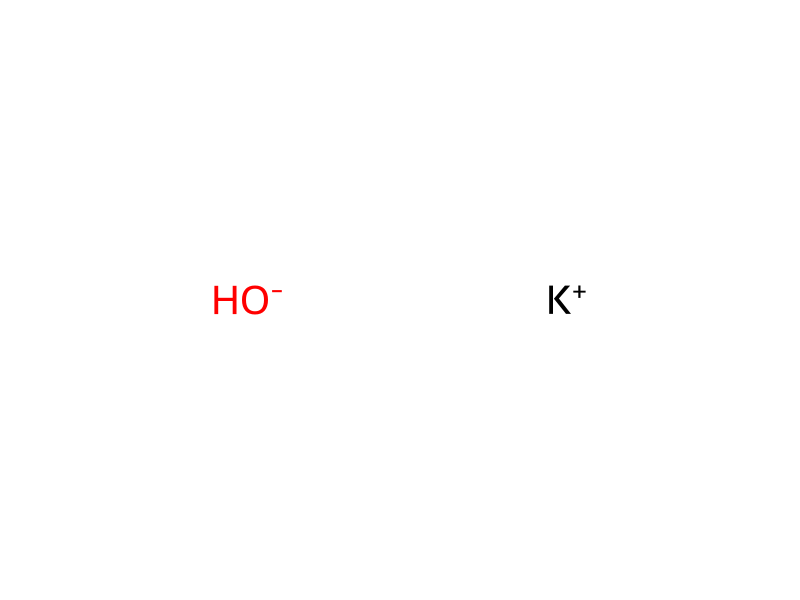
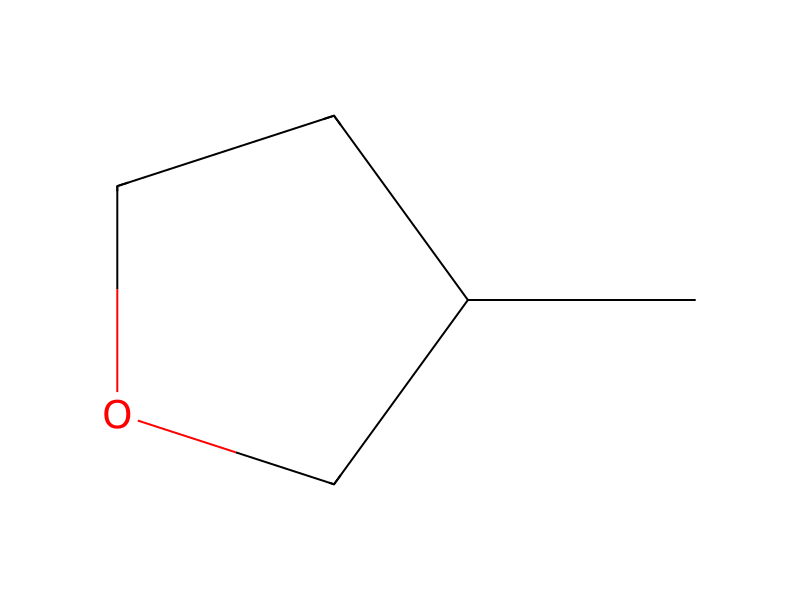
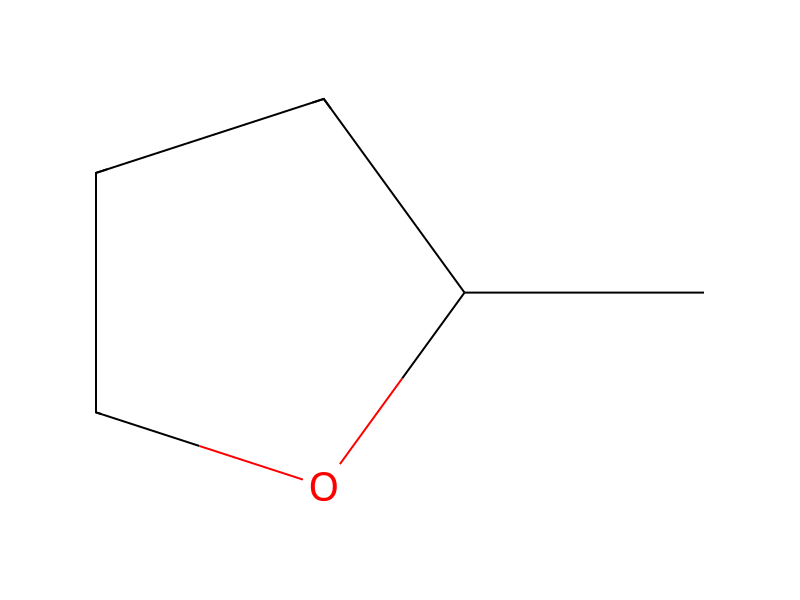
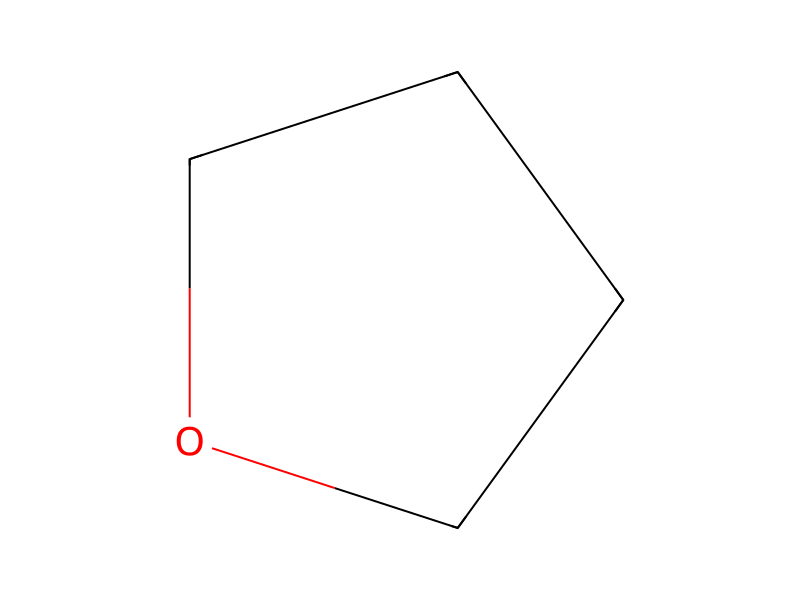
C[CH:2]1[CH2:6][CH2:5][O:4][CH2:3]1.[CH2:7]1OC1C.[OH-].[K+]>O1CCCC1.C(O)=O>[CH2:5]1[O:4][CH:6]1[CH3:2].[CH3:7][CH:3]1[CH2:2][CH2:6][CH2:5][O:4]1Participants


Procedure
195 parts of the catalyst used in Example 2 were introduced into a thermostatically regulated reaction vessel equipped with a stirring means. Then the reaction vessel was charged with a mixture of 900 parts tetrahydrofuran, 50 parts 3-methyl tetrahydrofuran and 40 parts formic acid. To this mixture, which was stirred constantly, 10 parts of propylene oxide per hour were then added at a uniform rate over a period of five hours. In this way, the propylene oxide concentration in the reaction mixture was kept constant at 0.08 wt. %. The reaction temperature was 50 C. After all the propylene oxide had been added, the reaction mixture was stirred for another four hours at reaction temperature. The resulting copolymer solution was separated from the catalyst by filtering. The filtrate was free of propylene oxide and consisted of 43% copolymer, 53% unreacted tetrahydrofuran and 4% 3-methyl tetrahydrofuran, as was determined by boildown under standard pressure and under vacuum. The solvent-free copolymer had a saponification number of 37 mg KOH/g and a hydroxyl number of 13 mg KOH/g. The product contained less than 0.3% cyclic oligomeric ethers. The ester-containing polymer was then mixed with an equal volume of methanol and, after addition of 10 parts of calcium hydroxide, was transesterified to glycol under standard pressure at 32° C. by distillation on a column with 20 theoretical trays, the methyl formate ester being distilled off. When the transesterification to glycol was complete, the calcium hydroxide used as transesterification catalyst was filtered off and the methanolic solution of the copolymer was boiled down completely—first under standard pressure and later under vacuum—using a film evaporater. The polymer obtained was pure, ester-free glycol and had a hydroxyl number of 51 mg KOH/g, which corresponds to a molecular weight of 2210. The 13C NMR spectrum showed that the copolymer had been formed from approximately 10% propylene oxide, 87% tetrahydrofuran and 3% methyl tetrahydrofuran. The product's dispersity Mw/Mn was 1.25. Its color index was below 5 APHA and the acid number less than 0.01 mg KOH/g.
Workup
- additionwere introduced into a thermostatically regulated reaction vessel
- customequipped with a stirring means
- concentrationIn this way, the propylene oxide concentration in the reaction mixture
- additionAfter all the propylene oxide had been added
- stirringthe reaction mixture was stirred for another four hours at reaction temperature
- customThe resulting copolymer solution was separated from the catalyst
- filtrationby filtering
- additionThe ester-containing polymer
- additionwas then mixed with an equal volume of methanol
- additionafter addition of 10 parts of calcium hydroxide
- distillationwas transesterified to glycol under standard pressure at 32° C. by distillation on a column with 20 theoretical trays
- distillationthe methyl formate ester being distilled off
- filtrationwas filtered off
- customThe polymer obtained
Sources & evidence
- ORD record
- ord-ebfc8686b7e04fcfa8a6359de85adcce
- Source dataset
- uspto-grants-2003_05
- Patent number
- US06559278B1
Reaction notes
Loading…