Hydrochloric Acid → 2-Fluoro-5-(4-propoxyphenyl)benzaldehyde
Reaction equation

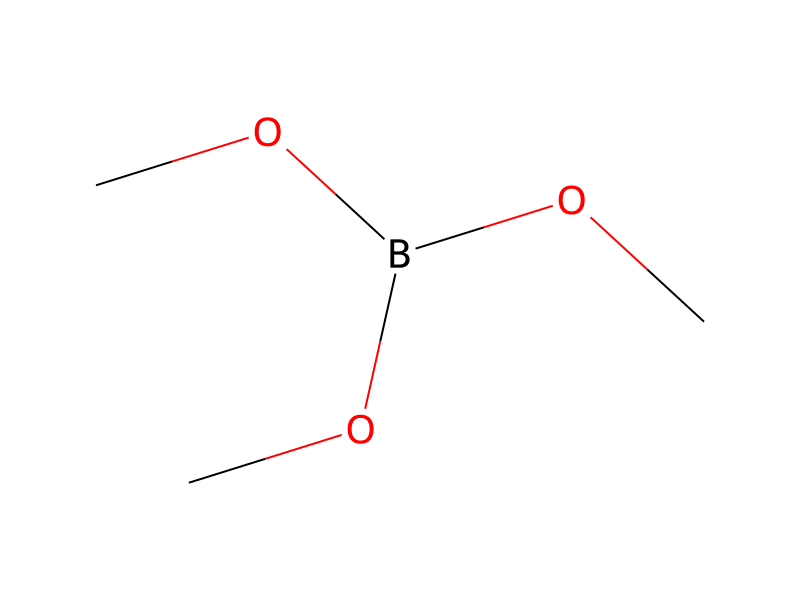
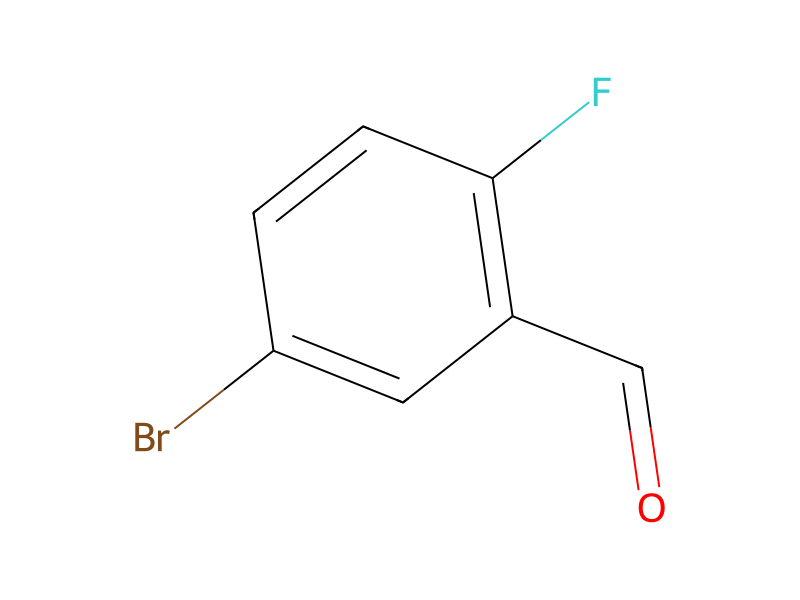
[Mg].Br[CH2:3][CH2:4][CH2:5][O:6][C:7]1[CH:12]=[CH:11][CH:10]=[CH:9][CH:8]=1.COB(OC)OC.C1(P(C2C=CC=CC=2)C2C=CC=CC=2)C=CC=CC=1.Br[C:40]1[CH:41]=[CH:42][C:43]([F:48])=[C:44]([CH:47]=1)[CH:45]=[O:46].C(=O)([O-])[O-].[K+].[K+].Cl>O1CCCC1.C([O-])(=O)C.[Pd+2].C([O-])(=O)C>[F:48][C:43]1[CH:42]=[CH:41][C:40]([C:10]2[CH:11]=[CH:12][C:7]([O:6][CH2:5][CH2:4][CH3:3])=[CH:8][CH:9]=2)=[CH:47][C:44]=1[CH:45]=[O:46]Participants
Reactant 7





Product 1

Reagents, catalysts & solvents 2


Conditions
- Temperature
- -11 °C
Procedure
Under an argon atmosphere, magnesium (4311 mg, 177.34 mmol) was suspended in 270 ml of tetrahydrofuran, which was then refluxed. Under reflux, 90 ml of a tetrahydrofuran solution of p-bromopropoxybenzene (37.08 g, 172.41 mmol) was dropped and refluxed for 1.5 hours. After cooling to −11° C., a solution of trimethoxyborane (17.92 ml, 172.41 mmol) in 90 ml of tetrahydrofuran was dropped at −11 to −8° C. Stirring was conducted at −10° C. for 1 hour. At room temperature, palladium (II) acetate (11 mg, 0.04926 mmol) and subsequently triphenylphosphine (52 mg, 0.1970 mmol) were added and stirred at room temperature for 30 minutes. 5-Bromo-2-fluorobenzaldehyde (20 g, 98.52 mmol) and subsequently 85 ml of an aqueous solution of potassium carbonate (71.49 g, 517.23 mmol) were added at room temperature and heated under reflux for 4 hours. After cooling to room temperature, 450 ml of a 2N hydrochloric acid was dropped at 20 to 30° C. After phase separation had occurred, the water layer was extracted with 450 ml of toluene. The organic layers were combined and washed with 300 ml of a 2N hydrochloric acid, two 300-ml portions of a 2N sodium hydroxide, 300 ml of a 20% brine, 300 ml of a 2N hydrochloric acid and two 300-ml portions of a 20% brine. To the organic layer, 1.0 g of activated carbon (Shirasagi A) was added and stirred at room temperature for 20 minutes. After filtration, the residue was washed with 50 ml of toluene and then the filtrate was concentrated under vacuum, resulting in 30.5 g of crude 2-fluoro-5-(4-propoxyphenyl)benzaldehyde as a brown oily matter, which was used in the next step without being purified. A part of the product was purified by column chromatography to yield 2-fluoro-5-(4-propoxyphenyl)benzaldehyde as white crystals.
Workup
- temperaturewhich was then refluxed
- temperatureUnder reflux
- temperaturerefluxed for 1.5 hours
- stirringstirred at room temperature for 30 minutes
- temperatureheated
- temperatureunder reflux for 4 hours
- temperatureAfter cooling to room temperature
- customAfter phase separation
- extractionthe water layer was extracted with 450 ml of toluene
- washwashed with 300 ml of a 2N hydrochloric acid, two 300-ml portions of a 2N sodium hydroxide, 300 ml of a 20% brine, 300 ml of a 2N hydrochloric acid and two 300-ml portions of a 20% brine
- additionTo the organic layer, 1.0 g of activated carbon (Shirasagi A) was added
- stirringstirred at room temperature for 20 minutes
- filtrationAfter filtration
- washthe residue was washed with 50 ml of toluene
- concentrationthe filtrate was concentrated under vacuum
- customresulting in 30.5 g of crude 2-fluoro-5-(4-propoxyphenyl)benzaldehyde as a brown oily matter, which
- customwithout being purified
- customA part of the product was purified by column chromatography
Sources & evidence
- ORD record
- ord-c1d8a41d682941259c97fd547acb62f9
- Source dataset
- uspto-grants-2003_05
- Patent number
- US06566535B1
Reaction notes
Loading…