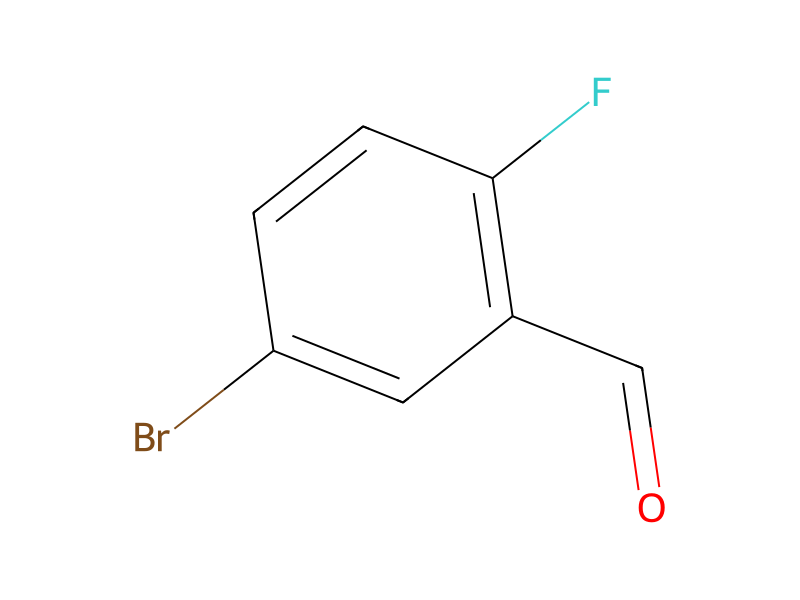
Hydrochloric Acid → 2-Fluoro-5-(4-propoxyethoxyphenyl)benzaldehyde
Reaction equation

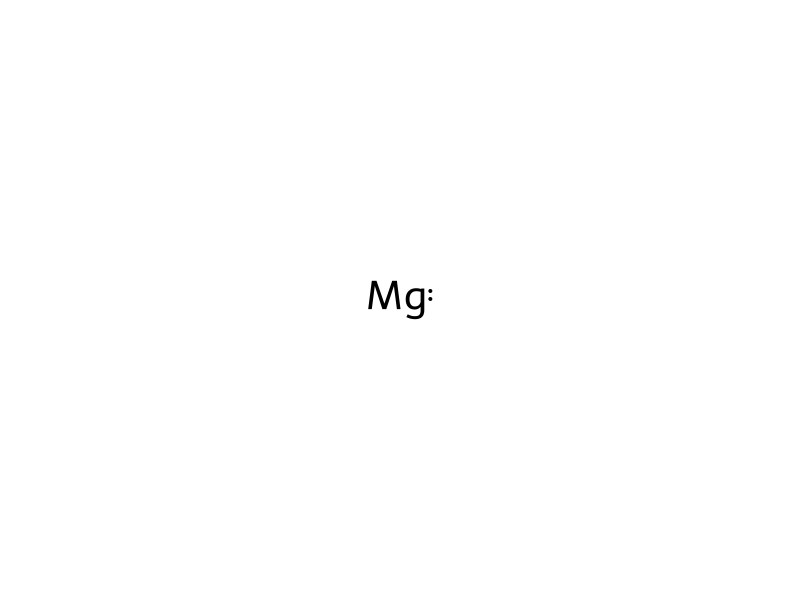
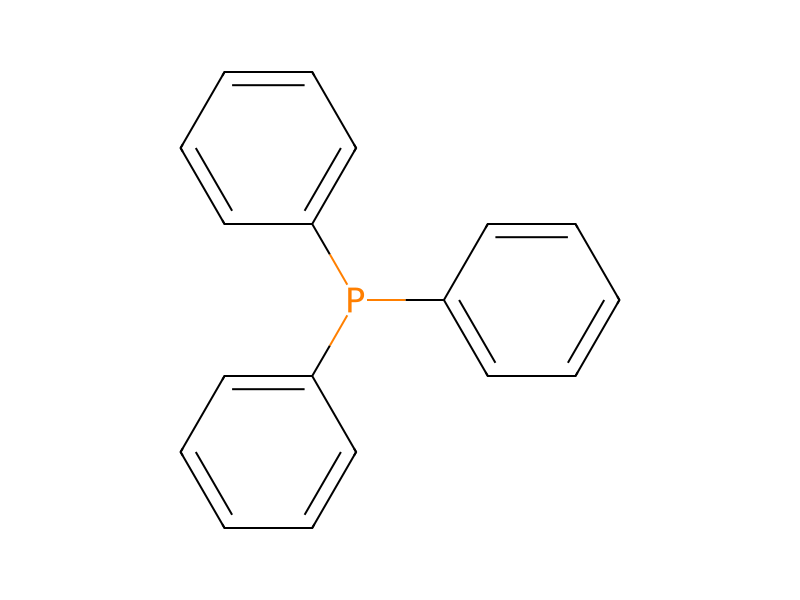
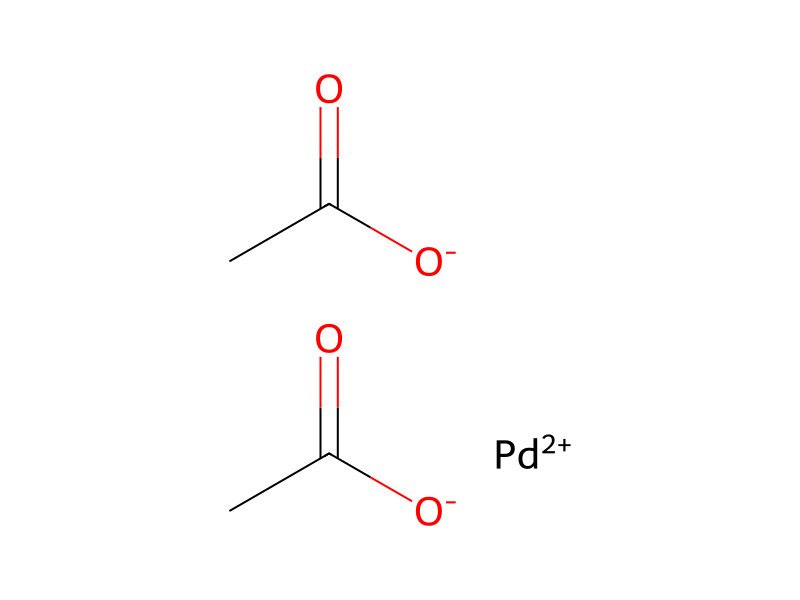
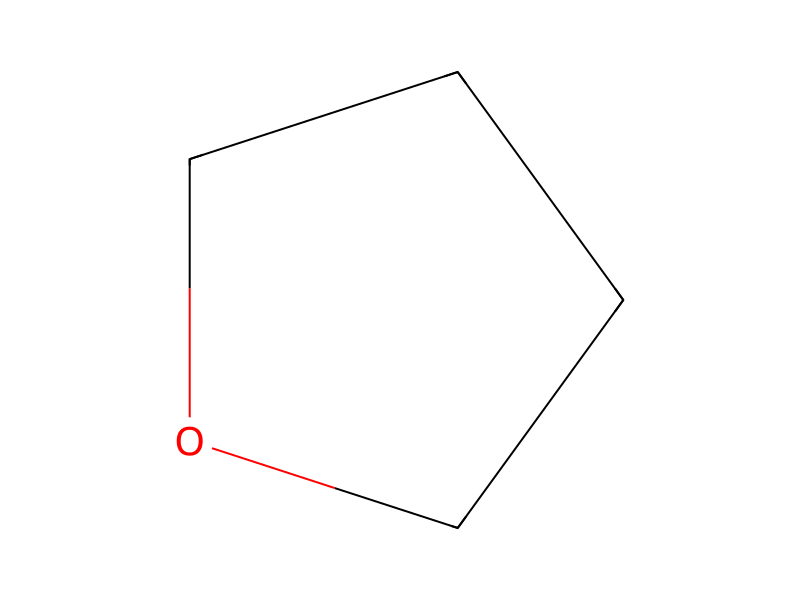
[Mg].Br[C:3]1[CH:15]=[CH:14][C:6]([O:7][CH2:8][CH2:9][O:10][CH2:11][CH2:12][CH3:13])=[CH:5][CH:4]=1.COB(OC)OC.Br[C:24]1[CH:25]=[CH:26][C:27]([F:32])=[C:28]([CH:31]=1)[CH:29]=[O:30].C(=O)([O-])[O-].[K+].[K+].Cl>O1CCCC1.C([O-])(=O)C.[Pd+2].C([O-])(=O)C.[Mg].BrC1C=CC(OCCOCCC)=CC=1.C1(P(C2C=CC=CC=2)C2C=CC=CC=2)C=CC=CC=1>[F:32][C:27]1[CH:26]=[CH:25][C:24]([C:3]2[CH:15]=[CH:14][C:6]([O:7][CH2:8][CH2:9][O:10][CH2:11][CH2:12][CH3:13])=[CH:5][CH:4]=2)=[CH:31][C:28]=1[CH:29]=[O:30]Participants
Reactant 6

Product 1

Reagents, catalysts & solvents 5
Procedure
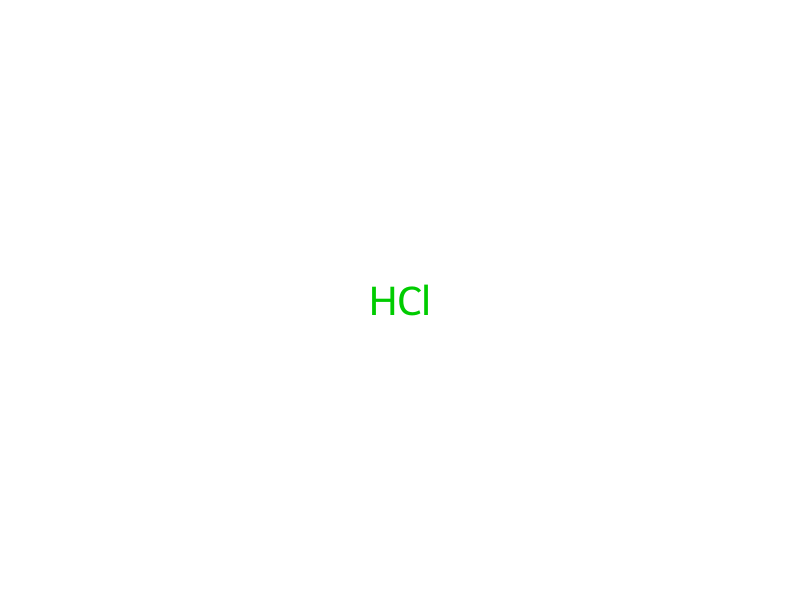
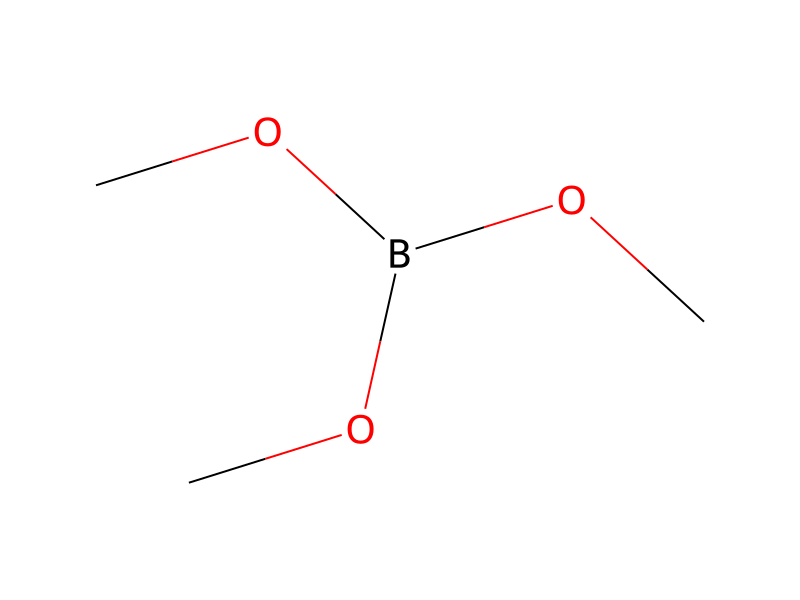
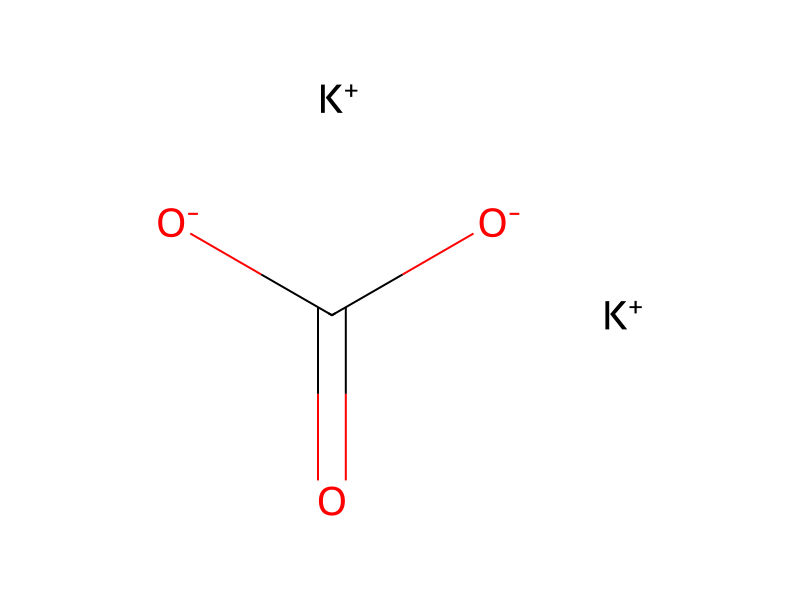
Under an argon atmosphere, magnesium (737 mg, 30.299 mmol) was suspended in 40.5 ml of tetrahydrofuran, which was then refluxed. Under reflux, a solution of 1-p-bromophenoxy-2-propoxyethane (7.66 g, 29.56 mmol) in 13.5 ml of tetrahydrofuran was dropped and refluxed for 1.5 hours. After cooling to room temperature, the resultant sealed was stored in a refrigerator to form seeds. Under a nitrogen flow, magnesium (73.7 g, 3.0299 mol) was suspended in 4050 ml of tetrahydrofuran, which was then refluxed. Under reflux, the seeds previously prepared were added. A solution of 1-p-bromophenoxy-2-propoxyethane (766 g, 2.956 mol) in 1350 ml of tetrahydrofuran was dropped. After refluxing for 3 hours, the mixture was cooled to 14° C. A solution of trimethoxyborane (310 g, 2.99 mmol) in 1350 ml of tetrahydrofuran was dropped at −15 to −10° C. and stirred at −15 to −10° C. for 1 hour. The mixture was heated to room temperature, sealed and left stand overnight. Under a nitrogen flow, palladium (II) acetate (3318 mg, 14.78 mmol) and subsequently triphenylphosphine (15.506 g, 59.12 mmol) were added at room temperature and stirred at room temperature for 30 minutes. 5-Bromo-2-fluorobenzaldehyde (300 g, 1.478 mmol) and subsequently 1275 ml of an aqueous solution of potassium carbonate (1072 g, 7.76 mol) were added at room temperature and was heated under reflux for 5 hours. After cooling room temperature, 6.75 L of a 2N hydrochloric acid was dropped at 20-30° C. After phase separation, the water layer was extracted with 6.75 L of toluene. The organic layers were combined together and washed with 4.5 L of a 2N hydrochloric acid, two 5-L portions of a 2N aqueous sodium hydroxide solution, two 4.5-L portions of a 12.5% aqueous ammonia, 4.5 L of a 20% brine, 4.5 L of a 2N hydrochloric acid, and three 4.5-L portions of a 20% brine. After addition of 15 g or activated carbon (Shirasagi A), followed by stirring at room temperature for 20 minutes, filtration was conducted and the residue was washed with 1.3 L of toluene. Through vacuum concentration, 533.2 g of crude 2-fluoro-5-(4-propoxyethoxyphenyl) benzaldehyde was obtained as a brown oily matter, which was used in the next step without being purified. A part thereof was purified by column chromatography to yield 2-fluoro-5-(4-propoxyethoxyphenyl) benzaldehyde as white crystals.
Workup
- temperaturewhich was then refluxed
- temperatureUnder reflux
- temperaturerefluxed for 1.5 hours
- customthe resultant sealed
- customto form seeds
- temperaturewhich was then refluxed
- temperatureUnder reflux
- customthe seeds previously prepared
- additionwere added
- temperatureAfter refluxing for 3 hours
- temperaturethe mixture was cooled to 14° C
- temperatureThe mixture was heated to room temperature
- customsealed
- waitleft
- waitstand overnight
- stirringstirred at room temperature for 30 minutes
- temperaturewas heated
- temperatureunder reflux for 5 hours
- temperatureAfter cooling room temperature
- customAfter phase separation
- extractionthe water layer was extracted with 6.75 L of toluene
- washwashed with 4.5 L of a 2N hydrochloric acid, two 5-L portions of a 2N aqueous sodium hydroxide solution, two 4.5-L portions of a 12.5% aqueous ammonia, 4.5 L of a 20% brine, 4.5 L of a 2N hydrochloric acid, and three 4.5-L portions of a 20% brine
- additionAfter addition of 15 g or activated carbon (Shirasagi A),
- stirringby stirring at room temperature for 20 minutes
- filtrationfiltration
- washthe residue was washed with 1.3 L of toluene
- concentrationThrough vacuum concentration
Sources & evidence
- ORD record
- ord-fd6dacc02a7946b8bbdeb5fc5c06b237
- Source dataset
- uspto-grants-2003_05
- Patent number
- US06566535B1
Reaction notes
Loading…