Hydrochloric Acid → 3-{[5-(azetidin-1-ylcarbonyl)pyrazin-2-yl]oxy}-5-[(1S)-2-methoxy-1-methylethoxy]benzoic acid
Reaction equation

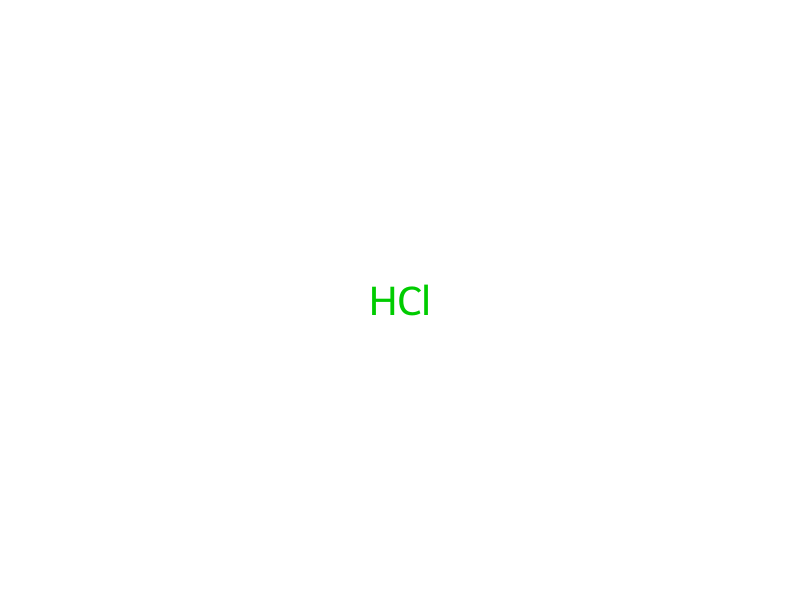
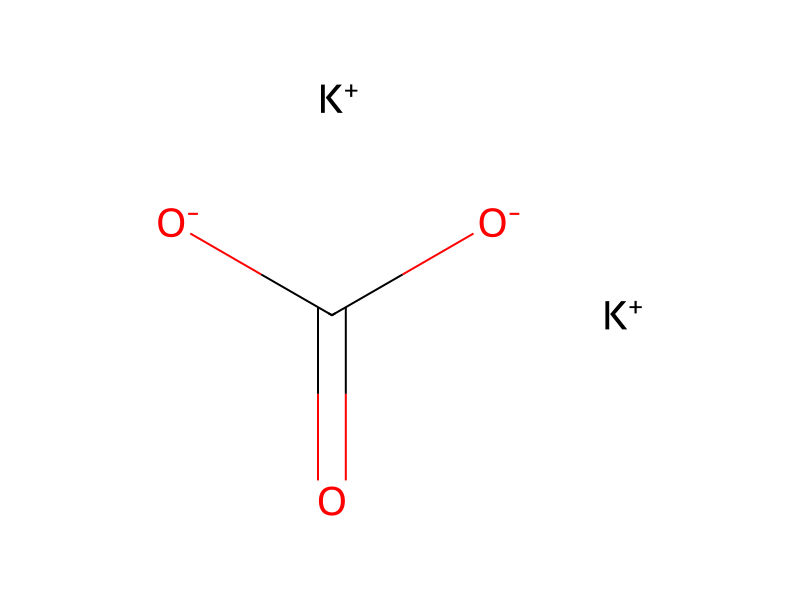
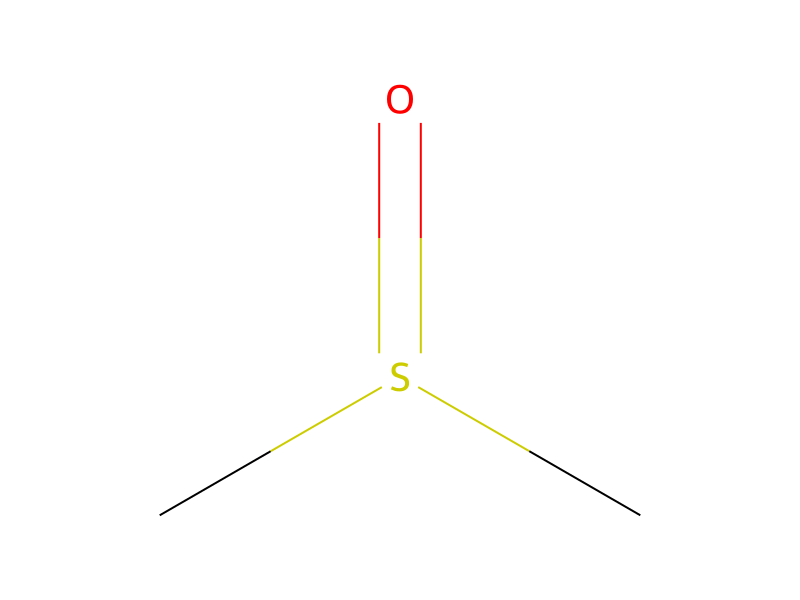
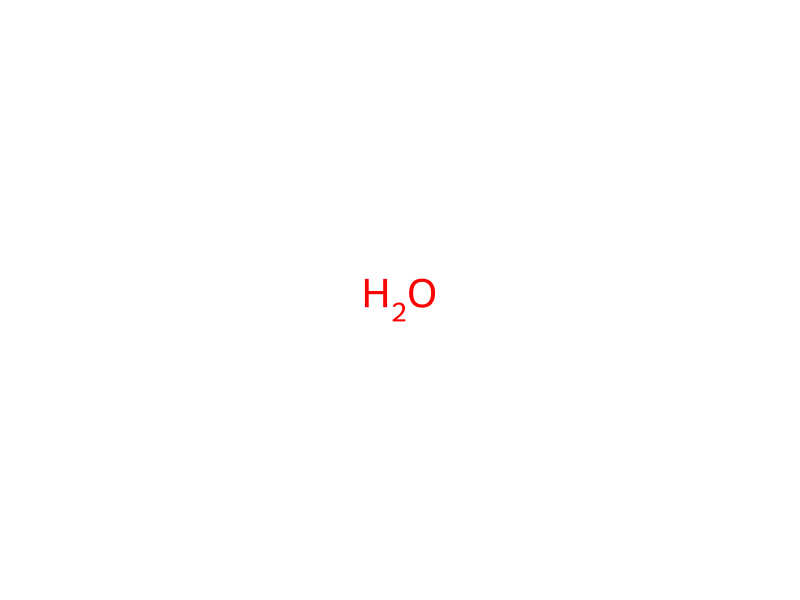
[OH:1][C:2]1[CH:3]=[C:4]([CH:8]=[C:9]([O:11][C@@H:12]([CH3:16])[CH2:13][O:14][CH3:15])[CH:10]=1)[C:5]([OH:7])=[O:6].C(=O)([O-])[O-].[K+].[K+].[N:23]1([C:27]([C:29]2[CH:34]=[N:33][C:32](Cl)=[CH:31][N:30]=2)=[O:28])[CH2:26][CH2:25][CH2:24]1.C(OC(C)C)(=O)C.Cl>CS(C)=O.O>[N:23]1([C:27]([C:29]2[N:30]=[CH:31][C:32]([O:1][C:2]3[CH:3]=[C:4]([CH:8]=[C:9]([O:11][C@@H:12]([CH3:16])[CH2:13][O:14][CH3:15])[CH:10]=3)[C:5]([OH:7])=[O:6])=[N:33][CH:34]=2)=[O:28])[CH2:26][CH2:25][CH2:24]1Participants
Reactant 5



Product 1

Reagents, catalysts & solvents 2
Conditions
- Temperature
- 22 °C
Procedure
To a clean dry flask fitted with thermometer, condenser, overhead stirrer and nitrogen line was added 3-hydroxy-5-[(1S)-2-methoxy-1-methylethoxy]benzoic acid* (1.0 eq), potassium carbonate (2.5 eq), dimethylsulfoxide (3 vols) and water (1.0 vols) under a nitrogen atmosphere. The resulting mixture was heated to 45° C.-55° C. for at least one hour. 2-(Azetidin-1-ylcarbonyl)-5-chloropyrazine (1.05 eq) was dissolved in dimethylsulfoxide (5.0 vols) at about 40° C.-50° C. The solution of 2-(azetidin-1-ylcarbonyl)-5-chloropyrazine in DMSO was added drop-wise via syringe pump to the above reaction mixture over 1-4 hours maintaining the reaction temperature at 45° C.-55° C. The reaction was stirred for 16 hours at 45° C.-55° C. The bath was cooled to 22±3° C. Water (8 vols) was added, followed by iso-propyl acetate (10 vols). The contents were agitated at 22° C. for 15 minutes then the layers were separated The aqueous layers was treated with iso-propylacetate (10 vols) and the mixture agitated at 22±3° C. for at least 15 minutes. The layers were separated and the aqueous layer was treated again with iso-propylacetate in the same manner. The layers were separated, the organic layer was discarded and 5N hydrochloric acid (˜4.4 eq) was added drop-wise over at least 30 minutes to the aqueous layer to a pH end-point of pH 3-0-pH4.0 whilst maintaining the reaction temperature at 22±3° C. Iso-propylacetate (10 vols) was then added and the mixture heated to 75° C. The mixture was agitated at this temperature for at least 30 minutes, then the temperature was adjusted to 70° C. and the layers were separated. The organic layer was retained, and the aqueous layer treated with iso-propylacetate (10 vols) and the mixture heated to 75° C. The mixture was agitated at this temperature for at least 30 minutes, then the temperature was adjusted to 70° C. and the layers separated. The organic layer was retained, and the aqueous layer discarded. The combined organic layers from the previous 2 separations were reheated to reflux for dissolution. Water (5 vols) was added and the mixture stirred at 70-75° C. for at least 15 minutes. The batch temperature was adjusted to 70° C. and the aqueous layer separated off and discarded. This process was repeated twice with a further 5 vols of water at each time. The organic layer was set to distil at atmospheric pressure to a pot volume of 4 vols. Iso-propyl acetate (8 vols) was added and the batch set to distil to a pot volume of approximately 4 vols. The batch was cooled to 22° C. over 2 hours, the batch was agitated at 22° C. for 3 hours, then cooled to 0° C., the mixture was held at 0° C. for 5 hours, then filtered, and the solid washed with iso-propylacetate (20 ml, 4 vols). After drying in the vacuum oven at 50° C. overnight, the desired product was obtained as a solid (corrected yield 85-90%). 1H NMR δ (400 MHz DMSO): 8.66 (s, 1H), 8.55 (s, 1H), 7.36 (s, 1H), 7.31 (s, 1H), 7.16 (s, 1H), 4.71-4.65 (m, 1H), 4.58-4.54 (t, 2H), 4.11-4.07 (t, 2H), 3.52-3.41 (m, 2H), 3.29 (s, 3H), 2.33-2.26 (m, 2H), 1.24-1.19 (d, 3H) *Alternatively, salts of this acid may be used in this procedure, either directly or after transformation into the free acid by cracking the salt by appropriate method, eg: acidification and extraction, adding NaOH then distilling, or any other process known in the art.
Workup
- customTo a clean dry flask fitted with thermometer, condenser, overhead stirrer and nitrogen line
- temperatureThe resulting mixture was heated to 45° C.-55° C. for at least one hour
- temperaturemaintaining the reaction temperature at 45° C.-55° C
- stirringThe contents were agitated at 22° C. for 15 minutes
- customthe layers were separated The aqueous layers
- additionwas treated with iso-propylacetate (10 vols)
- stirringthe mixture agitated at 22±3° C. for at least 15 minutes
- customThe layers were separated
- additionthe aqueous layer was treated again with iso-propylacetate in the same manner
- customThe layers were separated
- temperaturewhilst maintaining the reaction temperature at 22±3° C
- temperaturethe mixture heated to 75° C
- stirringThe mixture was agitated at this temperature for at least 30 minutes
- customwas adjusted to 70° C.
- customthe layers were separated
- additionthe aqueous layer treated with iso-propylacetate (10 vols)
- temperaturethe mixture heated to 75° C
- stirringThe mixture was agitated at this temperature for at least 30 minutes
- customwas adjusted to 70° C.
- customthe layers separated
- temperatureto reflux for dissolution
- additionWater (5 vols) was added
- stirringthe mixture stirred at 70-75° C. for at least 15 minutes
- customwas adjusted to 70° C.
- customthe aqueous layer separated off
- customto distil at atmospheric pressure to a pot volume of 4 vols
- additionIso-propyl acetate (8 vols) was added
- customthe batch set to distil to a pot volume of approximately 4 vols
- temperatureThe batch was cooled to 22° C. over 2 hours
- stirringthe batch was agitated at 22° C. for 3 hours
- temperaturecooled to 0° C.
- waitthe mixture was held at 0° C. for 5 hours
- filtrationfiltered
- washthe solid washed with iso-propylacetate (20 ml, 4 vols)
- customAfter drying in the vacuum oven at 50° C. overnight
Sources & evidence
- ORD record
- ord-08d78e4793564860802664333357f9f4
- Source dataset
- uspto-grants-2012_01
- Patent number
- US08093252B2
Reaction notes
Loading…