Pyridine → (R)-2-(6-Cyclopropyl-5-nitro-1-oxoisoquinolin-2(1H)-yl)propyl acetate
Reaction equation

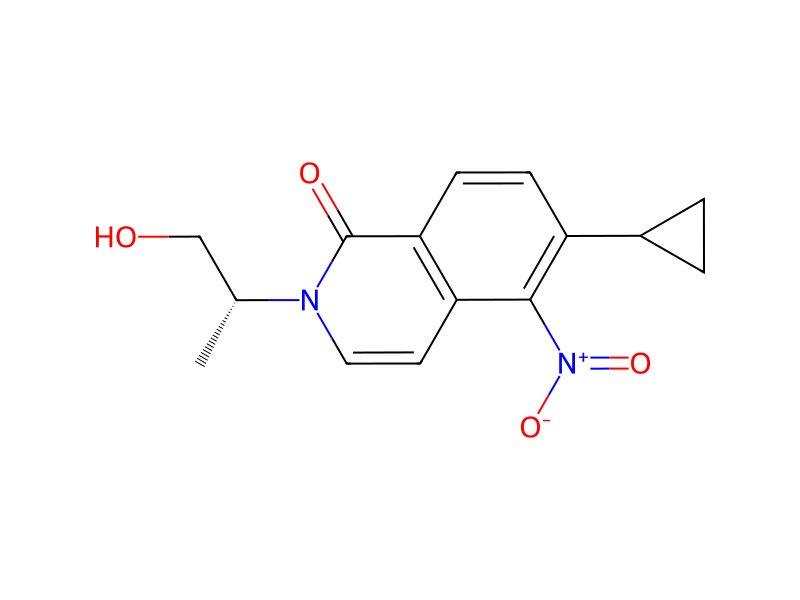
[CH:1]1([C:4]2[C:5]([N+:19]([O-:21])=[O:20])=[C:6]3[C:11](=[CH:12][CH:13]=2)[C:10](=[O:14])[N:9]([C@H:15]([CH3:18])[CH2:16][OH:17])[CH:8]=[CH:7]3)[CH2:3][CH2:2]1.[C:22](OC(=O)C)(=[O:24])[CH3:23].N1C=CC=CC=1.C(Cl)Cl>>[C:22]([O:17][CH2:16][C@H:15]([N:9]1[CH:8]=[CH:7][C:6]2[C:11](=[CH:12][CH:13]=[C:4]([CH:1]3[CH2:3][CH2:2]3)[C:5]=2[N+:19]([O-:21])=[O:20])[C:10]1=[O:14])[CH3:18])(=[O:24])[CH3:23]Participants
5




Procedure
A round bottom flask was charged with (R)-6-cyclopropyl-2-(1-hydroxypropan-2-yl)-5-nitroisoquinolin-1(2H)-one (30 mg, 0.0001 mol), acetic anhydride (0.015 mL, 0.00016 mol), pyridine (0.015 mL, 0.00019 mol) and methylene chloride (4 mL, 0.06 mol), and was stirred at room temperature overnight. The solvent was removed under reduced pressure and the product was taken onto the next step without purification.
Workup
- customThe solvent was removed under reduced pressure
- customthe product was taken onto the next step without purification
Sources & evidence
- ORD record
- ord-652f5ca6049541a4b469f569e223fafd
- Source dataset
- uspto-grants-2012_01
- Patent number
- US08093265B2
Reaction notes
Loading…