Propylene Oxide → Cumene
Reaction equation

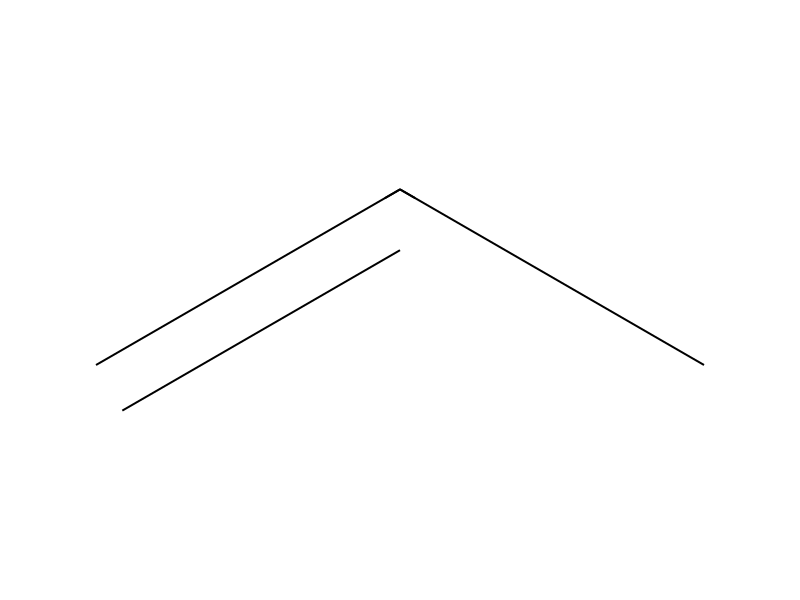
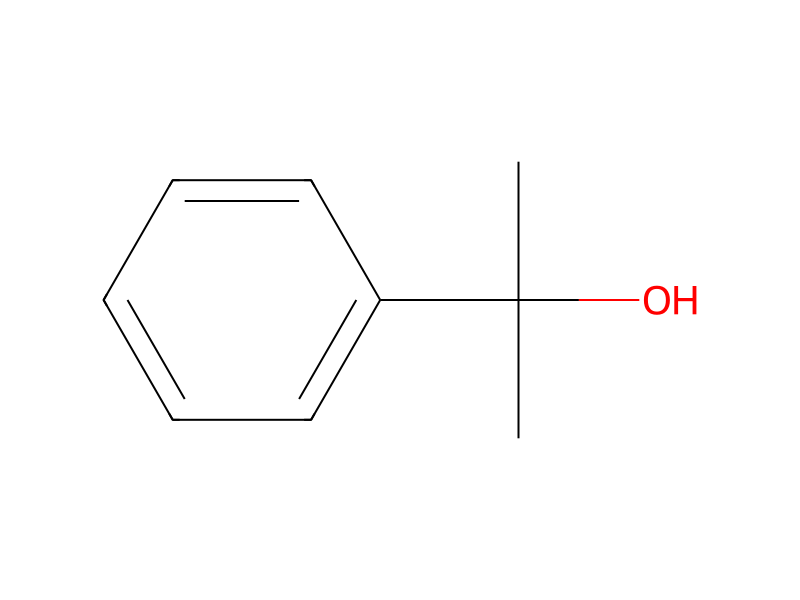
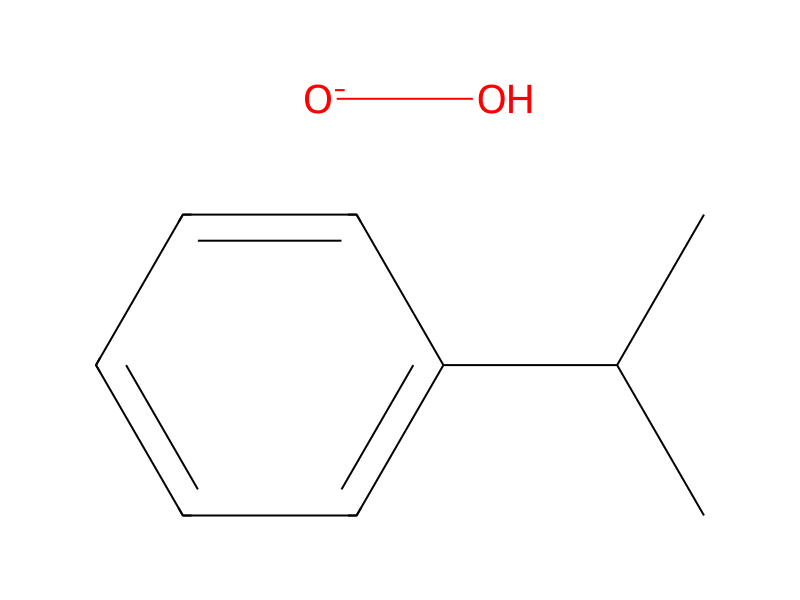
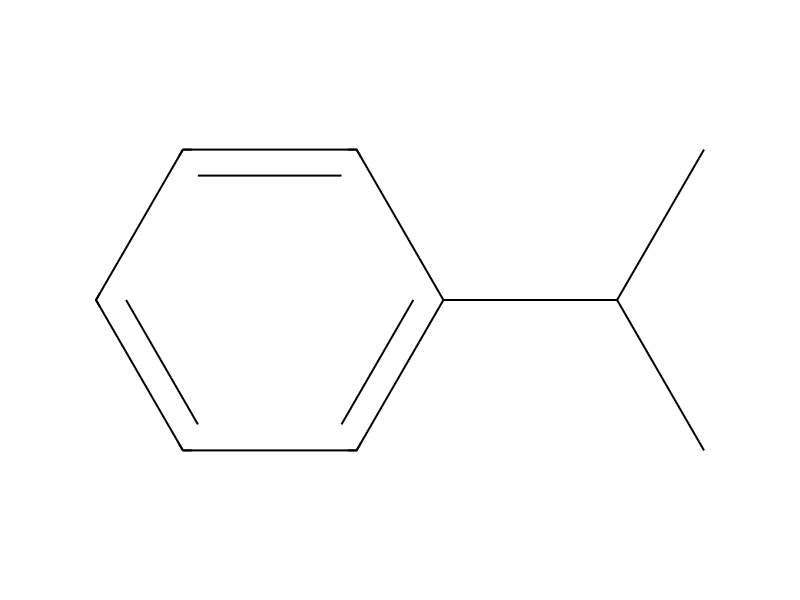
[O-]O.[CH:3]([C:6]1[CH:11]=[CH:10][CH:9]=[CH:8][CH:7]=1)([CH3:5])[CH3:4].C=CC.C1OC1C.C(O)(C1C=CC=CC=1)(C)C>[Ti]>[CH:3]([C:6]1[CH:11]=[CH:10][CH:9]=[CH:8][CH:7]=1)([CH3:5])[CH3:4]Participants
Reactant 4

Product 1
Reagents, catalysts & solvents 1

Procedure
The alkylbenzene hydroperoxide obtained in the present invention can be used as a starting material for producing an alkylene oxide. For example, isopropylbenzene hydroperoxide obtained is reacted with propylene in the presence of a titanium-containing catalyst to produce a mixture of propyleneoxide and cumyl alcohol. After the mixture is separated, the obtained cumyl alcohol is reacted with hydrogen in the presence of hydrogenolysis catalyst to produce isopropylbenzene, and the isopropylbenzene is recycled as a starting material for the oxidation process. Further, the cumyl alcohol is converted into α-methylstyrene in the presence of dehydration catalyst, the α-methylstyrene is reacted with hydrogen in the presence of hydrogenation catalyst to produce isopropylbenzene, and the isopropylbenzene can be recycled as a starting material for the oxidation process. As another example, ethylbenzene hydroperoxide obtained is reacted with propylene in the presence of a titanium- or molybdenum-containing catalyst to produce a mixture of propylene oxide and 1-phenylethylalcohol. After the mixture is separated, the obtained 1-phenylethylalcohol is dehydrated in the presence of a dehydration catalyst to produce styrene.
Workup
- additioncontaining catalyst
- customto produce
- customAfter the mixture is separated
- customthe obtained cumyl alcohol is reacted with hydrogen in the presence of hydrogenolysis catalyst
Sources & evidence
- ORD record
- ord-e33641f30cb845ac86e84165b0915fa5
- Source dataset
- uspto-grants-2012_01
- Patent number
- US08093433B2
Reaction notes
Loading…