p-Anisoyl chloride → HCID 18174608, compound
Reaction equation

[NH2:1][C:2]1[C:7]([NH2:8])=[CH:6][CH:5]=[CH:4][C:3]=1[OH:9].[OH-:10].[Na+].[CH3:12][O:13][C:14]1[CH:22]=[CH:21][C:17]([C:18](Cl)=[O:19])=[CH:16][CH:15]=1>C(Cl)Cl>[CH3:12][O:13][C:14]1[CH:22]=[CH:21][C:17]([C:18]([O:10][O:9][C:3]2[CH:4]=[CH:5][CH:6]=[C:7]([NH:8][C:18](=[O:19])[C:17]3[CH:21]=[CH:22][C:14]([O:13][CH3:12])=[CH:15][CH:16]=3)[C:2]=2[NH:1][C:18](=[O:19])[C:17]2[CH:21]=[CH:22][C:14]([O:13][CH3:12])=[CH:15][CH:16]=2)=[O:19])=[CH:16][CH:15]=1Participants
5
Reactant 3
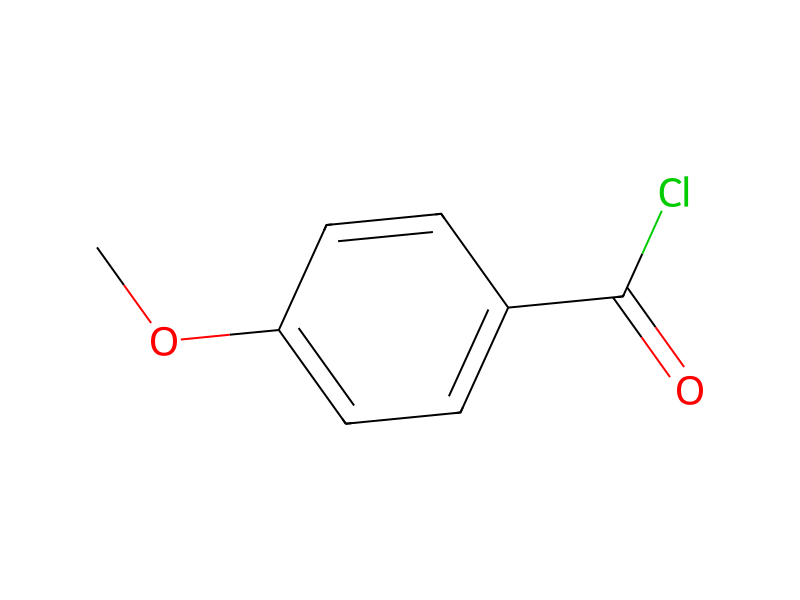


Product 1

Reagents, catalysts & solvents 1

Procedure
2,3-Diaminophenol (2.48g, 20 mmol) was dissolved in methylene chloride (200 mL) and the solution was cooled to ice-water bath temperature. Aqueous 5 N sodium hydroxide solution (126 mL) was added followed by 4-methoxybenzoyl chloride (8.6 mL, 63 mmol). The mixture was allowed to warm to room temperature and stirred for 18 h. The organic layer was separated and washed with dilute aqueous sodium hydroxide solution, dilute aqueous hydrochloric acid, and saturated aqueous sodium chloride solution. The organic layer was dried (sodium sulfate), filtered, and concentrated in vacuo to give 7.75 g (74%) of the title compound as a brown foam. This material was used without further purification.
Workup
- temperaturethe solution was cooled to ice-water bath temperature
- customThe organic layer was separated
- washwashed with dilute aqueous sodium hydroxide solution, dilute aqueous hydrochloric acid, and saturated aqueous sodium chloride solution
- dry with materialThe organic layer was dried (sodium sulfate)
- filtrationfiltered
- concentrationconcentrated in vacuo
Sources & evidence
- ORD record
- ord-ef2793f9aad8472da56d5ec58903f1a0
- Source dataset
- uspto-grants-2001_11
- Patent number
- US06313122B1
Reaction notes
Loading…