Ammonia → 8-hydroxy-2-(4-nitrophenyl)-3H-quinazolin-4-one
Reaction equation
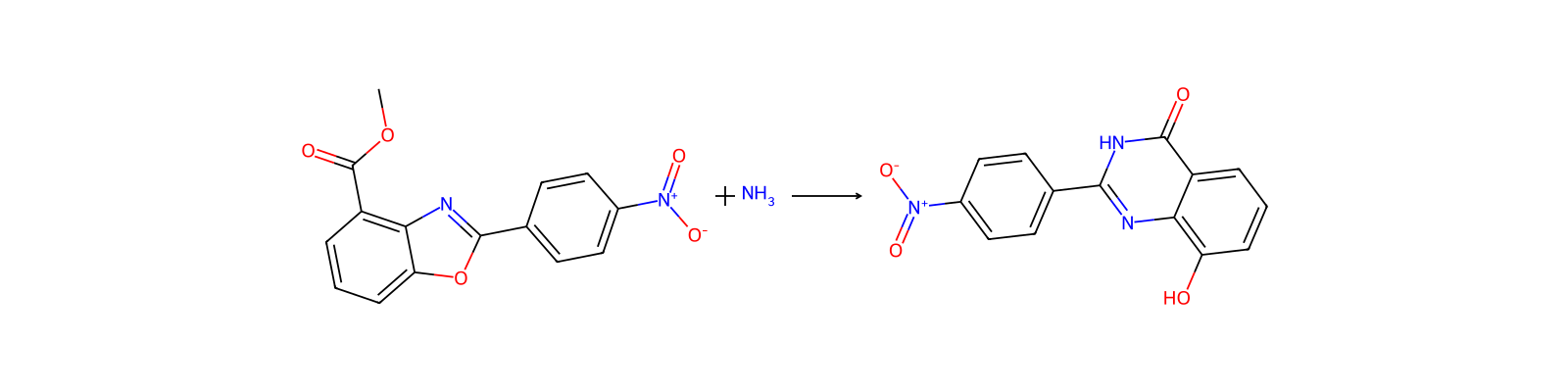
[N+:1]([C:4]1[CH:9]=[CH:8][C:7]([C:10]2[O:11][C:12]3[C:13](=[C:15]([C:19]([O:21]C)=O)[CH:16]=[CH:17][CH:18]=3)[N:14]=2)=[CH:6][CH:5]=1)([O-:3])=[O:2].[NH3:23]>>[OH:11][C:12]1[CH:18]=[CH:17][CH:16]=[C:15]2[C:13]=1[N:14]=[C:10]([C:7]1[CH:8]=[CH:9][C:4]([N+:1]([O-:3])=[O:2])=[CH:5][CH:6]=1)[NH:23][C:19]2=[O:21]Participants
3


Procedure
Methyl 2-(4-nitrophenyl)benzoxazole-4-carboxylate (0.20 g) obtained as described in Example 19 (2nd stage) was dissolved in liquid ammonia (30 ml) and sealed in an autoclave. The reaction mixture was left at 55° C., 20 bar for 20 hours. Under these conditions, the expected 2-(4-nitrophenyl)benzoxazole derivative apparently rearranged to give the corresponding quinazolinone derivative. Once the reaction was complete the ammonia was removed and the resulting solid recrystallised from boiling ethyl acetate and petrol (84%).
Workup
- customsealed in an autoclave
- waitThe reaction mixture was left at 55° C.
Sources & evidence
- ORD record
- ord-b63597a0203b4031a63a9973f9316c52
- Source dataset
- uspto-grants-2001_11
- Patent number
- US06316455B1
Reaction notes
Loading…