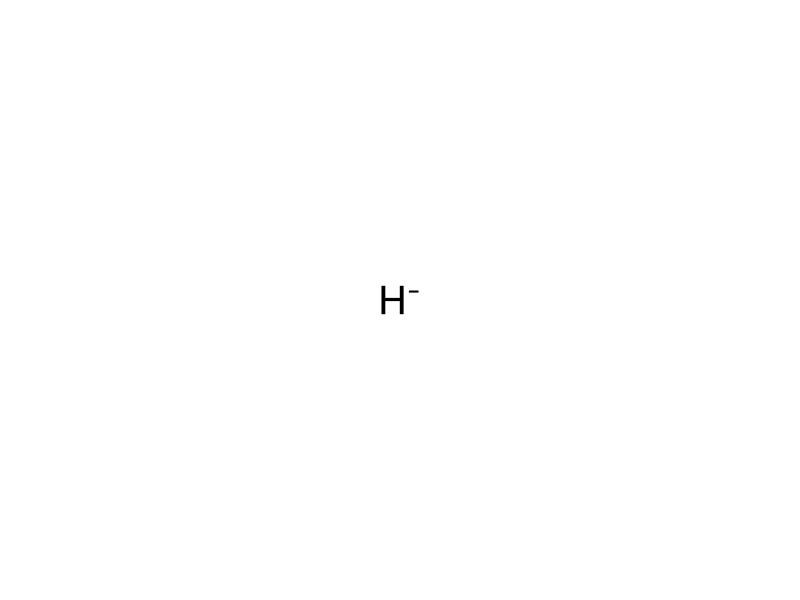
Hydride → 5-Nitropyridine-2-carbaldehyde
Reaction equation

[H-].C([O:4][C:5]([C:7]1[CH:12]=[CH:11][C:10]([N+:13]([O-:15])=[O:14])=[CH:9][N:8]=1)=O)C>C(Cl)Cl>[N+:13]([C:10]1[CH:11]=[CH:12][C:7]([CH:5]=[O:4])=[N:8][CH:9]=1)([O-:15])=[O:14]Participants
Reactant 2

Product 1

Reagents, catalysts & solvents 1

Conditions
- Temperature
- 5 °C
Procedure
Diisobutylaluminiumo hydride (1 M in DCM, 44 mL, 44 mmol, 1.3 equiv) was added dropwise to a cold (−78° C.) solution of 5-nitro-pyridine-2-carboxylic acid ethyl ester (step 39.4) (6.56 g, 33.5 mmol) in DCM (130 mL), under an argon atmosphere. The reaction mixture was allowed to warm to 5° C., quenched by addition of an aqueous solution of potassium sodium tartrate, diluted with DCM and H2O, stirred for 16 h at rt, and filtered through a pad of celite. The filtrate was extracted several times with DCM. The organic phase was washed with H2O and brine, dried (Na2SO4), filtered and concentrated. The residue was purified by by silica gel column chromatography (EtOAc/Hex, 1:1) to provide 2.54 g of the title compound as a beige solid: ESI-MS: 151.1 [M−H]−.
Workup
- customquenched by addition of an aqueous solution of potassium sodium tartrate
- additiondiluted with DCM and H2O
- filtrationfiltered through a pad of celite
- extractionThe filtrate was extracted several times with DCM
- washThe organic phase was washed with H2O and brine
- dry with materialdried (Na2SO4)
- filtrationfiltered
- concentrationconcentrated
- customThe residue was purified by by silica gel column chromatography (EtOAc/Hex, 1:1)
Sources & evidence
- ORD record
- ord-b1ef0f95d2f54f5da771592b97516bf2
- Source dataset
- uspto-grants-2013_09
- Patent number
- US08536175B2
Reaction notes
Loading…