1,2,3,4-Tetrahydroisoquinoline → HCID 18763653, compound
Reaction equation

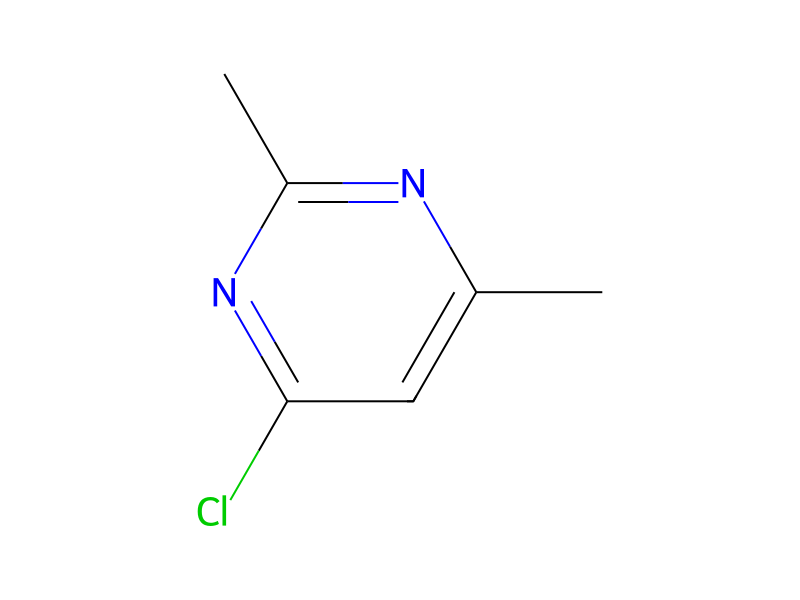
Cl[C:2]1[CH:7]=[C:6]([CH3:8])[N:5]=[C:4]([CH3:9])[N:3]=1.[CH2:10]1[C:19]2[C:14](=[CH:15][CH:16]=[CH:17][CH:18]=2)[CH2:13][CH2:12][NH:11]1>C1(C)C=CC=CC=1.P([O-])([O-])([O-])=O.[K+].[K+].[K+]>[CH3:9][C:4]1[N:3]=[C:2]([N:11]2[CH2:12][CH2:13][C:14]3[C:19](=[CH:18][CH:17]=[CH:16][CH:15]=3)[CH2:10]2)[CH:7]=[C:6]([CH3:8])[N:5]=1Participants
5
Reactant 2

Product 1

Reagents, catalysts & solvents 2


Procedure
A mixture of 4-chloro-2,6-dimethylpyrimidine (Chem. Ber. 1902, 35, 1575; 1.24 g, 8.70 mmol) and 1,2,3,4-tetrahydroisoquinoline (3.47 g, 26.1 mmol) was stirred at room temperature for 3 h. The solid formed was then dissolved in toluene (15 ml) and 1 M aqueous potassium phosphate buffer (pH 6.85, 15 ml). The organic layer was separated, washed with brine, dried (MgSO4), and evaporated. Recrystallization in hexane (150 ml) yielded 2-(2,6-dimethyl-pyrimidin-4-yl)-1,2,3,4-tetrahydro-isoquinoline (1.71 g, 82%) as a crystalline light yellow solid. EI mass spectrum, m/e: 239.1 (M calculated for C15H17N3: 239).
Workup
- customThe solid formed
- customThe organic layer was separated
- washwashed with brine
- dry with materialdried (MgSO4)
- customevaporated
- customRecrystallization in hexane (150 ml)
Sources & evidence
- ORD record
- ord-a16b6aa4c2eb49a599df628a16959623
- Source dataset
- uspto-grants-2003_12
- Patent number
- US06657060B2
Reaction notes
Loading…