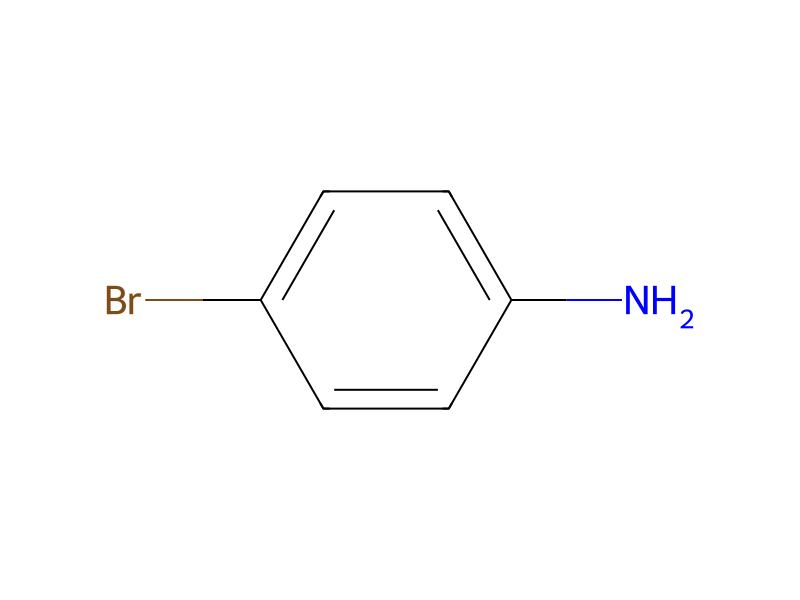
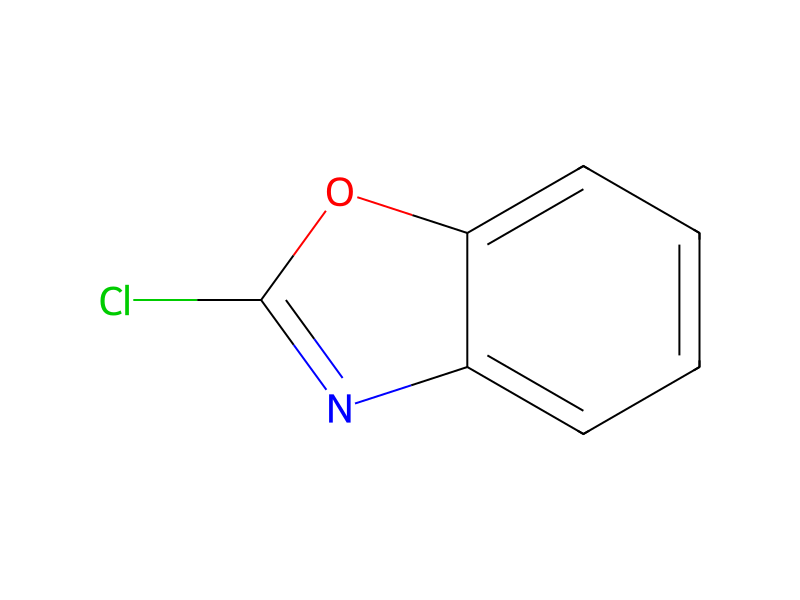
4-Bromoaniline → N-(4-Bromophenyl)benzo[d]oxazol-2-amine
Reaction equation

[Br:1][C:2]1[CH:8]=[CH:7][C:5]([NH2:6])=[CH:4][CH:3]=1.Cl[C:10]1[O:11][C:12]2[CH:18]=[CH:17][CH:16]=[CH:15][C:13]=2[N:14]=1>>[O:11]1[C:12]2[CH:18]=[CH:17][CH:16]=[CH:15][C:13]=2[N:14]=[C:10]1[NH:6][C:5]1[CH:7]=[CH:8][C:2]([Br:1])=[CH:3][CH:4]=1Participants
3

Conditions
- Temperature
- 100 °C
Procedure
4-Bromoaniline (3.9 g, 0.0227 mol) was added to a solution of 2-chlorobenzoxazole (1.16 g, 0.00755 mol) in xylenes and the reaction mixture was heated at 100° C. for 2 hours. It was cooled to ambient temperature and concentrated under reduced pressure. The residue was partitioned between ethyl acetate (50 mL) and water (50 mL), the organic phase was dried with magnesium sulfate and concentrated under reduced pressure. The residue was triturated in n-heptane and the precipitate collected by filtration and dried to yield N-(1,3-benzoxazol-2-yl)-N-(4-bromophenyl)amine (1.48 g, 0.00512 mol) as a white solid.
Workup
- temperatureIt was cooled to ambient temperature
- concentrationconcentrated under reduced pressure
- customThe residue was partitioned between ethyl acetate (50 mL) and water (50 mL)
- dry with materialthe organic phase was dried with magnesium sulfate
- concentrationconcentrated under reduced pressure
- customThe residue was triturated in n-heptane
- filtrationthe precipitate collected by filtration
- customdried
Sources & evidence
- ORD record
- ord-b0575258613a4f3083a08a9f8345db34
- Source dataset
- uspto-grants-2003_12
- Patent number
- US06660744B1
Reaction notes
Loading…