Water → HCID 67492882, compound
Reaction equation

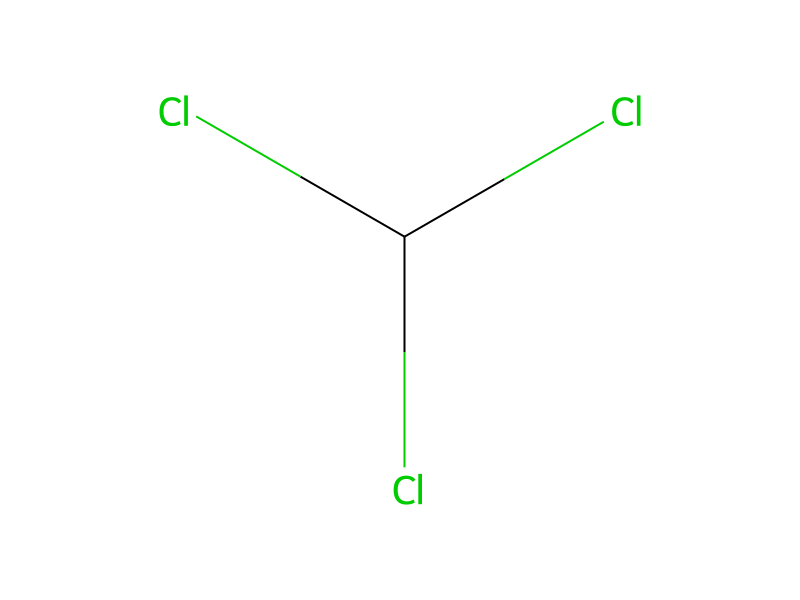
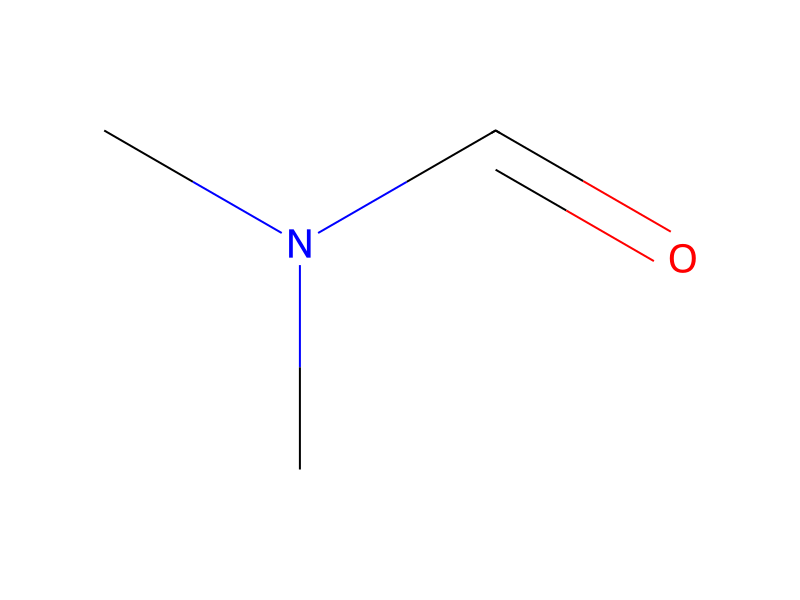
[C:1](=[O:17])(OC1C=CC([N+]([O-])=O)=CC=1)[O:2][CH2:3][CH:4]([CH3:6])[CH3:5].[NH2:18][C:19](=[NH:49])[C:20]1[CH:48]=[CH:47][C:23]([O:24][CH2:25][CH2:26][CH2:27][CH:28]2[CH2:33][CH2:32][N:31]([CH2:34][CH2:35][CH2:36][O:37][C:38]3[CH:46]=[CH:45][C:41]([C:42]([NH2:44])=[NH:43])=[CH:40][CH:39]=3)[CH2:30][CH2:29]2)=[CH:22][CH:21]=1.C(Cl)(Cl)Cl.[OH2:54]>CN(C)C=O>[NH2:49][C:19](=[N:18][C:1]([O:2][CH2:3][CH:4]([CH3:5])[CH3:6])=[O:17])[C:20]1[CH:48]=[CH:47][C:23]([O:24][CH2:25][CH2:26][CH2:27][CH:28]2[CH2:33][CH2:32][N:31]([CH2:34][CH2:35][CH2:36][O:37][C:38]3[CH:39]=[CH:40][C:41]([C:42]([NH2:44])=[N:43][C:1]([O:2][CH2:3][CH:4]([CH3:6])[CH3:5])=[O:54])=[CH:45][CH:46]=3)[CH2:30][CH2:29]2)=[CH:22][CH:21]=1Participants
Reactant 4


Product 1

Reagents, catalysts & solvents 1
Procedure
Into a solution of 1.82 g of isobutyl 4-nitrophenyl carbonate in 15 mL of N,N-dimethylformamide, 1.50 g of 4-{3-[4-(3-{4-[amino(imino)methyl]phenoxy}propyl)-1-piperidinyl]propoxy}benzamidine was added at room temperature, and the solution was left reacting at the same temperature for 17 hours. Chloroform and water were added to the reaction mixture. The organic layer was separated, washed with water, a 5% potassium carbonate aqueous solution and a saturated sodium chloride aqueous solution successively, and dried over anhydrous magnesium sulfate, followed by solvent removal by evaporation under reduced pressure. The obtained residue was purified by a silica gel column chromatography (eluent; chloroform:methanol=4:1). The obtained residue was dissolved in chloroform, washed with a 5% potassium carbonate aqueous solution and a saturated sodium chloride aqueous solution successively, and dried over anhydrous magnesium sulfate. After removing the solvent by evaporation under reduced pressure, 1.43 g of 4-{3-[4-(3-{4-[amino(isobutoxycarbonylimino)methyl]phenoxy}propyl)-1-piperidinyl]propoxy}-N′-(isobutoxycarbonyl)benzamidine was obtained as a white solid.
Workup
- waitthe solution was left
- customThe organic layer was separated
- washwashed with water
- dry with materiala 5% potassium carbonate aqueous solution and a saturated sodium chloride aqueous solution successively, and dried over anhydrous magnesium sulfate
- customfollowed by solvent removal by evaporation under reduced pressure
- customThe obtained residue was purified by a silica gel column chromatography (eluent; chloroform:methanol=4:1)
- dissolutionThe obtained residue was dissolved in chloroform
- washwashed with a 5% potassium carbonate aqueous solution
- dry with materiala saturated sodium chloride aqueous solution successively, and dried over anhydrous magnesium sulfate
- customAfter removing the solvent
- customby evaporation under reduced pressure
Sources & evidence
- ORD record
- ord-7655ffef7e074a918409078dba4fa1aa
- Source dataset
- uspto-grants-2013_09
- Patent number
- US08536343B2
Reaction notes
Loading…