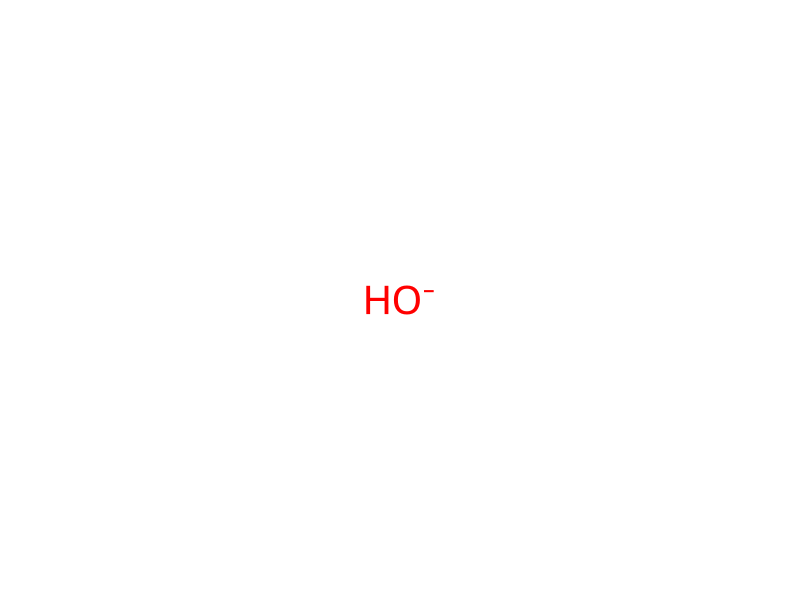
Hydroxide → 2-Methyl-4-morpholino-5-fluoroindole
Reaction equation

[CH3:1][C:2]1[NH:3][C:4]2[C:9]([CH:10]=1)=[C:8]([N:11]1[CH2:16][CH2:15][O:14][CH2:13][CH2:12]1)[C:7]([F:17])=[CH:6][C:5]=2Br.[OH-].[H][H]>C(O)C.[C].[Pd]>[CH3:1][C:2]1[NH:3][C:4]2[C:9]([CH:10]=1)=[C:8]([N:11]1[CH2:12][CH2:13][O:14][CH2:15][CH2:16]1)[C:7]([F:17])=[CH:6][CH:5]=2Participants
6





Procedure
To a solution of 24 g of 2-methyl-4-morpholino-5-fluoro-7-bromoindole in 200 ml of ethanol was added 1 g of palladium-carbon and then 15 ml of a 20% aqueous sodiium hydroxide solution. This mixture was subjected to catalytic reduction at room temperature and at atmospheric pressure. The reaction was stopped when a theoretical amount (about 1.7 l) of hydrogen was absorbed, and the catalyst was removed by filtration followed by concentration. The residue was purified through silica gel column chromatography (Wako gel C-200; eluent:chloroform:n-hexane=5:1) to give 11.8 g of 2-methyl-4-morpholino-5-fluoroindole.
Workup
- customwas subjected to catalytic reduction at room temperature and at atmospheric pressure
- customwas absorbed
- customthe catalyst was removed by filtration
- concentrationfollowed by concentration
- customThe residue was purified through silica gel column chromatography (Wako gel C-200; eluent:chloroform:n-hexane=5:1)
Sources & evidence
- ORD record
- ord-f82e5e9786934fb2a560732e42ba15b4
- Source dataset
- uspto-grants-1983_08
- Patent number
- US04399134
Reaction notes
Loading…