Sodium Azide → 3-(Azidopropyl)triethoxysilane
Reaction equation

Cl[CH2:2][CH2:3][CH2:4][Si:5]([O:12][CH2:13][CH3:14])([O:9][CH2:10][CH3:11])[O:6][CH2:7][CH3:8].[N-:15]=[N+:16]=[N-:17].[Na+]>>[N:15]([CH2:2][CH2:3][CH2:4][Si:5]([O:12][CH2:13][CH3:14])([O:9][CH2:10][CH3:11])[O:6][CH2:7][CH3:8])=[N+:16]=[N-:17]Participants
3

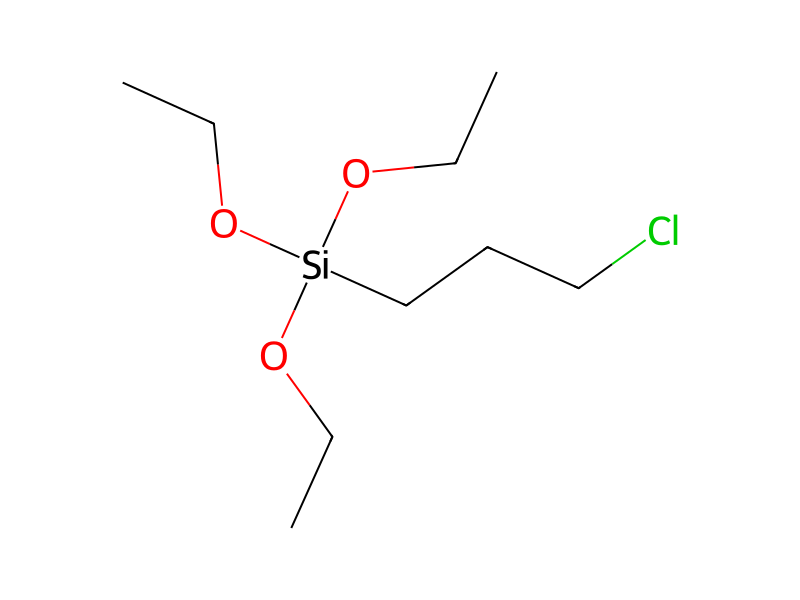

Conditions
- Temperature
- 140 °C
Procedure
1.0 mole of 3-chloropropyltriethoxysilane (Cl-PTES) and 1.1 moles of sodium azide were heated together in a 500 ml capacity three neck flask made of glass and equipped with reflux condenser and magnetic stirrer and in the presence of 5 mole percent of a catalyst on the basis of a mixture of tris(n-C8 to C10 alkyl)methyl ammonium chloride with stirring for 3 hours at 140° C. The rectification subsequently carried out thereon at reduced pressure gave the 3-azidopropyltriethoxysilane (N3 -PTES) in a yield of 95 weight percent. The N3 -PTES had the following properties:
Workup
- customequipped
- temperaturewith reflux condenser and magnetic stirrer
Sources & evidence
- ORD record
- ord-e772fbb88e9843aab4e0682ca619323b
- Source dataset
- uspto-grants-1983_08
- Patent number
- US04401598
Reaction notes
Loading…