Isobutyraldehyde → HCID 54305692, compound
Reaction equation

[CH3:1][C:2]([OH:9])([CH:4]=[C:5]([CH3:8])[C:6]#[CH:7])[CH3:3].[CH:10](=[O:14])[CH:11]([CH3:13])[CH3:12].[Cl-].[NH4+]>C1C=CC=CC=1>[CH3:1][C:2]([OH:9])([CH:4]=[C:5]([CH3:8])[C:6]#[C:7][CH:10]([OH:14])[CH:11]([CH3:13])[CH3:12])[CH3:3]Participants
Reactant 3
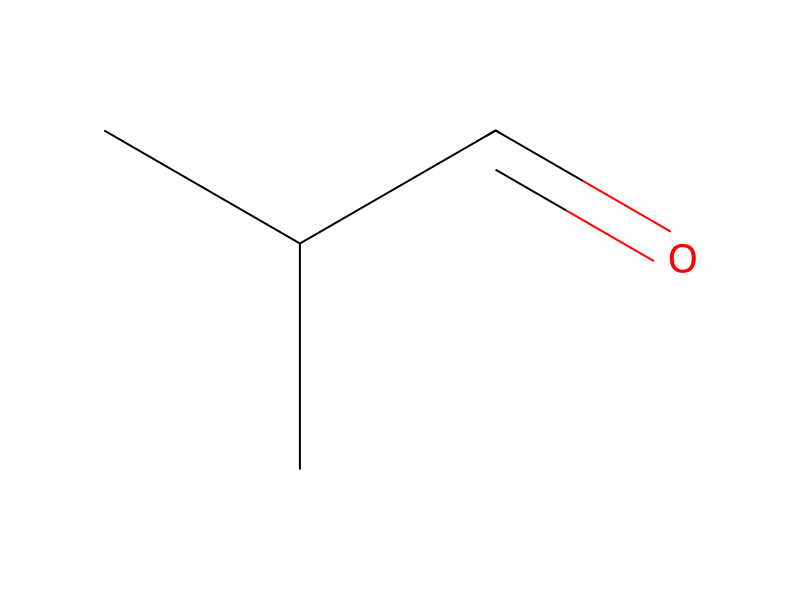


Product 1

Reagents, catalysts & solvents 1

Conditions
- Temperature
- 10 °C
Procedure
There are then added 150 ml of dry benzene and subsequently, while stirring and at a temperature between 30° C and 40° C, a solution of 55.9 g (0.45 mol) of 2,4-dimethyl-hex-3-en-5-yn-2-ol in 100 ml of dry benzene. After the addition, the mixture is held for 3 hours at 50° C and then cooled to 10° C. There is then added, within 1 hour at a temperature between 10° C and 20° C, a solution of 31.3 g (0.435 mol) of isobutyraldehyde in 100 ml of benzene. The mixture is left to stand for 12 hours at room temperature and then added with stirring to a solution of 40 g of ammonium chloride in 200 ml of ice-water. In order to facilitate separation of the phases, 53 ml of glacial acetic acid are added. The organic phase is separated and the aqueous layer extracted twice with ether. The combined extracts are washed neutral with a saturated sodium bicarbonate solution and a saturated sodium chloride solution and, after the addition of a small amount of hydroquinone, dried over sodium sulphate. After evaporation of the solvent (<40° C), there are obtained 92.3 g of crude 2,4,8-trimethyl-non-3-en-5-yne-2,7-diol which are immediately hydrogenated as follows: To a 1 liter magnetically stirred autoclave having built-in cooling spirals, there are added 92.3 g of crude 2,4,8-trimethyl-non-3-en-5-yne-2,7-diol, 5 g of Raney nickel, 0.5 g of Raney nickel, 0.5 g of anhydrous sodium carbonate and 125 ml of absolute methanol. The mixture is first hydrogenated while cooling with water at a pressure of ca 8 atmospheres. After the initial strongly exothermic reaction has ended, the mixture is hydrogenated up to complete saturation at 30 atmospheres of hydrogen and 80° C. After cooling, the catalyst is filtered off from the mixture, the alcohol removed on a rotary evaporator and the residue distilled over a small amount of sodium carbonate. There are thus obtained 70.6 g (74%) of 2,4,8-trimethyl-nona-2,7-diol of boiling point 130°-133° C/5 mm Hg; nD20 = 1.4600.
Workup
- additionAfter the addition
- additionThere is then added, within 1 hour at a temperature between 10° C and 20° C
- waitThe mixture is left
- waitto stand for 12 hours at room temperature
- additionadded
- customseparation of the phases, 53 ml of glacial acetic acid
- additionare added
- customThe organic phase is separated
- extractionthe aqueous layer extracted twice with ether
- washThe combined extracts are washed neutral with a saturated sodium bicarbonate solution
- additiona saturated sodium chloride solution and, after the addition of a small amount of hydroquinone
- dry with materialdried over sodium sulphate
- customAfter evaporation of the solvent (<40° C), there
Sources & evidence
- ORD record
- ord-6157245c860f456c9f363c7d669d8aa9
- Source dataset
- uspto-grants-1977_02
- Patent number
- US04006109
Reaction notes
Loading…