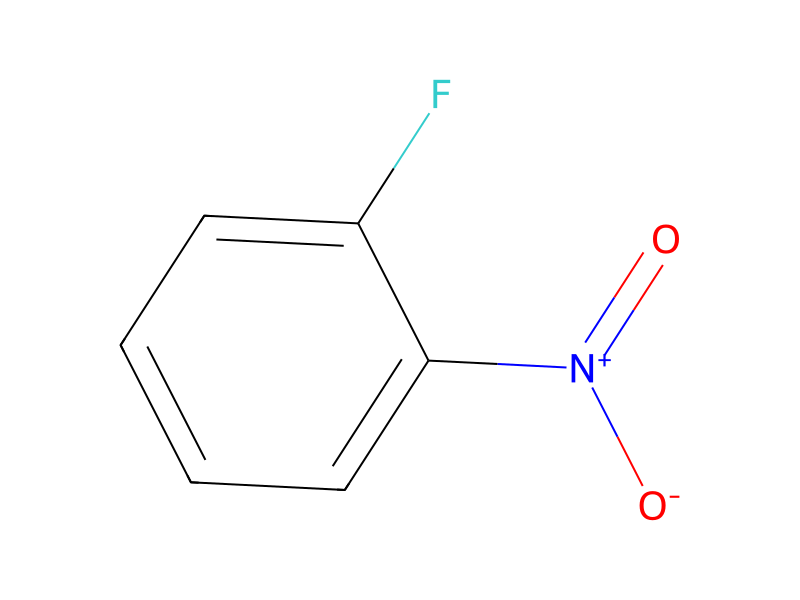
1-Fluoro-2-nitrobenzene → 5-(2-Nitrophenyl)thiopyrano[3,2-b]indol-4(5H)-one
Reaction equation

[S:1]1[C:13]2[C:12]3[CH:11]=[CH:10][CH:9]=[CH:8][C:7]=3[NH:6][C:5]=2[C:4](=[O:14])[CH:3]=[CH:2]1.F[C:16]1[CH:21]=[CH:20][CH:19]=[CH:18][C:17]=1[N+:22]([O-:24])=[O:23]>>[N+:22]([C:17]1[CH:18]=[CH:19][CH:20]=[CH:21][C:16]=1[N:6]1[C:7]2[CH:8]=[CH:9][CH:10]=[CH:11][C:12]=2[C:13]2[S:1][CH:2]=[CH:3][C:4](=[O:14])[C:5]1=2)([O-:24])=[O:23]Participants
3


Conditions
- Temperature
- 95 °C
Procedure
By the same method as described in Example 7, 8.9 g of thiopyrano [3,2-b]-indol-4(5H)-one is alkylated with o-fluoronitrobenzene, except the reaction is stirred for 40 hours at 95° C. The yield of product is 9.2 g, mp 207°-208° C. after recrystallization from ether-hexane.
Workup
- customafter recrystallization from ether-hexane
Sources & evidence
- ORD record
- ord-034e53d58225437098f6bb7c5323e85d
- Source dataset
- uspto-grants-1977_06
- Patent number
- US04032537
Reaction notes
Loading…