2-Hydroxyethyl Methacrylate → Methacrylic Acid
Reaction equation

[C:1]([O:6][Si](C)(C)C)(=[O:5])[C:2]([CH3:4])=[CH2:3].[CH3:11][C:12]([C:14]([O:16][CH2:17][CH2:18][OH:19])=[O:15])=[CH2:13].[OH2:20].O.O.[F-].C([N+](CC[CH2:39][CH3:40])(CCCC)CCCC)CCC>CO>[C:1]([OH:6])(=[O:5])[C:2]([CH3:4])=[CH2:3].[C:14]([OH:16])(=[O:15])[C:12]([CH3:13])=[CH2:11].[CH3:39][CH2:40][O:6][CH:1]([OH:5])[CH2:2][O:20][CH2:12][CH2:14][O:16][CH2:17][CH2:18][OH:19]Participants
6
Reactant 3

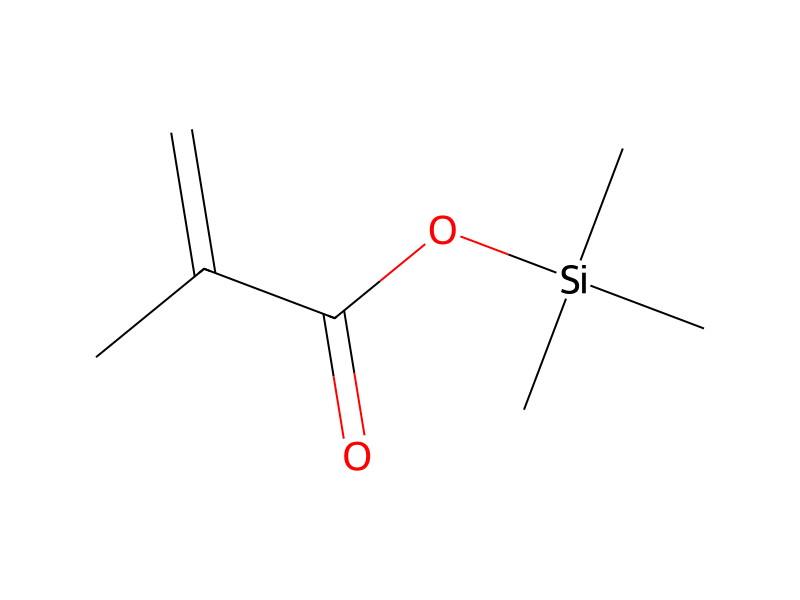

Product 2


Reagents, catalysts & solvents 1

Procedure
To the solution of poly(trimethylsilyl methacrylate [48 mol %]-b-2-phenylethyl methacrylate [37 mol %]-bethoxytriethylene glycol methacrylate [15 mol %]) was added 350 mL of 0.03 M tetrabutylammonium fluoride trihydrate in methanol. The resulting mixture was refluxed for 16 hr and evaporated in a rotary evaporator under reduced pressure. The residual polymer was dried for 48 hr in a vacuum oven to give 515 g of poly(methacrylic acid [48 mol %]-b-2-phenylethyl methacrylate [37 mol %]-b-ethoxytriethylene glycol methacrylate [15 mol %]). 1H NMR analysis of the product showed that no trimethylsilyl ester groups remained.
Workup
- temperatureThe resulting mixture was refluxed for 16 hr
- customevaporated in a rotary evaporator under reduced pressure
- customThe residual polymer was dried for 48 hr in a vacuum oven
Sources & evidence
- ORD record
- ord-c8cc82f6ad1f4a898b290b5e18c41db0
- Source dataset
- uspto-grants-1996_05
- Patent number
- US05519085
Reaction notes
Loading…