Isopropanol → UV-328
Reaction equation

[OH:1][C:2]1[C:7]([C:8]([CH2:11][CH3:12])([CH3:10])[CH3:9])=[CH:6][C:5]([C:13]([CH2:16][CH3:17])([CH3:15])[CH3:14])=[CH:4][C:3]=1[N:18]=[N:19][C:20]1[CH:25]=[CH:24][CH:23]=[CH:22][C:21]=1[N+:26]([O-])=O.C(O)(C)C.[OH-].[Na+].[N+](C1C=CC=CC=1N=NC1C=CC=CC=1)([O-])=O>[Zn].O>[OH:1][C:2]1[C:7]([C:8]([CH2:11][CH3:12])([CH3:10])[CH3:9])=[CH:6][C:5]([C:13]([CH2:16][CH3:17])([CH3:15])[CH3:14])=[CH:4][C:3]=1[N:18]1[N:26]=[C:21]2[CH:22]=[CH:23][CH:24]=[CH:25][C:20]2=[N:19]1Participants



Conditions
- Temperature
- 60 °C
Procedure
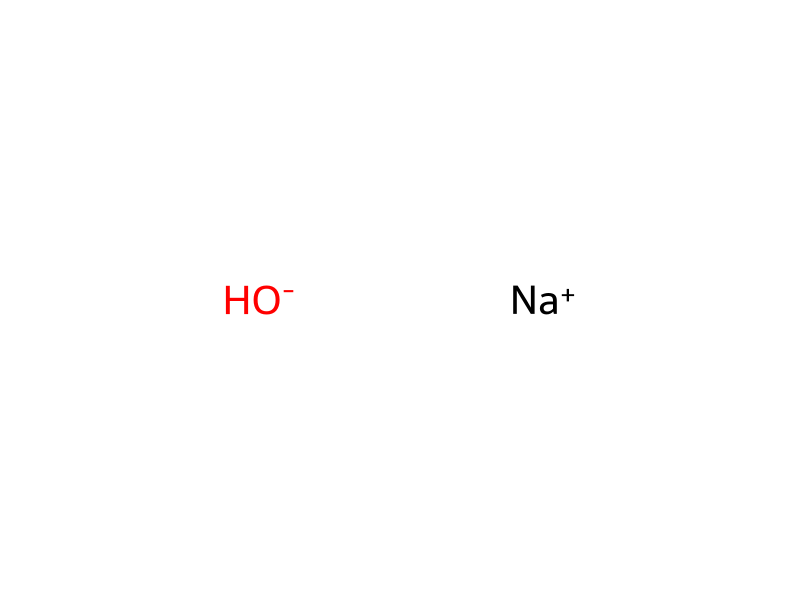
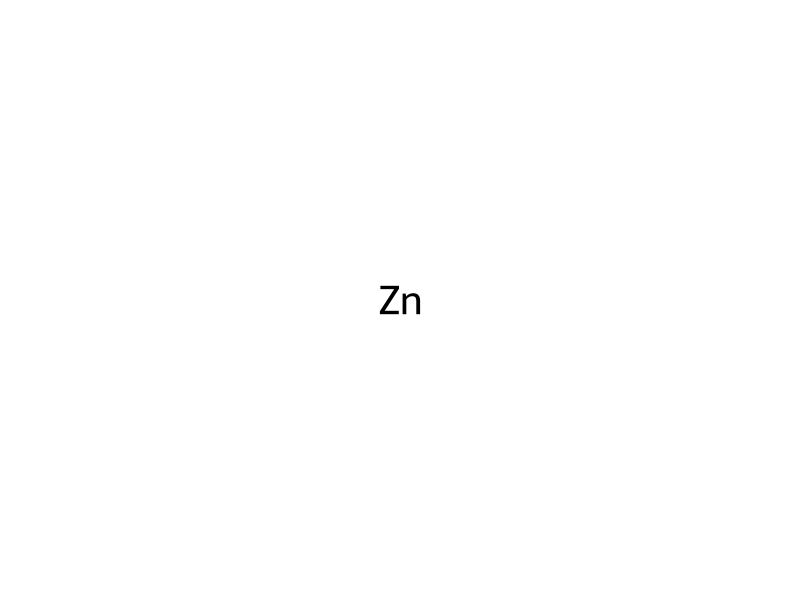
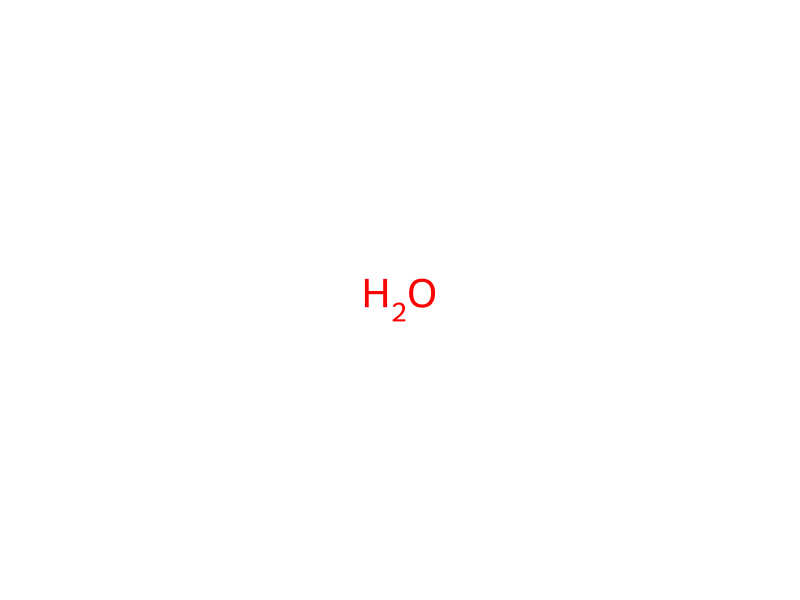
To a 2000 ml. 3-necked, round-bottomed flask equipped with an agitator, reflux condenser, nitrogen inlet and thermometer were charged 155 grams of 2'-hydroxy-3',5'-di-tert-amyl-2-nitroazobenzene, 119 grams of isopropanol and 80 grams of Amsco mineral spirits. A stream of nitrogen was introduced over the surface of the contents of the flask and the nitrogen atmosphere was then maintained throughout the remainder of the reduction process. 13.7 grams of 50% aqueous sodium hydroxide solution and 222 grams of water were added and the temperature of the contents of the flask were adjusted to 55° C. The ratio of the moles of alkali to moles of o-nitroazobenzene intermediate used was 0.42/1. 104 grams of zinc dust was added in 5 portions over a 2 hour period with the temperature of the flask being held at 55°-60° C. with some slight external cooling. The total concentration of iron impurities from all reactants totalled less than 150 ppm based on zinc used. After all the zinc was added, the temperature was raised to 60° C. and held at this temperature until a spot test indicated no more o-nitroazobenzene intermediate was present. The temperature was then raised to 65° and held there for 4 to 5 hours or until TLC analysis indicated that no more of the N-oxy intermediate was present. 62.6 grams of anhydrous sodium sulfate and 35.6 grams of water were then added, the batch was heated to 70° C. and stirred for 15 minutes. The material was then allowed to stand and separate into three liquid phases plus unreacted zinc dust. The top two layers containing the desired product were transferred to another flask. The remaining aqueous zinc slurry was washed at 65°-70° C. with three successive 16 gram portions of Amsco mineral spirits: isopropanol 50:50. The combined product layers and wash liquids were then washed once at 70° C. with an aqueous hydrochloric acid solution made from 130 grams of water and 40 grams of 32% hydrochloric acid to remove cleavage amine by-products. A second and third wash followed at 70° C. with aqueous hydrochloric acid solutions made each from 65 grams of water and 20 grams of 32% hydrochloric acid. The last wash was essentially colorless. 14 grams of 32% hydrochloric acid and 220 grams of isopropanol were added to the solution of the product. The batch was allowed to crystallize slowly. The solid product form was filtered and washed with isopropanol at 0° C. to give 110 grams of 2-(2-hydroxy-3,5-di-tert-amylphenyl)-2H-benzotriazole with a melting point of 80°-81° C. The yield was 77.5% of theory based on the o-nitroazobenzene intermediate. C. C.
Workup
- custom3-necked, round-bottomed flask equipped with an agitator
- temperaturereflux condenser, nitrogen inlet
- additionA stream of nitrogen was introduced over the surface of the contents of the flask
- temperaturethe nitrogen atmosphere was then maintained throughout the remainder of the reduction process
- customwere adjusted to 55° C
- custombeing held at 55°-60° C. with some slight external cooling
- concentrationThe total concentration of iron impurities from all reactants
- additionAfter all the zinc was added
- temperatureThe temperature was then raised to 65°
- addition62.6 grams of anhydrous sodium sulfate and 35.6 grams of water were then added
- temperaturethe batch was heated to 70° C.
- customseparate into three liquid phases plus unreacted zinc dust
- additionThe top two layers containing the desired product
- customwere transferred to another flask
- washThe remaining aqueous zinc slurry was washed at 65°-70° C. with three successive 16 gram portions of Amsco mineral spirits: isopropanol 50:50
- washThe combined product layers and wash liquids
- washwere then washed once at 70° C. with an aqueous hydrochloric acid solution
- customto remove cleavage amine by-products
- washA second and third wash
- customfollowed at 70° C. with aqueous hydrochloric acid solutions
- washThe last wash
- addition14 grams of 32% hydrochloric acid and 220 grams of isopropanol were added to the solution of the product
- customto crystallize slowly
- filtrationThe solid product form was filtered
- washwashed with isopropanol at 0° C.
Sources & evidence
- ORD record
- ord-f8b32e96e9b94768a336b5f8ea63f7d8
- Source dataset
- uspto-grants-1977_08
- Patent number
- US04041044
Reaction notes
Loading…