Cyclohexanone → 5,6,7,8-Tetrahydroquinoline
Reaction equation

[CH3:1][O:2][CH:3](OC)[CH2:4][CH:5](OC)[O:6]C.[NH2:12][CH:13]=[CH:14][CH:15]=O.[C:17]1(=O)[CH2:22][CH2:21][CH2:20][CH2:19][CH2:18]1.C(N(CC)CC)C>CCOCC.C([O-])(=O)C.[NH2+]1CCCCC1>[CH3:1][O:2][CH:3]=[CH:4][CH:5]=[O:6].[N:12]1[C:18]2[CH2:19][CH2:20][CH2:21][CH2:22][C:17]=2[CH:15]=[CH:14][CH:13]=1Participants





Procedure
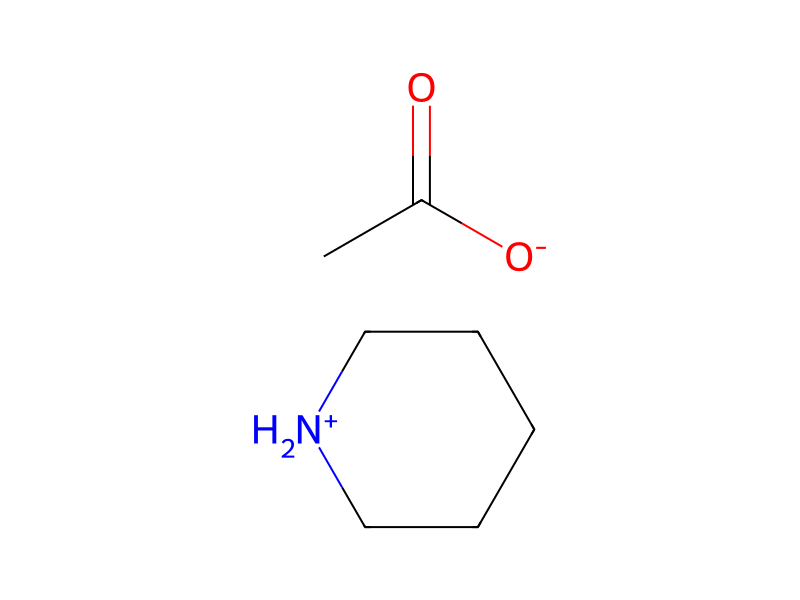
3-Methoxyacrolein was prepared from 1,1,3,3-tetramethoxypropane (Helv. Chim. Acta 1959, 42, 851) and converted to 3-aminoacrolein according to the method of Brietmaier and Gasenmann (Chem. Ber. 1971, 104, 665-7). 5,6,7,8-Tetrahydroquinoline was prepared from 3-aminoacrolein as described by Brietmaier and Bayer (Tet. Letts 1970, 38, 3291). A mixture of 3-aminoacrolein (7.3 gm, 0.1 m) and cyclohexanone (12 gm., 0.12m) was treated with triethylamine (5 ml.) and piperidinium acetate (0.1 gr) and the mixture heated in an oil bath at 120° for 24 hours. The cooled reaction mixture was dissolved in ether (100 ml.), washed with water and 2N HCl (2 × 20 ml.) and the acid washings combined, made basic with sodium carbonate and extracted with ether. The combined extracts were dried, evaporated and the residue distilled to give the title compound as a pale yellow oil (4.5 gm, 35%) b.p. 100°/15 mm.
Workup
- temperaturethe mixture heated in an oil bath at 120° for 24 hours
- customThe cooled reaction mixture
- washwashed with water and 2N HCl (2 × 20 ml.)
- extractionextracted with ether
- customThe combined extracts were dried
- customevaporated
- distillationthe residue distilled
Sources & evidence
- ORD record
- ord-899a2fa6fed14429903b38d28b37b59d
- Source dataset
- uspto-grants-1977_08
- Patent number
- US04044138
Reaction notes
Loading…