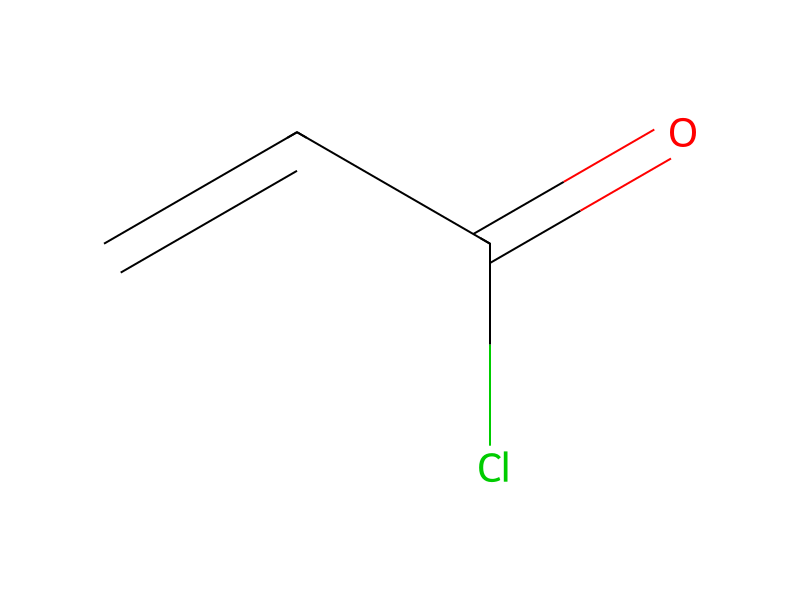
Acryloyl chloride → HCID 23467942, compound
Reaction equation

[N:1]1[N:2]([C:10]2[CH:15]=[C:14]([CH3:16])[CH:13]=[CH:12][C:11]=2[OH:17])[N:3]=[C:4]2[CH:9]=[CH:8][CH:7]=[CH:6][C:5]=12.[OH-].[Na+].[C:20](Cl)(=[O:23])[CH:21]=[CH2:22]>CC(C)=O.CCOCC>[C:20]([O:17][C:11]1[CH:12]=[CH:13][C:14]([CH3:16])=[CH:15][C:10]=1[N:2]1[N:3]=[C:4]2[CH:9]=[CH:8][CH:7]=[CH:6][C:5]2=[N:1]1)(=[O:23])[CH:21]=[CH2:22]Participants
6
Reactant 3


Product 1

Reagents, catalysts & solvents 2


Procedure
Into a flask provided with a magnetic stirrer is added 10.0 g of 2-(2H-benzotriazol-2-yl)-4-methylphenol dissolved in 350 ml acetone. Then 10% NaOH is added dropwise until the pH is 9. With stirring, 4.1 g of acryloyl chloride is added dropwise while maintaining the pH between 7 and 9 by addition of dilute base. After the addition is complete, the solvent is evaporated leaving a yellow residue which is dissolved in 80 ml ether and extracted with an equal volume of 5% NaOH solution until the aqueous washings are colorless. After evaporation of the ether, there is left 8.4 g of a yellow residue as the product, whose structure, is confirmed by NMR. The yield is 67.7%.
Workup
- customInto a flask provided with a magnetic stirrer
- temperaturewhile maintaining the pH between 7 and 9
- additionby addition of dilute base
- additionAfter the addition
- customthe solvent is evaporated
- customleaving a yellow residue which
- extractionextracted with an equal volume of 5% NaOH solution until the aqueous washings
- customAfter evaporation of the ether, there
- waitis left 8.4 g of a yellow residue as the product, whose structure
Sources & evidence
- ORD record
- ord-cbb1aaaa035c426494dc324707f9a06d
- Source dataset
- uspto-grants-1981_04
- Patent number
- US04260768
Reaction notes
Loading…