Hydrochloric Acid → Methyl 2-(((benzyloxy)carbonyl)amino)acetimidate
Reaction equation

[NH2:1][C:2](=[O:15])[CH2:3][NH:4][C:5](=[O:14])[O:6][CH2:7][C:8]1[CH:13]=[CH:12][CH:11]=[CH:10][CH:9]=1.F[B-](F)(F)F.[CH3:21][O+](C)C.Cl>C(Cl)Cl>[CH2:7]([O:6][C:5]([NH:4][CH2:3][C:2](=[NH:1])[O:15][CH3:21])=[O:14])[C:8]1[CH:13]=[CH:12][CH:11]=[CH:10][CH:9]=1Participants




Procedure
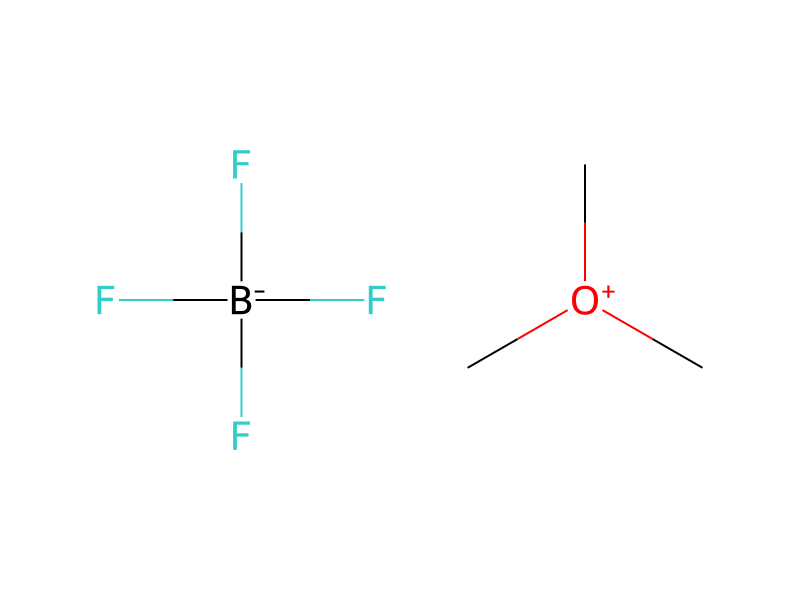
To a solution of benzyl (2-amino-2-oxoethyl)carbamate (8.5 g, 40.8 mmol) in CH2Cl2 (204 mL) was added trimethyloxonium tetrafluoroborate (6.0 g, 40.8 mmol) in one portion. The resulting mixture was stirred for 24 h, then acidified to pH˜3 with 1N ethereal HCl. The resulting mixture was concentrated under reduced pressure to yield methyl 2-(((benzyloxy)carbonyl)amino)acetimidate. A solution of methyl 2-(((benzyloxy)carbonyl)amino)acetimidate (9.3 g, 36 mmol), 4-(benzyloxy)benzothiohydrazide (8.0 g, 24 mmol) and diisopropylethylamine (4.2 mL, 24 mmol) in methanol (480 mL) was refluxed for 12 h. The resulting mixture was cooled to room temperature, at which point benzyl ((5-(4-(benzyloxy)phenyl)-1,3,4-thiadiazol-2-yl)methyl)carbamate precipitated and was collected (MS m/z=432 MH+).
Workup
- concentrationThe resulting mixture was concentrated under reduced pressure
Sources & evidence
- ORD record
- ord-deced21729c74026be77b41c6fbc3276
- Source dataset
- uspto-grants-2013_07
- Patent number
- US08476302B2
Reaction notes
Loading…