Triethyl phosphite → Diethyl (4-Bromobenzyl)phosphonate
Reaction equation

[Br:1][C:2]1[CH:9]=[CH:8][C:5]([CH2:6]Br)=[CH:4][CH:3]=1.[CH2:10]([O:12][P:13]([O:17]CC)[O:14][CH2:15][CH3:16])[CH3:11]>CCCCCC.C(OC(=O)C)C>[Br:1][C:2]1[CH:9]=[CH:8][C:5]([CH2:6][P:13](=[O:17])([O:14][CH2:15][CH3:16])[O:12][CH2:10][CH3:11])=[CH:4][CH:3]=1Participants
4
Reactant 2
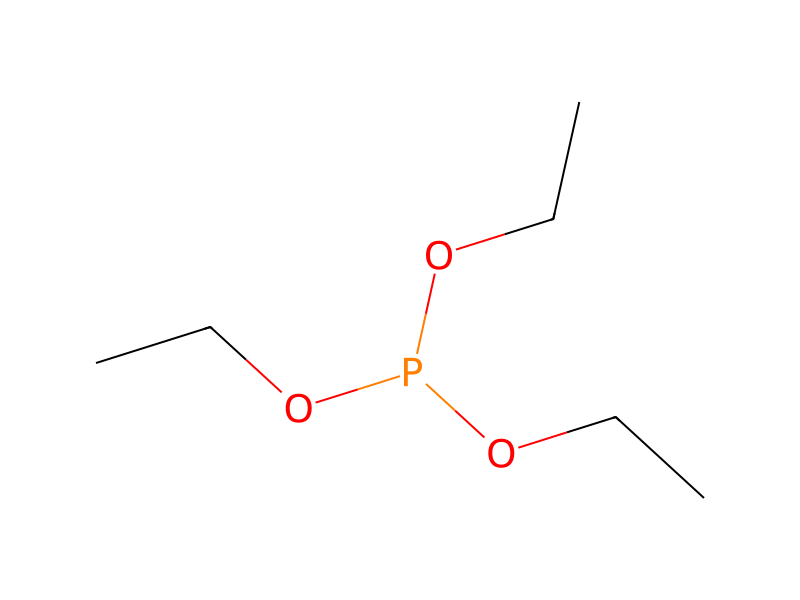

Product 1

Reagents, catalysts & solvents 1

Procedure
4-bromobenzylbromide (10.0 g, 40.0 mmol) was dissolved in triethylphosphite (8.4 mL, 48.0 mmol) under a nitrogen atmosphere, and the reaction solution was refluxed and stirred for 24 hours. The reaction solution was passed through a silica gel column by using hexane-ethylacetate 7:3 as an eluant. After the solvent was removed, the residue material was dried in vacuum to thereby obtain pale yellow oil (10.0 g, yield: 81%).
Workup
- temperaturethe reaction solution was refluxed
- customAfter the solvent was removed
- customthe residue material was dried in vacuum
Sources & evidence
- ORD record
- ord-a845bd873afd417ca5bab28df7d10d1d
- Source dataset
- uspto-grants-2013_07
- Patent number
- US08476474B2
Reaction notes
Loading…