Triethyl phosphite → Diethyl 4-nitrobenzylphosphonate
Reaction equation

Br[CH2:2][C:3]1[CH:8]=[CH:7][C:6]([N+:9]([O-:11])=[O:10])=[CH:5][CH:4]=1.[P:12]([O:19]CC)([O:16][CH2:17][CH3:18])[O:13][CH2:14][CH3:15]>>[N+:9]([C:6]1[CH:7]=[CH:8][C:3]([CH2:2][P:12](=[O:19])([O:16][CH2:17][CH3:18])[O:13][CH2:14][CH3:15])=[CH:4][CH:5]=1)([O-:11])=[O:10]Participants
3
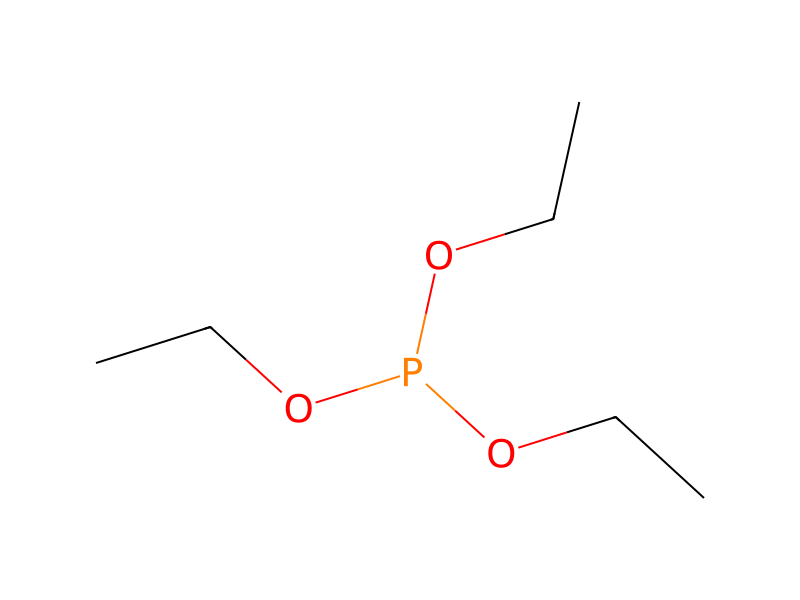


Conditions
- Temperature
- 110 °C
Procedure
Into a 250-mL round-bottom flask, was placed 1-(bromomethyl)-4-nitrobenzene (15 g, 69.77 mmol, 1.00 equiv), triethyl phosphite (70 mL). The resulting solution was stirred for 2 h at 110° C. in an oil bath. The resulting mixture was concentrated under vacuum. The residue was applied onto a silica gel column with ethyl acetate/petroleum ether (1:10-1:1). This resulted in 17 g (89%) of the title compound as a yellow oil.
Workup
- customInto a 250-mL round-bottom flask, was placed
- concentrationThe resulting mixture was concentrated under vacuum
Sources & evidence
- ORD record
- ord-d424663ee781470495ffa60bf9c771e2
- Source dataset
- uspto-grants-2013_09
- Patent number
- US08541448B2
Reaction notes
Loading…