Ammonium Chloride → 4-[1,3]Dioxolan-2-yl-2-fluorophenol
Reaction equation

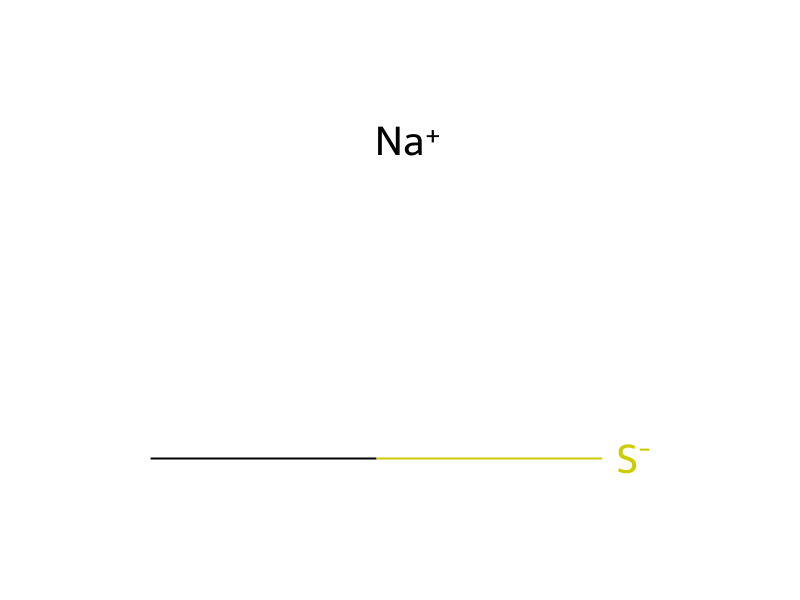
[F:1][C:2]1[CH:3]=[C:4]([CH:10]2[O:14][CH2:13][CH2:12][O:11]2)[CH:5]=[CH:6][C:7]=1[O:8]C.C[S-].[Na+].[Cl-].[NH4+]>CN(C)C=O>[O:11]1[CH2:12][CH2:13][O:14][CH:10]1[C:4]1[CH:5]=[CH:6][C:7]([OH:8])=[C:2]([F:1])[CH:3]=1Participants
5




Procedure
A solution of 2-(3-Fluoro-4-methoxy-phenyl)-[1,3]-dioxolane (250 mg, 1.26 mmol) and Sodium thiomethoxide (106 mg, 1.51 mmol) in dry N,N-dimethylformamide (3.5 mL) was heated at 100° C. under nitrogen for 4 hours. Then a saturated solution of ammonium chloride (15 mL) was added and the aqueous layer extracted with methylene chloride (4×10 mL). The combined organic layers were dried (Na2SO4), filtered and concentrated under vacuum. The residue was chromatographed (silica gel, hexanes/ethyl acetate 7:3) to produce 4-[1,3]dioxolan-2-yl-2-fluoro-phenol as a pale brown oil (120 mg, 52%). 1H-NMR (CDCl3, 200.15 MHz): δ 7.24–7.01 (m, 2H), 6.88 (t, 1H, J=8.4), 6.07 (sa, 1H), 5.71 (s, 1H), 4.13–3.95 (m, 4H).
Workup
- extractionthe aqueous layer extracted with methylene chloride (4×10 mL)
- dry with materialThe combined organic layers were dried (Na2SO4)
- filtrationfiltered
- concentrationconcentrated under vacuum
- customThe residue was chromatographed (silica gel, hexanes/ethyl acetate 7:3)
Sources & evidence
- ORD record
- ord-704ec88e0da242b7bff65faacc4c0c49
- Source dataset
- uspto-grants-2007_03
- Patent number
- US07192982B2
Reaction notes
Loading…