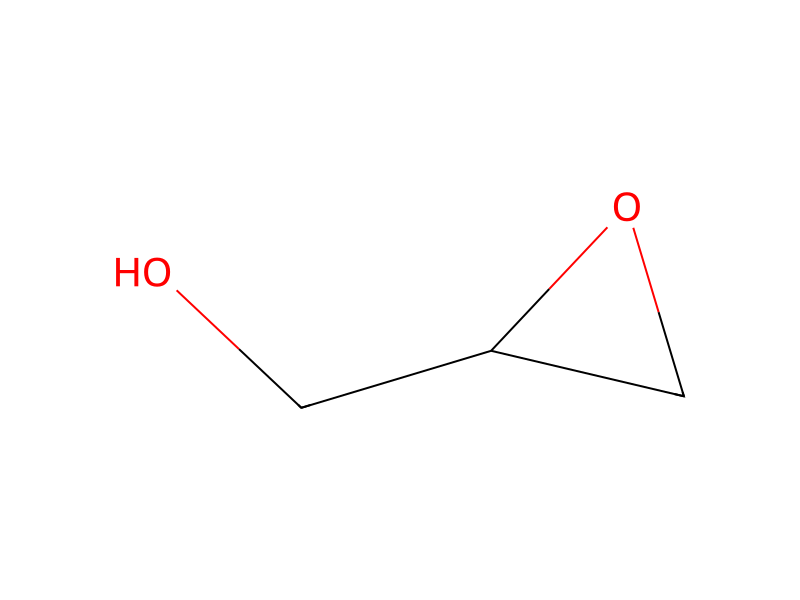
Glycidol → HCID 21390341, compound
Reaction equation

[OH-].[K+].[CH2:3]([N:10]1[C:20]2[C:15](=[C:16]([OH:21])[CH:17]=[CH:18][CH:19]=2)[CH2:14][CH2:13][C:11]1=[O:12])[C:4]1[CH:9]=[CH:8][CH:7]=[CH:6][CH:5]=1.[CH2:22]1[O:24][CH:23]1[CH2:25][OH:26]>CO>[CH2:3]([N:10]1[C:20]2[C:15](=[C:16]([O:21][CH2:22][CH:23]([OH:24])[CH2:25][OH:26])[CH:17]=[CH:18][CH:19]=2)[CH2:14][CH2:13][C:11]1=[O:12])[C:4]1[CH:5]=[CH:6][CH:7]=[CH:8][CH:9]=1Participants
5
Reactant 3


Product 1

Reagents, catalysts & solvents 1

Procedure
0.7 g of potassium hydroxide was dissolved in 30 ml of methanol, and 2.5 g of 1-benzyl-5-hydroxy-3,4-dihydrocarbostyril and 0.9 g of glycidol were added to the resulting solution followed by refluxing the mixture for 4 hours. After the mixture was concentrated to dryness, the residue was extracted with 50 ml of chloroform, and the extract was washed with a 5% aqueous potassium hydroxide and then water and then dried over anhydrous sodium sulfate. The chloroform was then removed by distillation and the resulting residue was recrystallized from ethyl acetate to give 1.4 g of 1-benzyl-5-(2,3-dihydroxy)propoxy-3,4-dihydrocarbostyril as colorless needle-like crystals having a melting point of 154° - 155° C.
Workup
- temperatureby refluxing the mixture for 4 hours
- concentrationAfter the mixture was concentrated to dryness
- extractionthe residue was extracted with 50 ml of chloroform
- washthe extract was washed with a 5% aqueous potassium hydroxide
- dry with materialwater and then dried over anhydrous sodium sulfate
- customThe chloroform was then removed by distillation
- customthe resulting residue was recrystallized from ethyl acetate
Sources & evidence
- ORD record
- ord-71efd7ec4eb94ab9a61947819fd02740
- Source dataset
- uspto-grants-1977_12
- Patent number
- US04065456
Reaction notes
Loading…