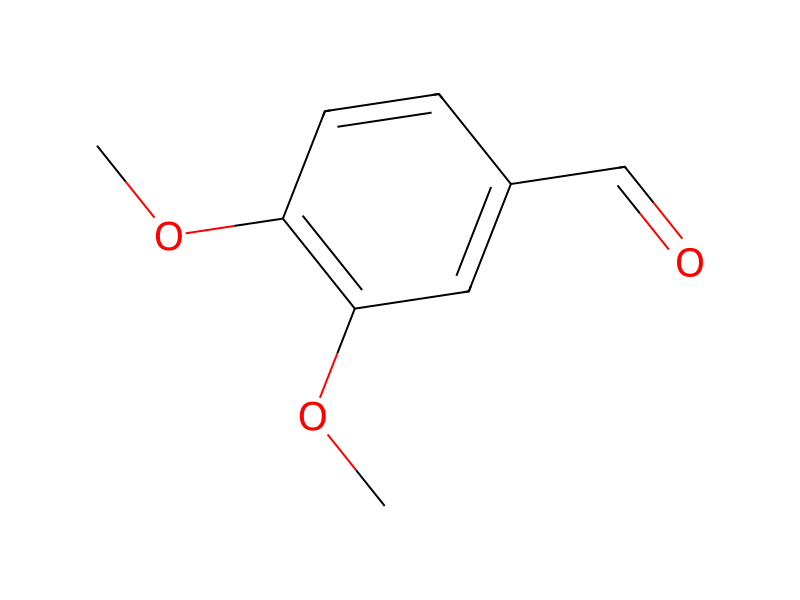
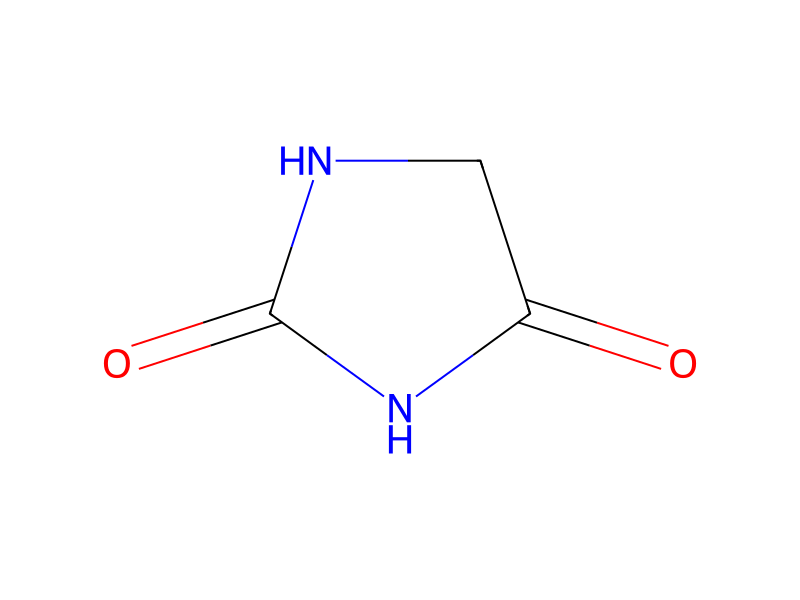
Veratraldehyde → 5-[(3,4-Dimethoxyphenyl)methylidene]imidazolidine-2,4-dione
Reaction equation

[CH:1](=O)[C:2]1[CH:11]=[CH:10][C:7]([O:8][CH3:9])=[C:4]([O:5][CH3:6])[CH:3]=1.[NH:13]1[CH2:19][C:17](=[O:18])[NH:16][C:14]1=[O:15].C([O-])(=O)C.[Na+]>C(OC(=O)C)(=O)C>[CH3:6][O:5][C:4]1[CH:3]=[C:2]([CH:11]=[CH:10][C:7]=1[O:8][CH3:9])[CH:1]=[C:19]1[NH:13][C:14](=[O:15])[NH:16][C:17]1=[O:18]Participants
5
Reactant 3

Product 1

Reagents, catalysts & solvents 1

Procedure
It was previously reported by Deulofeu and Mendivelzua, Z. physiol, Chem. 219, 233 (1933) that the condensation of veratraldehyde (3,4-dimethoxybenzaldehyde) with hydantoin in acetic anhydride in the presence of fused anhydrous sodium acetate gave 5-(3',4'-dimethoxybenzal) hydantoin. We have now found, however, that this reaction leads to the formation of a corresponding acetylated product.
Sources & evidence
- ORD record
- ord-4f522d3df67744e4925257bcccc799b9
- Source dataset
- uspto-grants-1977_12
- Patent number
- US04065570
Reaction notes
Loading…