Potassium Hydroxide → 5-(2,4-dichlorophenoxy)benzo-2,1,3-oxadiazole N-oxide
Reaction equation

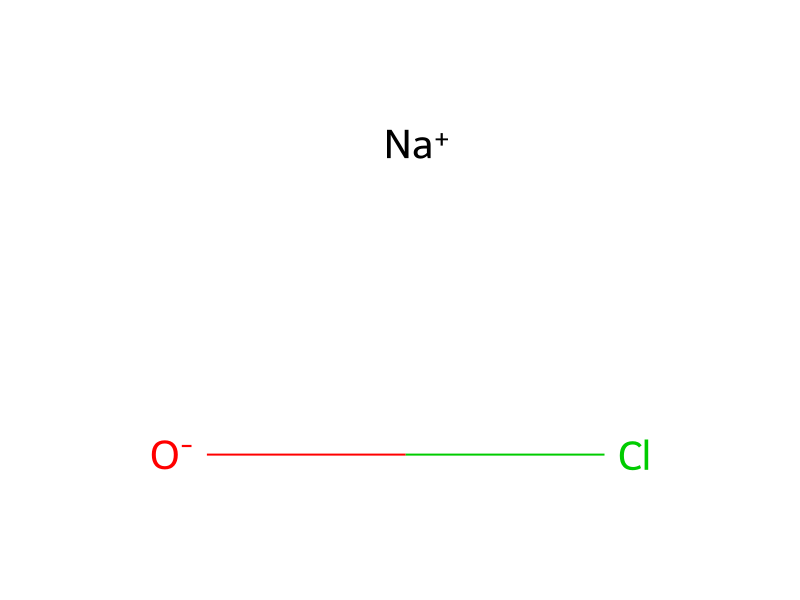
[N+:1]([C:4]1[CH:10]=[CH:9][C:8]([O:11][C:12]2[CH:17]=[CH:16][C:15]([Cl:18])=[CH:14][C:13]=2[Cl:19])=[CH:7][C:5]=1[NH2:6])([O-:3])=[O:2].[OH-].[K+].Cl[O-].[Na+]>C(O)C.CCOCC>[Cl:19][C:13]1[CH:14]=[C:15]([Cl:18])[CH:16]=[CH:17][C:12]=1[O:11][C:8]1[CH:9]=[CH:10][C:4]2=[N+:1]([O-:3])[O:2][N:6]=[C:5]2[CH:7]=1Participants
6





Procedure
2-Nitro-5-(2,4-dichlorophenoxy)aniline (1.6 g, 5.4 mmol) is dissolved in a solution of potassium hydroxide (0.33 g, 5.9 mmol) in ~150 ml of ethanol. The mixture is cooled to -5°, and sodium hypochlorite (17 ml of 5.3% solution, 0.9 g, 11.8 mmol) is added dropwise over 20 minutes. The reaction is stirred at RT overnight, then cooled to 10° and ~2 ml of sodium hypochlorite is added. One hour later, the reaction is stripped. The residue is taken up in ether, washed with water, dried, stripped and purified by prep. TLC (10% ethyl acetate/hexane) to yield 5-(2,4-dichlorophenoxy)benzo-2,1,3-oxadiazole N-oxide, m.p. 92°-93°.
Workup
- temperatureThe mixture is cooled to -5°
- temperaturecooled to 10°
- customOne hour
- washwashed with water
- customdried
- custompurified by prep
Sources & evidence
- ORD record
- ord-09a8af165c9e45b091dbf096e822115f
- Source dataset
- uspto-grants-1985_10
- Patent number
- US04544400
Reaction notes
Loading…