Pyridine → Methyl 5-sulfanylidenepyrrolidine-3-carboxylate
Reaction equation

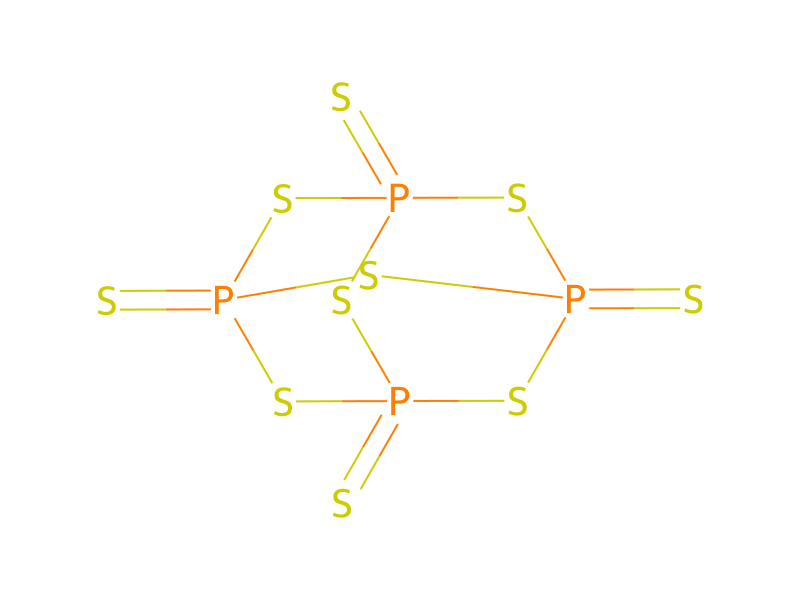
[CH3:1][O:2][C:3]([CH:5]1[CH2:9][NH:8][C:7](=O)[CH2:6]1)=[O:4].P12(SP3(SP(SP(S3)(S1)=S)(=S)S2)=S)=[S:12].N1C=CC=CC=1>C1(C)C=CC=CC=1>[CH3:1][O:2][C:3]([CH:5]1[CH2:9][NH:8][C:7](=[S:12])[CH2:6]1)=[O:4]Participants
5
Reactant 3


Product 1

Reagents, catalysts & solvents 1

Procedure
10 g of 4-methoxycarbonyl-pyrrolidine-2-one II (prepared as described in P. L. Paytash, E. Sparrow and I. C. Gathe, J. Am. Chem. Soc. 72, 1415 (1950)) were dissolved in 170 ml of absolute toluene under the influence of heat. 16.7 g of P4S10 ×4 pyridine (Riedel de Haen, Hanover, West Germany) and 42 g of kieselguhr (as a filtration aid) were then added in succession. The mixture was subsequently warmed at 90°-100° C. for 3 hours, while stirring and under nitrogen as an inert gas. The solid was then filtered off with suction and the residue on the filter was rinsed with hot toluene. The filtrate was concentrated in vacuo.
Workup
- temperatureof heat
- temperatureThe mixture was subsequently warmed at 90°-100° C. for 3 hours
- filtrationThe solid was then filtered off with suction
- washthe residue on the filter was rinsed with hot toluene
- concentrationThe filtrate was concentrated in vacuo
Sources & evidence
- ORD record
- ord-1822b2fc8fe14a4c9b566905c18d4794
- Source dataset
- uspto-grants-1985_10
- Patent number
- US04548936
Reaction notes
Loading…