Chloroform → 2-Hydroxy-5-phenoxybenzaldehyde
Reaction equation

[O:1]([C:8]1[CH:13]=[CH:12][C:11]([OH:14])=[CH:10][CH:9]=1)[C:2]1[CH:7]=[CH:6][CH:5]=[CH:4][CH:3]=1.[OH-].[Na+].C(Cl)(Cl)Cl.O.[CH2:22]([OH:24])C>>[O:1]([C:8]1[CH:9]=[CH:10][C:11]([OH:14])=[C:12]([CH:13]=1)[CH:22]=[O:24])[C:2]1[CH:7]=[CH:6][CH:5]=[CH:4][CH:3]=1Participants



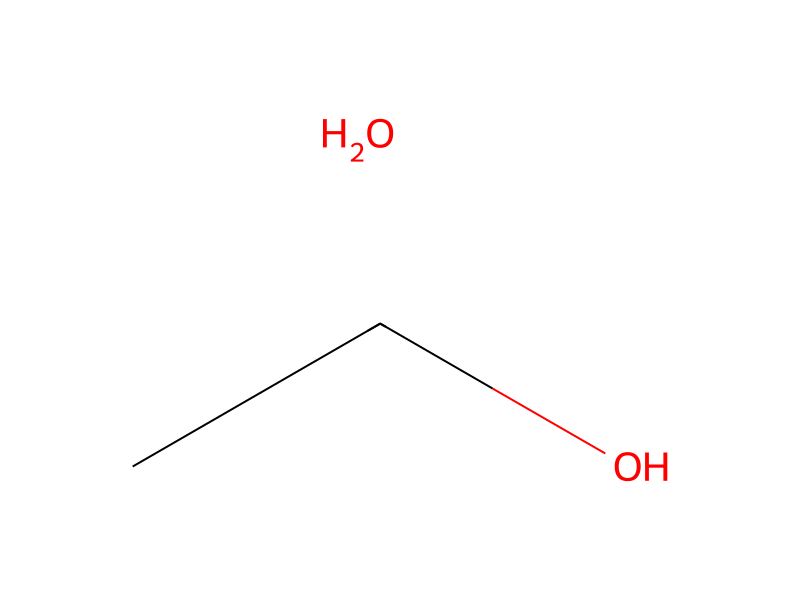

Conditions
- Temperature
- 70 °C
Procedure
The starting material is prepared as follows: 4-Phenoxyphenol (20.0 g, 107 mmol) and sodium hydroxide (3.8 g, 845 mmol) are dissolved in a water/ethanol (130 ml/26 ml) mixture and heated at 70° C. To this reaction mixture is added chloroform (24.6 g, 215 mmol) dropwise over 45 minutes, and heating is continued for 3 hours. The mixture is cooled to room temperature, and then evaporated. The aqueous phase is acidified with conc. HCl to pH 1-3, and extracted twice with ether. The extracts are dried (MgSO4) and evaporated. Silica gel chromatography (10% ethyl acetate/hexane) of the residual oil yields 5-phenoxy-2-hydroxybenzaldehyde as a yellow solid, m.p. 54°-55° C., which is converted to 3-(N-hydroxyaminomethyl)-6-phenoxy-2H-1-benzopyran as described under (a).
Workup
- customThe starting material is prepared
- temperatureheating
- temperatureThe mixture is cooled to room temperature
- customevaporated
- extractionextracted twice with ether
- dry with materialThe extracts are dried (MgSO4)
- customevaporated
Sources & evidence
- ORD record
- ord-623b88feb2b944fa985d35f18dec9aac
- Source dataset
- uspto-grants-1992_10
- Patent number
- US05155130
Reaction notes
Loading…