Aluminum(III) Chloride → 5-(6-Chloro-pyrimidine-4-carbonyl)-1,3-dihydro-indol-2-one
Reaction equation

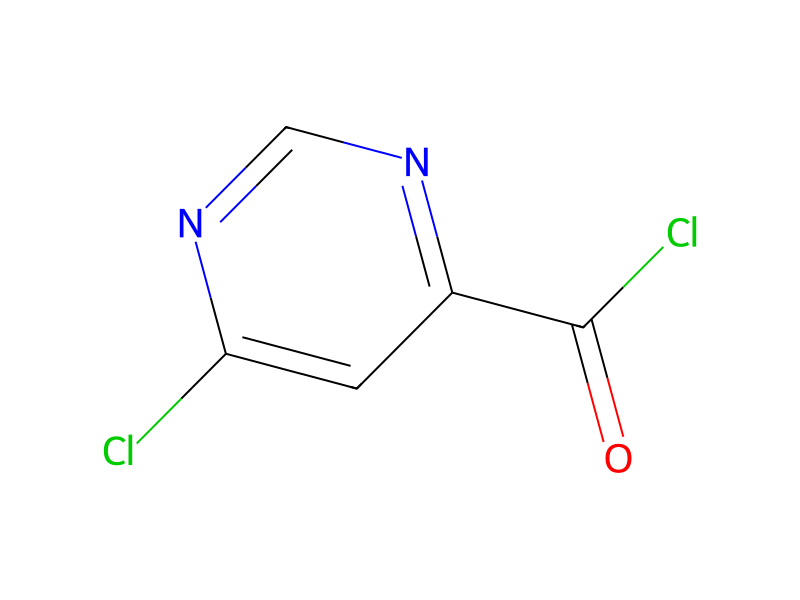
[Cl:1][C:2]1[N:7]=[CH:6][N:5]=[C:4]([C:8](Cl)=[O:9])[CH:3]=1.[O:11]=[C:12]1[CH:20]=[C:19]2[C:14]([CH:15]=[CH:16][CH:17]=[CH:18]2)=[N:13]1.[Cl-].[Cl-].[Cl-].[Al+3]>>[Cl:1][C:2]1[N:7]=[CH:6][N:5]=[C:4]([C:8]([C:17]2[CH:18]=[C:19]3[C:14](=[CH:15][CH:16]=2)[NH:13][C:12](=[O:11])[CH2:20]3)=[O:9])[CH:3]=1Participants
4



Procedure
3.93 g (22.2 mmol) 6-chloropyrimidine-4-carboxylic acid chloride, 2.96 g (22.2 mmol) 2-oxoindole and 14.8 g (111 mmol) aluminium trichloride were combined and heated for 3 h to 130° C. Then the mixture was mixed with ice water and extracted twice with EtOAc. The organic phases were combined, dried and evaporated down. The residue was triturated in DIPE, suction filtered, washed and dried.
Workup
- temperatureheated for 3 h to 130° C
- extractionextracted twice with EtOAc
- customdried
- customevaporated down
- customThe residue was triturated in DIPE, suction
- filtrationfiltered
- washwashed
- customdried
Sources & evidence
- ORD record
- ord-1e386c55299543d7bb46a334762f72bd
- Source dataset
- uspto-grants-2014_01
- Patent number
- US08629137B2
Reaction notes
Loading…