Chlorosulfonic acid → HCID 58152678, compound
Reaction equation

[Cl:1][S:2]([OH:5])(=O)=[O:3].[F:6][CH:7]([F:21])[C:8]1[N:12]=[CH:11][N:10]([C:13]2[CH:18]=[CH:17][C:16]([CH3:19])=[CH:15][C:14]=2[CH3:20])[N:9]=1>C(Cl)Cl>[F:21][CH:7]([F:6])[C:8]1[N:12]=[CH:11][N:10]([C:13]2[C:14]([CH3:20])=[CH:15][C:16]([CH3:19])=[C:17]([S:2]([Cl:1])(=[O:5])=[O:3])[CH:18]=2)[N:9]=1Participants
4
Reactant 2
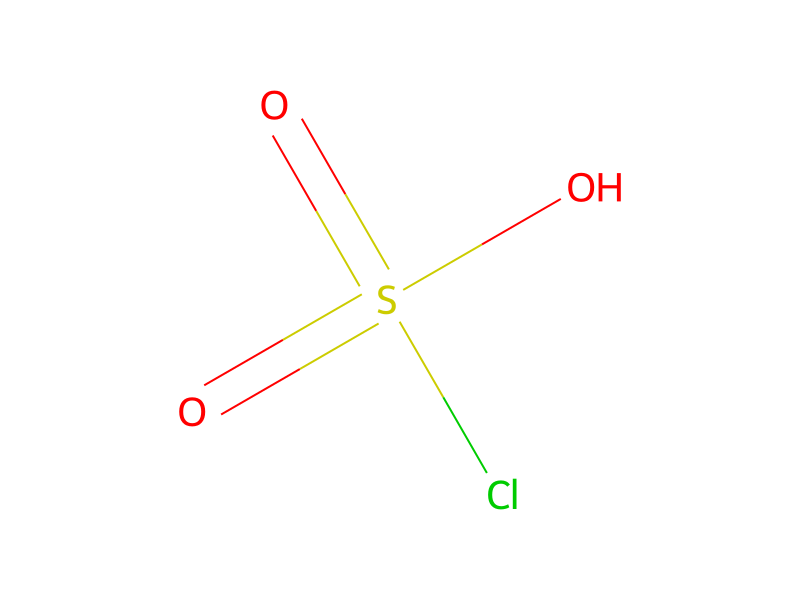

Product 1

Reagents, catalysts & solvents 1

Conditions
- Temperature
- 45 °C
Procedure
Under a nitrogen atmosphere, 14.2 g of chlorosulphonic acid are introduced and are admixed at room temperature, in portions, with 4 g of 3-(difluoromethyl)-1-(2,4-dimethylphenyl)-1H-1,2,4-triazole. The exothermic reaction raises the temperature of the mixture to around 45° C. The mixture is subsequently stirred at 70° C. for 5 hours and then cooled, and diluted with 20 ml of methylene chloride. The mixture is added with stirring to 40 g of ice and then the phases are separated and extracted with twice 20 ml of methylene chloride. The combined organic phases are concentrated on a rotary evaporator. This gives 4.5 g of brown oil. This oil is chromatographed using CH2Cl2. A white solid (2.9 g; 52% of theory) is isolated.
Workup
- customThe exothermic reaction
- temperaturecooled
- additionThe mixture is added
- customthe phases are separated
- extractionextracted with twice 20 ml of methylene chloride
- concentrationThe combined organic phases are concentrated on a rotary evaporator
- customThis oil is chromatographed
- customA white solid (2.9 g; 52% of theory) is isolated
Sources & evidence
- ORD record
- ord-80b0812e64fb49f4a68f3ec1f5435909
- Source dataset
- uspto-grants-2014_01
- Patent number
- US08632767B2
Reaction notes
Loading…