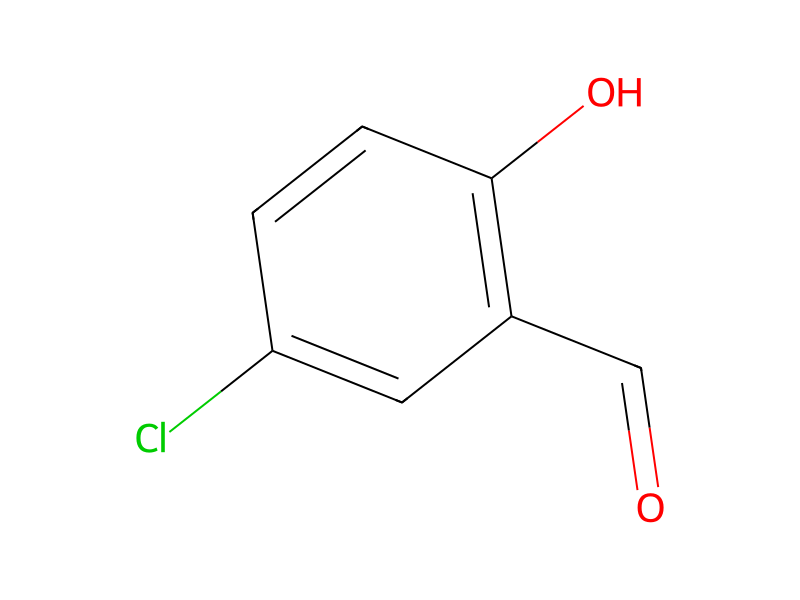
5-Chloro-salicylaldehyde → HCID 136203559, compound
Reaction equation

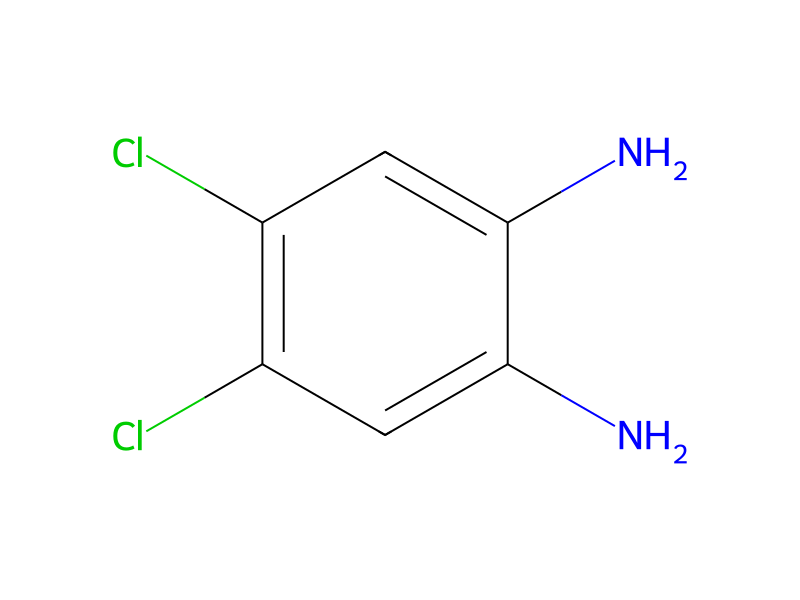
[Cl:1][C:2]1[C:7]([Cl:8])=[CH:6][C:5]([NH2:9])=[C:4]([NH2:10])[CH:3]=1.[Cl:11][C:12]1[CH:19]=[C:16]([CH:17]=O)[C:15]([OH:20])=[CH:14][CH:13]=1>C(O)C>[OH:20][C:15]1[CH:14]=[CH:13][C:12]([Cl:11])=[CH:19][C:16]=1[CH:17]=[N:10][C:4]1[CH:3]=[C:2]([Cl:1])[C:7]([Cl:8])=[CH:6][C:5]=1[N:9]=[CH:17][C:16]1[CH:19]=[C:12]([Cl:11])[CH:13]=[CH:14][C:15]=1[OH:20]Participants
4
Reactant 2
Product 1

Reagents, catalysts & solvents 1

Procedure
A slurry of 177.0 g (1.0 mole) of 4,5-dichloro-o-phenylenediamine in 750 ml. ethanol was added to a warm near solution of 313.1 g (2.0 mole) of 5-chlorosalicylaldehyde in 2250 ml. of ethanol with mechanical stirring in a 5000 ml, 3-neck flask. A brown solution formed, and a light brown solid began to precipitate after 10-15 minutes. Stirring at room temperature was continued for six days. Thin-layer chromatography indicated that the reaction was substantially complete at the end of six days.
Workup
- customA brown solution formed
- customto precipitate after 10-15 minutes
- customwas substantially complete at the end of six days
Sources & evidence
- ORD record
- ord-1e7090a8e7584e4bafd25885b458f993
- Source dataset
- uspto-grants-1989_12
- Patent number
- US04886781
Reaction notes
Loading…