Benzil → 6-methyl-2,3-diphenylquinoxaline
Reaction equation

[NH2:1][C:2]1[CH:7]=[CH:6][C:5]([CH3:8])=[CH:4][C:3]=1[NH2:9].[C:10]1([C:16]([C:18]([C:20]2[CH:25]=[CH:24][CH:23]=[CH:22][CH:21]=2)=O)=O)[CH:15]=[CH:14][CH:13]=[CH:12][CH:11]=1>C(O)(=O)C>[CH3:8][C:5]1[CH:4]=[C:3]2[C:2](=[CH:7][CH:6]=1)[N:1]=[C:18]([C:20]1[CH:25]=[CH:24][CH:23]=[CH:22][CH:21]=1)[C:16]([C:10]1[CH:15]=[CH:14][CH:13]=[CH:12][CH:11]=1)=[N:9]2Participants
4
Reactant 2

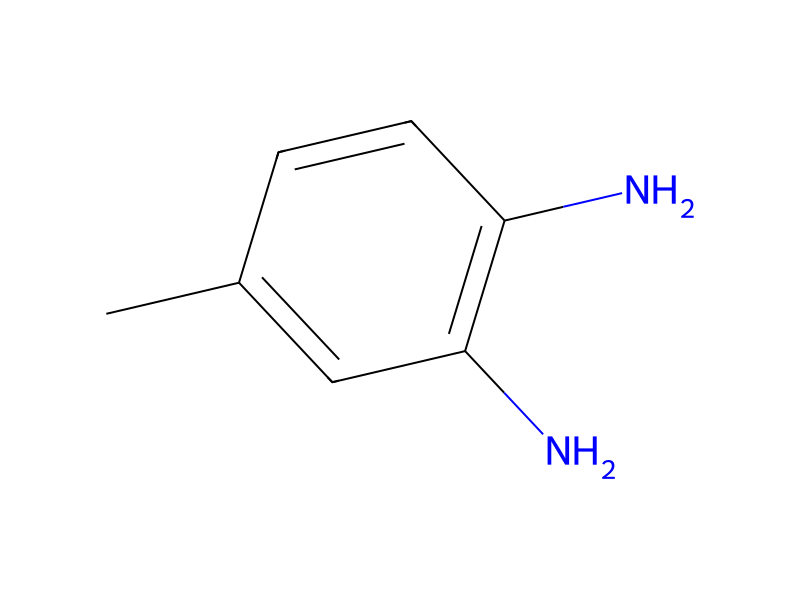
Product 1

Reagents, catalysts & solvents 1

Procedure
1,2-Diamino-4-methylbenzene (25.0 g, 0.20 mol) and benzil (43 g, 0.20 mol) were refluxed in ethanoic acid (250 ml) overnight. The solvent was evaporated in vacuo and the black residue recrystallised three times from ethanol to give pale brown crystals of 6-methyl-2,3-diphenylquinoxaline, 39.6 g, 65% (m.pt. 114.5-116° C. (lit.iv 115-116° C.)). 1H NMR (CDCl3, 300 MHz) δ 8.08 (d, J 8.4 Hz, 1H, Hs of quinoxaline), 7.97 (bs, 1H, Hs of quinoxaline), 7.60 (d of d, J 8.4 Hz, J 1.8 Hz, 1H, Hs of quinoxaline), 7.50-7.58 (m, 4H, phenyl rings), 7.30-7.38 (m, 6H, phenyl rings), 2.62 (s, 3H, Ch3).
Workup
- customThe solvent was evaporated in vacuo
- customthe black residue recrystallised three times from ethanol
Sources & evidence
- ORD record
- ord-2015a74147a94ad78b6ceb205882f9d5
- Source dataset
- uspto-grants-2003_11
- Patent number
- US06642332B1
Reaction notes
Loading…