Ethylene → 2-Vinyl-6-methoxynaphthalene
Reaction equation

Br[C:2]1[CH:11]=[CH:10][C:9]2[C:4](=[CH:5][CH:6]=[C:7]([O:12][CH3:13])[CH:8]=2)[CH:3]=1.[CH2:14](N(CC)CC)[CH3:15].C=C.[OH-].[Na+].Br.C(N(CC)CC)C>Cl[Pd]Cl.C(C(CC)=O)C>[CH3:13][O:12][C:7]1[CH:8]=[C:9]2[C:4](=[CH:5][CH:6]=1)[CH:3]=[C:2]([CH:14]=[CH2:15])[CH:11]=[CH:10]2Participants




Conditions
- Temperature
- 95 °C
Procedure
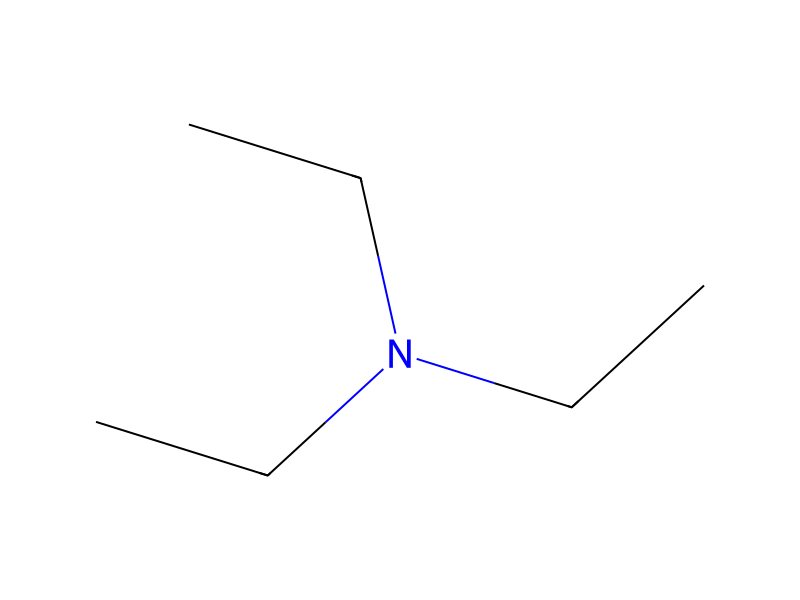
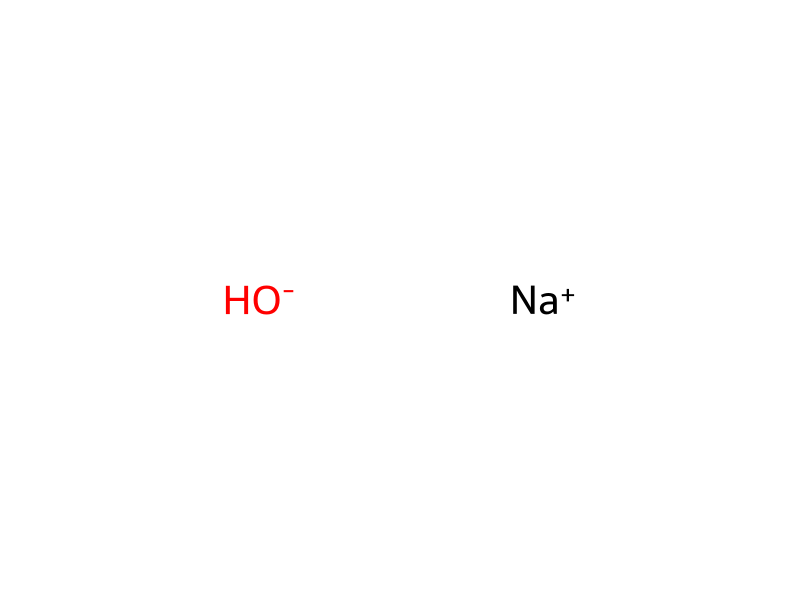
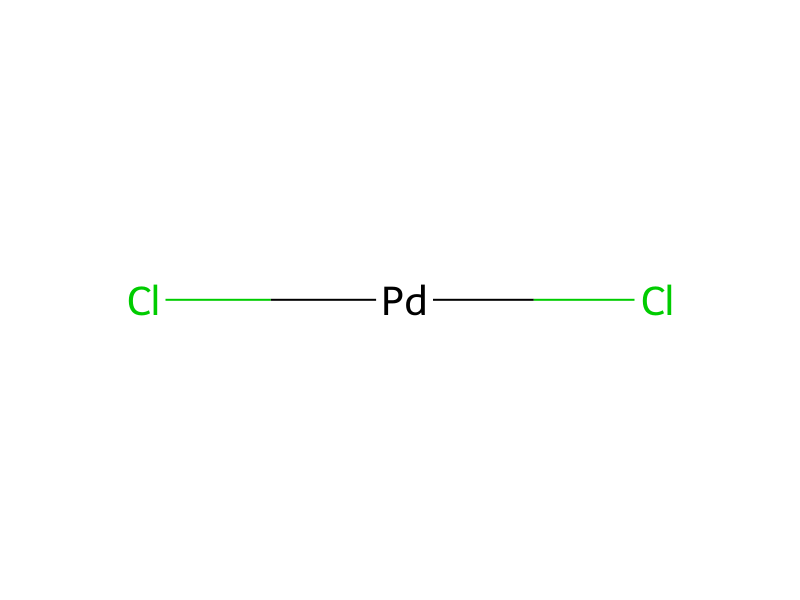
To a 5-gallon stainless steel electrically heated reactor is added 1,485 grams (6.26 mol) of 2-bromo-6-methoxynaphthalene (BMN) (produced as in Example 7 hereof, added as a dry powder through a 2" opening in the reactor head), 672 grams (6.64 mol) of triethylamine, 0.56 grams of PdCl2 (3.2 mmol) and 6.2 grams of NMDP (19 mmol). The reactor is purged three times with nitrogen (50 psig) and then three times with ethylene (50 psig). The reactor is charged with ethylene (about 300 psig) and then warmed at 95° C. Ethylene pressure in the reactor is raised to about 550 psig after reaching reaction temperature. When the reaction is completed, the reaction mixture is cooled to below 50° C. and the ethylene is vented. Diethyl ketone (3,835 g) is added to the reaction mixture. Aqueous sodium hydroxide (24.8 wt %) is then added to the reaction mixture to neutralize the triethylamine hydrobromide salt formed during the reaction. The aqueous phase is removed, as well as possible at this point, from the reactor. The reaction mixture is filtered using a medium porosity 3-liter sintered glass funnel and any further aqueous phase that separates is removed. The volatile organics (acetonitrile, diethyl ketone, triethylamine) are removed at reduced pressure (1 mm Hg, 45° C.) to give 6-methoxy-2-vinylnaphthalene as a yellow solid.
Workup
- customproduced as in Example 7
- additionadded as a dry powder through a 2"
- customThe reactor is purged three times with nitrogen (50 psig)
- additionThe reactor is charged with ethylene (about 300 psig)
- temperatureEthylene pressure in the reactor is raised to about 550 psig
- customreaction temperature
- temperaturethe reaction mixture is cooled to below 50° C.
- customformed during the reaction
- customThe aqueous phase is removed
- filtrationThe reaction mixture is filtered
- customany further aqueous phase that separates is removed
- customThe volatile organics (acetonitrile, diethyl ketone, triethylamine) are removed at reduced pressure (1 mm Hg, 45° C.)
Sources & evidence
- ORD record
- ord-ed75f97fb4d04c68b12c8d5500858c77
- Source dataset
- uspto-grants-1998_08
- Patent number
- US05792886
Reaction notes
Loading…