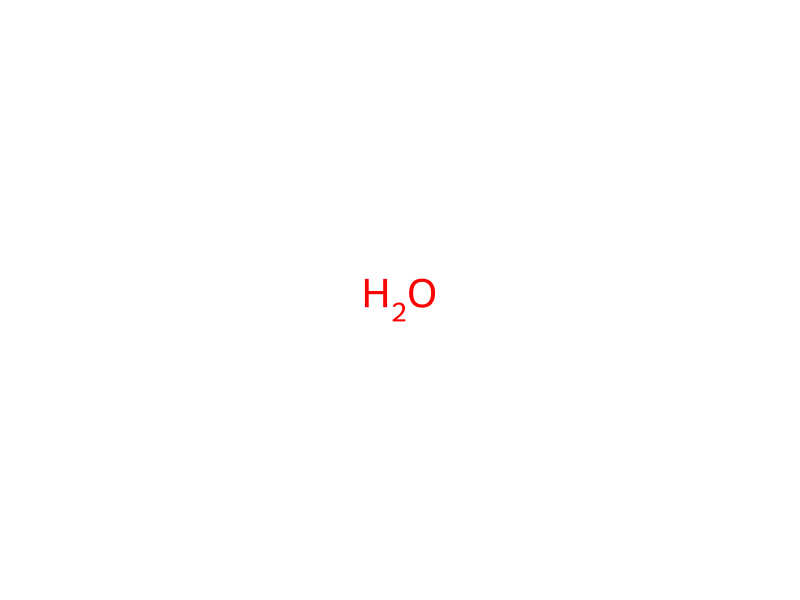
Water → 2-(2-fluoro-4-methoxyphenyl)-4,5,6,7-tetrahydro-1H-indazol-3-one
Reaction equation

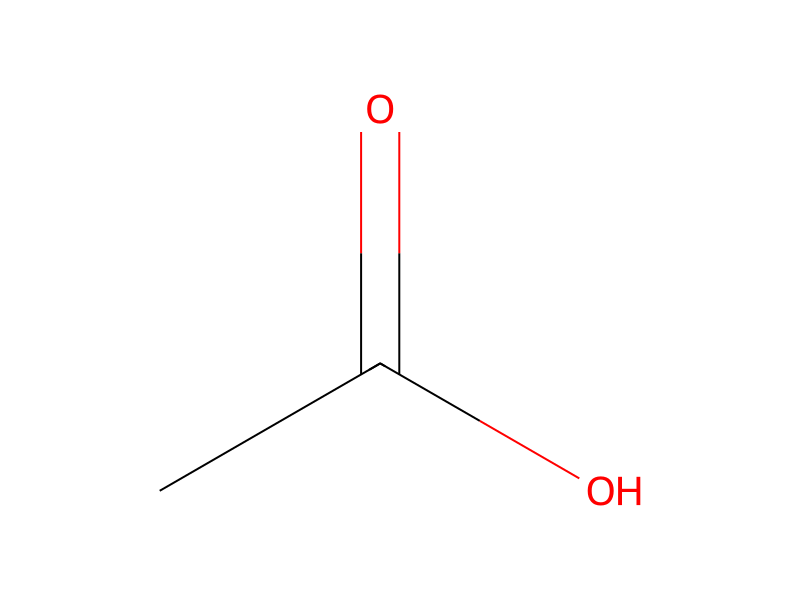
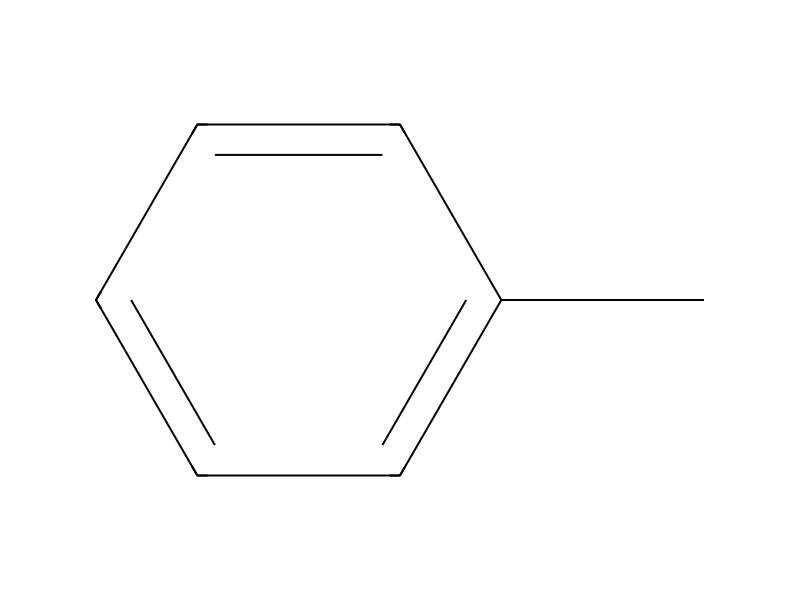
[F:1][C:2]1[CH:7]=[C:6]([O:8][CH3:9])[CH:5]=[CH:4][C:3]=1[NH:10][NH2:11].CC[O:14][C:15]([CH:17]1[C:22](=O)[CH2:21][CH2:20][CH2:19][CH2:18]1)=O.O>C1(C)C=CC=CC=1.C(O)(=O)C>[F:1][C:2]1[CH:7]=[C:6]([O:8][CH3:9])[CH:5]=[CH:4][C:3]=1[N:10]1[C:15](=[O:14])[C:17]2[CH2:22][CH2:21][CH2:20][CH2:19][C:18]=2[NH:11]1Participants


Procedure
To a solution of 6.28 g (0.040 mole) of 2-fluoro-4-methoxyphenylhydrazine in 200 mL of toluene was added with stirring 6.82 g (0.040 mole) of ethyl 2-cyclohexanonecarboxylate. This mixture was heated at reflux under a nitrogen atmosphere while water was removed with a Dean-Stark trap. When all water had been removed, the reaction mixture was cooled, and the solvent was evaporated under reduced pressure, leaving a residue, which was then dissolved in acetic acid. This solution was heated at reflux for approximately sixteen hours, after which the solvent was evaporated under reduced pressure, leaving a residue. This residue was dissolved in toluene, which was also evaporated under reduced pressure. The residue was dissolved in ethyl acetate and placed on a silica gel column and eluted with ethyl acetate. An attempt to crystallize the product by dissolving it in diethyl ether after the ethyl acetate had been evaporated was unsuccessful. After the solvent had been evaporated from this product, it was again heated at reflux in acetic acid for 24 hours and allowed to cool to room temperature, where the solution stirred for an additional 48 hours. The solvent was evaporated under reduced pressure, leaving a residue weighing 4.32 g. Two additional fractions weighing 0.80 g and 2.75 g had been recovered by extracting the reaction mixture before the solvent was evaporated. The NMR spectrum of the residue showed it to be a mixture of 2-(2-fluoro-4-methoxyphenyl)-4,5,6,7-tetrahydro-1H-indazol-3-one and the 2-fluoro-4-methoxyphenylhydrazone of 2-cyclohexanonecarboxylic acid.
Workup
- temperatureThis mixture was heated
- customwas removed with a Dean-Stark trap
- customWhen all water had been removed
- temperaturethe reaction mixture was cooled
- customthe solvent was evaporated under reduced pressure
- customleaving a residue, which
- temperatureThis solution was heated
- temperatureat reflux for approximately sixteen hours
- customafter which the solvent was evaporated under reduced pressure
- customleaving a residue
- customwhich was also evaporated under reduced pressure
- dissolutionThe residue was dissolved in ethyl acetate
- washeluted with ethyl acetate
- customAn attempt to crystallize the product
- dissolutionby dissolving it in diethyl ether after the ethyl acetate
- customhad been evaporated
- customAfter the solvent had been evaporated from this product, it
- temperaturewas again heated
- temperatureat reflux in acetic acid for 24 hours
- customThe solvent was evaporated under reduced pressure
- customleaving a residue
- customhad been recovered
- extractionby extracting the reaction mixture before the solvent
- customwas evaporated
- additiona mixture of 2-(2-fluoro-4-methoxyphenyl)-4,5,6,7-tetrahydro-1H-indazol-3-one
Sources & evidence
- ORD record
- ord-9f80efb267f34302aa2e95b045c8b789
- Source dataset
- uspto-grants-1998_08
- Patent number
- US05798316
Reaction notes
Loading…