1,3-Propanediol → HCID 19751957, compound
Reaction equation

[N+:1]([C:4]1[C:5](Cl)=[C:6]([Cl:14])[CH:7]=[C:8]([N+:11]([O-:13])=[O:12])[C:9]=1Cl)([O-:3])=[O:2].[OH-:16].[K+].[CH2:18]([OH:22])[CH2:19][CH2:20][OH:21]>>[N+:1]([C:4]1[C:5]([O:16][CH2:18][CH2:19][CH2:20][OH:21])=[C:6]([Cl:14])[CH:7]=[C:8]([N+:11]([O-:13])=[O:12])[C:9]=1[O:21][CH2:20][CH2:19][CH2:18][OH:22])([O-:3])=[O:2]Participants
4
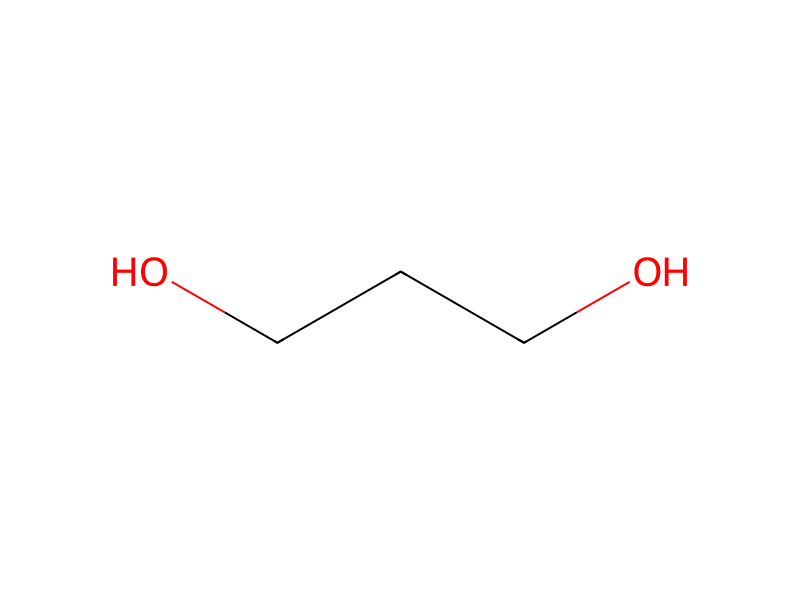



Conditions
- Temperature
- 85 °C
Procedure
1 mole (271.5 g) of 3,5-dinitro-1,2,4-trichlorobenzene was added to 700 ml of 1,3-propanediol at 85° C. 2 moles of powdered potassium hydroxide in 280 ml of 1,3-propanediol were added over 30 minutes. The reaction mixture was heated for 1 hour at 85° C. upon completion of the addition. After cooling, the expected product was filtered off, washed with water, and then dissolved in 1.5 liters of ethyl acetate which, after washing with water, was dried over sodium sulphate. After concentration to dryness, a precipitate was obtained which, after having been recrystallized from isopropyl ether, melted at 90° C.
Workup
- temperatureAfter cooling
- filtrationthe expected product was filtered off
- washwashed with water
- dissolutiondissolved in 1.5 liters of ethyl acetate which
- washafter washing with water
- dry with materialwas dried over sodium sulphate
- concentrationAfter concentration to dryness
- customa precipitate was obtained which
- customafter having been recrystallized from isopropyl ether, melted at 90° C.
Sources & evidence
- ORD record
- ord-3b4b95e6651843fba1a56b4854d076fe
- Source dataset
- uspto-grants-1993_07
- Patent number
- USRE034300
Reaction notes
Loading…