Acetic Anhydride → 1,3-Dipivaloyl-2-acetoxymethyl glycerol
Reaction equation

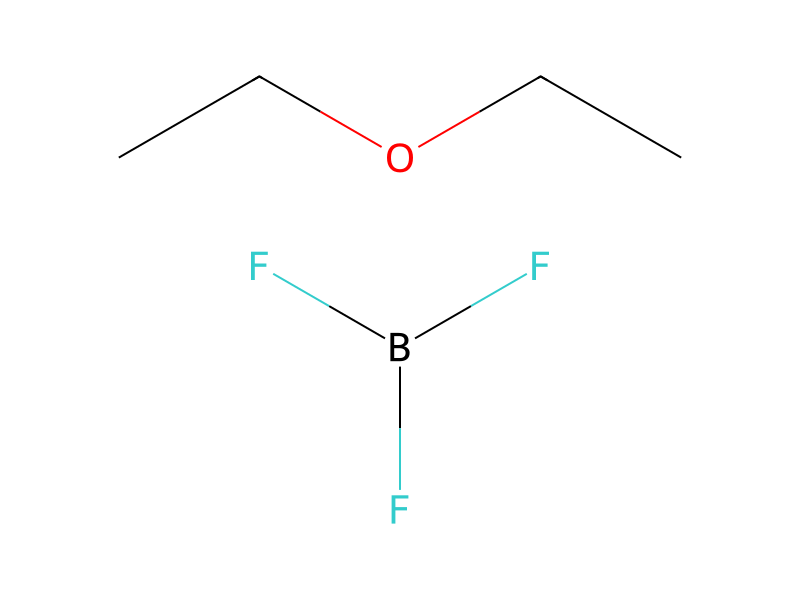
[C:1]([O:7][CH2:8][CH:9]([CH2:14][O:15][C:16](=[O:21])[C:17]([CH3:20])([CH3:19])[CH3:18])OCOC)(=[O:6])[C:2]([CH3:5])([CH3:4])[CH3:3].[C:22]([O:25][C:26](=[O:28])[CH3:27])(=[O:24])C.B(F)(F)F.CCOCC>C(Cl)Cl>[C:1]([O:7][CH2:8][CH:9]([CH2:14][O:15][C:16](=[O:21])[C:17]([CH3:20])([CH3:19])[CH3:18])[O:24][CH2:22][O:25][C:26](=[O:28])[CH3:27])(=[O:6])[C:2]([CH3:5])([CH3:4])[CH3:3]Participants
5
Reactant 3


Product 1

Reagents, catalysts & solvents 1

Conditions
- Temperature
- 0 °C
Procedure
50 g of 1,3-dipivaloyl-2-methoxymethyl glycerol, 150 ml of methylene chloride, and 17 ml of acetic anhydride was cooled to about -5° C. Then 0.3 ml of boron trifluoride etherate was added and the mixture was stirred for an additional 1 hr at about 0° C. then allowed to warm to 25° C. over an additional 1.5 hr. After this period, 100 ml saturated aqueous Na2Cl3 was added to the mixture followed by 100 ml CH2Cl2. After vigorous stirring for 5 min, the organic layer was separated and washed once with 100 ml H2O, once with aqueous NaCl, dried over anhydrous magnesium sulfate and concentrated in vacuo to afford 1,3-dipivaloyl-2-acetoxymethyl glycerol as a faintly colored oil.
Workup
- temperatureto warm to 25° C. over an additional 1.5 hr
- waitAfter this period
- stirringAfter vigorous stirring for 5 min
- customthe organic layer was separated
- washwashed once with 100 ml H2O, once with aqueous NaCl
- dry with materialdried over anhydrous magnesium sulfate
- concentrationconcentrated in vacuo
Sources & evidence
- ORD record
- ord-dbeb750e3a844d4aaa2776fe2a154fb8
- Source dataset
- uspto-grants-1993_07
- Patent number
- US05225590
Reaction notes
Loading…