Butanal → 2-Pentenal, 2-ethyl-4-methyl-
Reaction equation

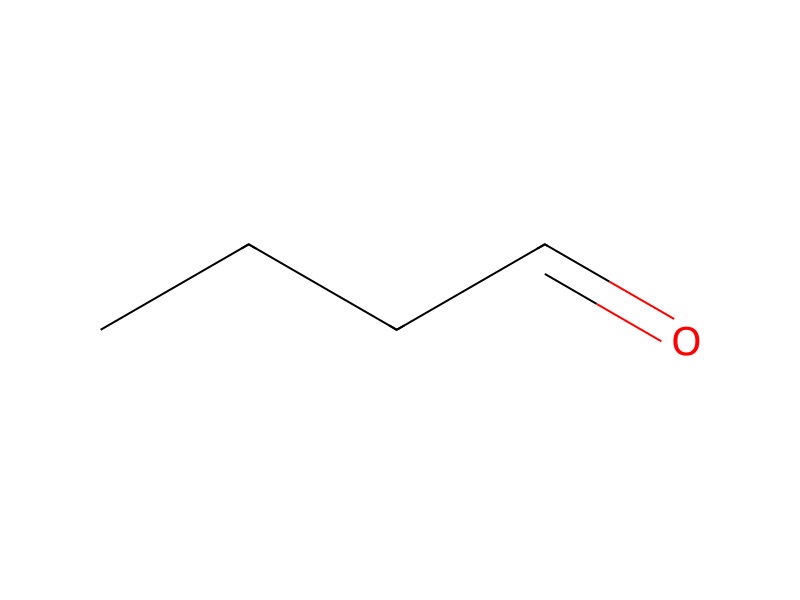
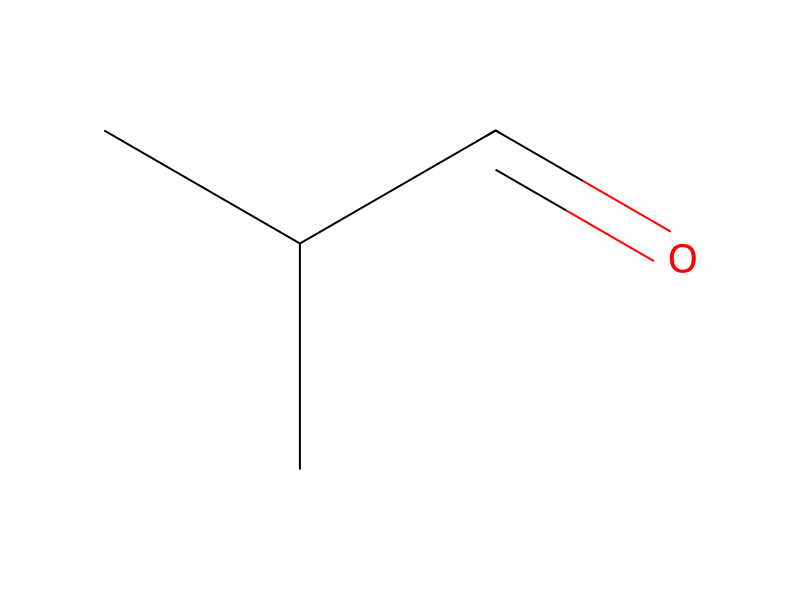
[CH:1](=[O:5])[CH2:2][CH2:3][CH3:4].[CH:6](=O)[CH:7]([CH3:9])[CH3:8]>O>[CH2:3]([C:2](=[CH:6][CH:7]([CH3:9])[CH3:8])[CH:1]=[O:5])[CH3:4]Participants

Reagents, catalysts & solvents 1

Procedure
Accordingly, it has been discovered that if water is added to the n-butyraldehyde feed to the distillation column in an amount effective to hydrolyze the isobutyraldehyde oligomers to the monomeric form during distillation, they can be stripped from the n-butyraldehyde, thereby reducing the amount of isobutyraldehyde which reacts to form 2-ethyl-4-methyl-pentenal during aldol condensation and subsequent hydrogenation of the 2-ethyl-4-methyl-pentenal to 2-ethyl-4-methyl pentanol during the hydrogenation stage. By this method the content of 2-ethyl-4-methyl-pentanol in the final product can be substantially reduced; typically from a range of from about 0.2 to about 0.4 wt. % without the water addition to less than 0.2 wt. %, preferably to within a range of from about 0.08 to about 0.1 wt. % with the water addition, based on 2-ethylhexanol. The degree of improvement will vary with the amount of water added, with increasing amounts of water tending to give increasing reductions in the amount of 2-ethyl-4-methyl-pentanol in the 2-ethylhexanol.
Workup
- distillationduring distillation, they
- customreacts
Sources & evidence
- ORD record
- ord-9e6099bae45e489dbe06bdc9b1ab5f64
- Source dataset
- uspto-grants-1993_07
- Patent number
- US05227544
Reaction notes
Loading…