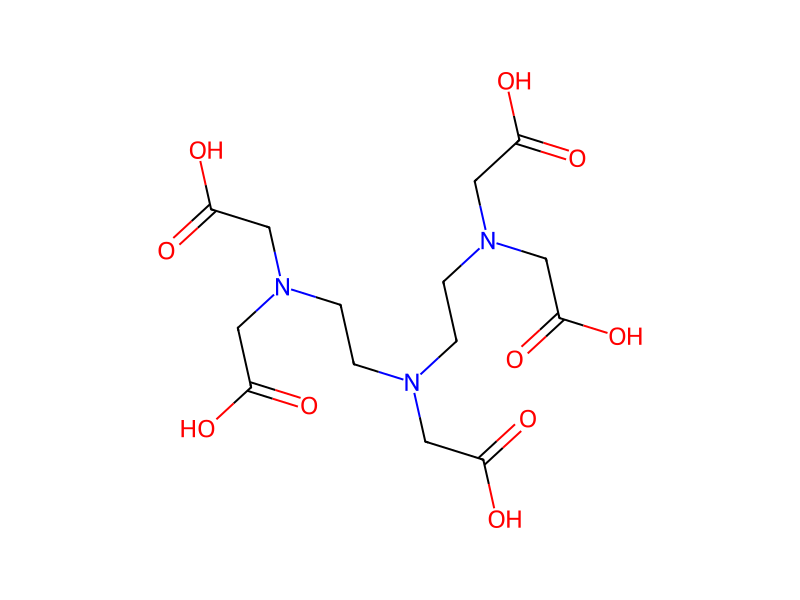
Diethylenetriaminepentaacetic acid → DTPA dianhydride
Reaction equation
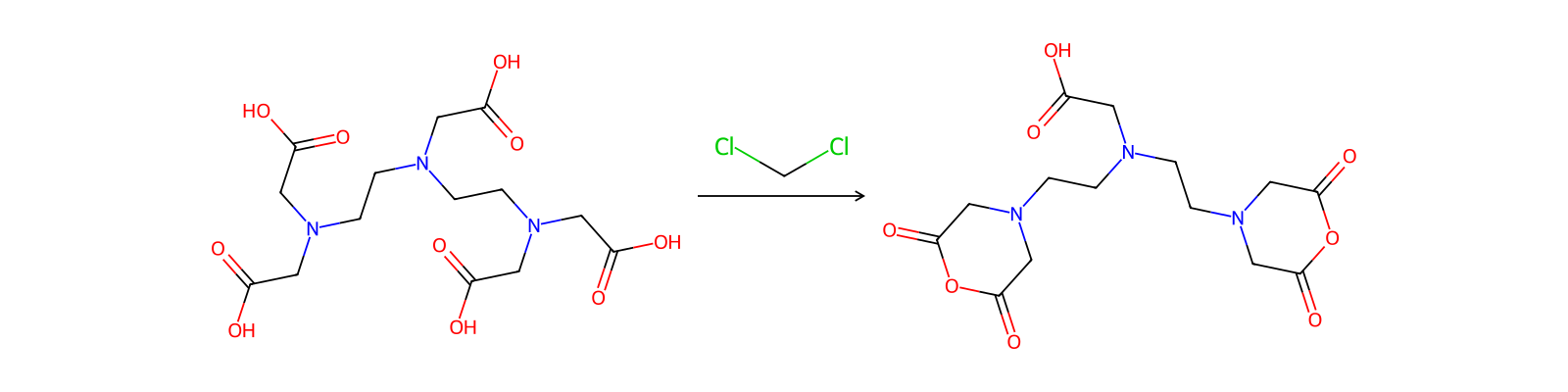
[CH2:1]([N:12]([CH2:24][C:25]([OH:27])=[O:26])[CH2:13][CH2:14][N:15]([CH2:20][C:21]([OH:23])=O)[CH2:16][C:17]([OH:19])=[O:18])[CH2:2][N:3]([CH2:8][C:9]([OH:11])=[O:10])[CH2:4][C:5]([OH:7])=O>C(Cl)Cl>[CH2:20]1[N:15]([CH2:14][CH2:13][N:12]([CH2:24][C:25]([OH:27])=[O:26])[CH2:1][CH2:2][N:3]2[CH2:8][C:9](=[O:10])[O:11][C:5](=[O:7])[CH2:4]2)[CH2:16][C:17](=[O:19])[O:18][C:21]1=[O:23]Participants
Reactant 1
Product 1

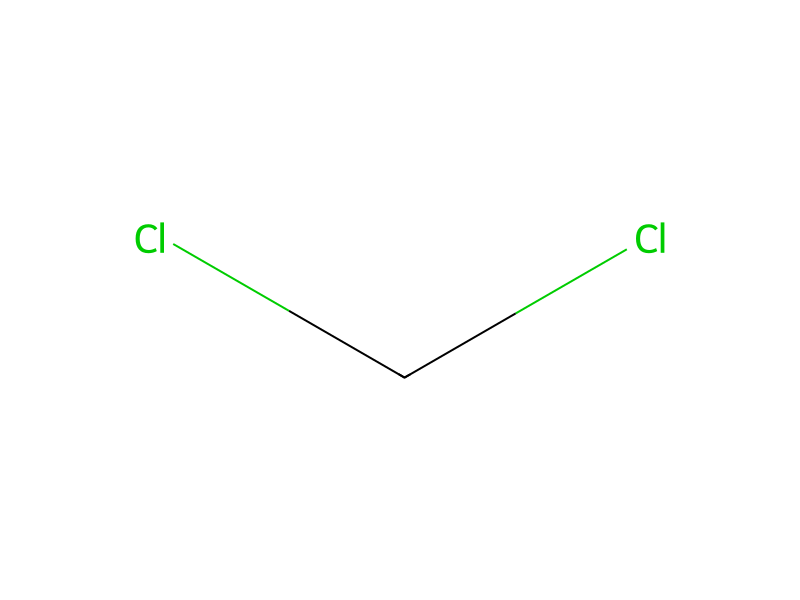
Reagents, catalysts & solvents 1
Procedure
Under these reaction conditions, DTPA ethyl ester comes off the column first, followed by the cyclic product (HETA) and the LiLo ethyl ester (FIG. 8). These three products have different Rf values in TLC, as shown in FIG. 9. The TLC Rf values of In(111) labeled LiLo, HETA and DTPA chelates are provided for comparison (FIG. 10). The formation of the cyclic product was confirmed by spectral analyses using IR, NMR and FAB MS. The FAB mass spectral data are provided in FIG. 11. Also, when the reaction volume was 500 mL (methylene chloride), the DTPA anhydride coupling to the diamine resulted exclusively in the formation of the cyclic product HETA. The nitro derivative of HETA was converted to isothiocyanate derivative of HETA as follows: 500 mg of nitro-HETA was taken in 50 ml of absolute ethanol and reduced to amine derivative using catalytic amounts of PD/C(10%) under hydrogen atmosphere. The solution was filtered and 1 ml of thiophosgene was added dropwise. The solution was stirred for 2 hours and rotoevaporated to obtain the isothiocyanate derivative of HETA. This product was further purified by silica gel column chromatography using 4% methanol in methylene chloride as the solvent (Yield 350 mg). The isothiocyanate derivative of HETA thus obtained was coupled to the human monoclonal antibody 16.88. The resultant 16.88-HETA conjugate was labeled with In(111), and incubated with excess DTPA to assess stability. Stability of the radioimmunoconjugate was followed over a period of 7 days. The results are shown in FIG. 13. 16.88-HETA. In(111) was much more stable than 16.88-DTPA.In(111).
Workup
- customare provided for comparison (FIG. 10)
- customThe FAB mass spectral data are provided in FIG. 11
Sources & evidence
- ORD record
- ord-835df124f709494888b31c8f63f0d955
- Source dataset
- uspto-grants-1994_03
- Patent number
- US05292868
Reaction notes
Loading…