Acetic Anhydride → 2-(Acetoxymethyl)-4-methoxy-3,5-dimethylpyridine
Reaction equation

[CH3:1][C:2]1[C:7]([CH3:8])=[C:6]([O:9][CH3:10])[C:5]([CH3:11])=[CH:4][N+:3]=1[O-].CN(C1C=CC=CN=1)C.[C:22]([O:25]C(=O)C)(=[O:24])[CH3:23]>C(Cl)Cl>[C:22]([O:25][CH2:1][C:2]1[C:7]([CH3:8])=[C:6]([O:9][CH3:10])[C:5]([CH3:11])=[CH:4][N:3]=1)(=[O:24])[CH3:23]Participants
Reactant 3

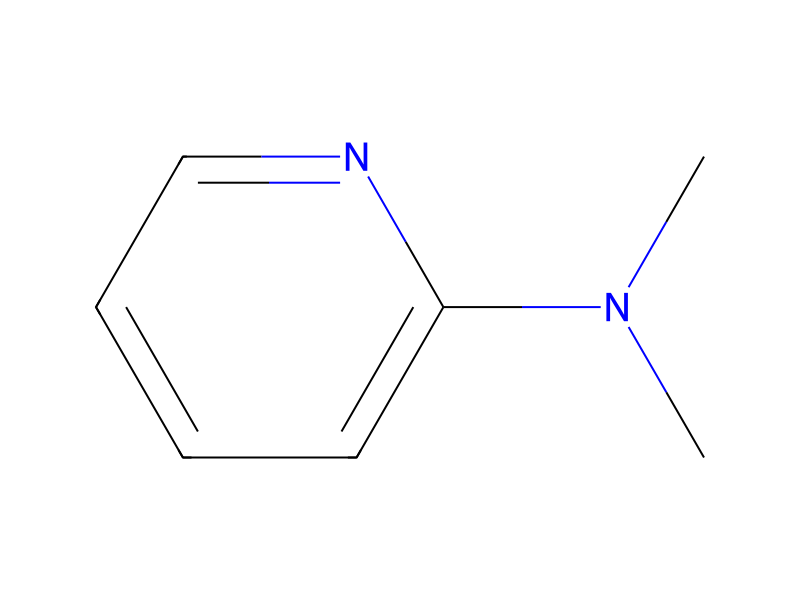

Product 1

Reagents, catalysts & solvents 1

Procedure
A solution of 30.06 g (0.18 mole) of 2,3,5-trimethyl-4-methoxypyridine N-oxide in 100 ml of methylene chloride was added slowly (over approximately one hour) over a solution of 0.38 g of dimethylaminopyridine in 53.4 ml (0.565 mole) of acetic anhydride, heated to 90°-95° C., with the temperature being held within the abovementioned range and the methylene chloride being removed by distillation. At the end of the addition, the distillation was continued for a further 10 minutes, the mixture was cooled to below 90° C. and 7.5 ml of water were added slowly, holding the temperature below 90° C. Crude 2-acetoxymethyl-3,5-dimethyl-4-methoxypyridine was obtained by distillation at reduced pressure and was used directly as starting product for the hydrolysis (Example 2).
Workup
- temperatureheated to 90°-95° C., with the temperature
- customthe methylene chloride being removed by distillation
- additionAt the end of the addition
- distillationthe distillation
- temperaturethe mixture was cooled to below 90° C.
- addition7.5 ml of water were added slowly
- customthe temperature below 90° C
Sources & evidence
- ORD record
- ord-10c8b20b82b2402689c0376615a24def
- Source dataset
- uspto-grants-1994_03
- Patent number
- US05292886
Reaction notes
Loading…