Methane → Resorcinol
Reaction equation

[CH4:1].[CH2:2]=[CH:3][C:4]1[CH:9]=CC=[CH:6][CH:5]=1.[CH3:10][N:11]1[CH:15]=[C:14]([N+]([O-])=[O:17])[N:13]=[CH:12]1.C(OOC(=O)CCCCCCCCCCC)(=O)CCCCCCCCCCC.CC1C(N=C=O)=CC(N=C=O)=CC=1.C1(N=C=O)C=CC=CC=1.C(OCC(CC)CCCC)(=O)C=C.C(C1C=CC=CC=1C=C)=C.P([O-])([O-])([O-])=O.[Ca+2].P([O-])([O-])([O-])=O.[Ca+2].[Ca+2].Cl.[OH2:106]>C(O)(C)(C)C>[C:1]1([CH:6]=[CH:5][CH:4]=[C:3]([OH:17])[CH:2]=1)[OH:106].[NH2:11][C:1]1[CH:2]=[C:3]([OH:106])[CH:4]=[CH:5][CH:6]=1.[N:13]12[CH2:4][CH2:9][N:11]([CH2:10][CH2:12]1)[CH2:15][CH2:14]2Participants
Reactant 11




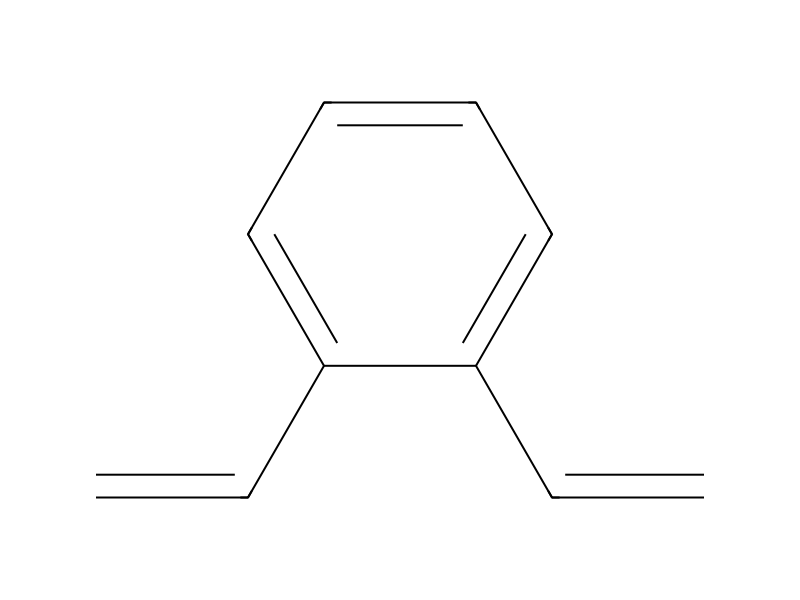
Product 3
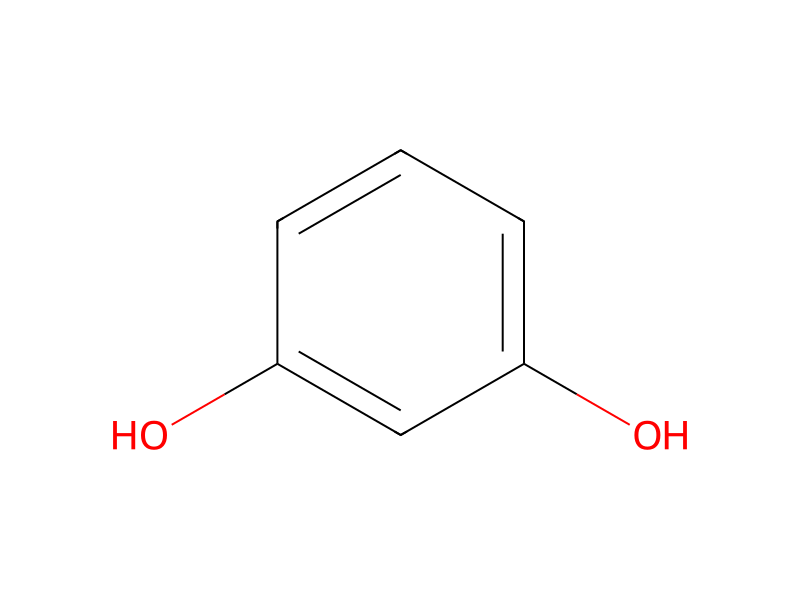

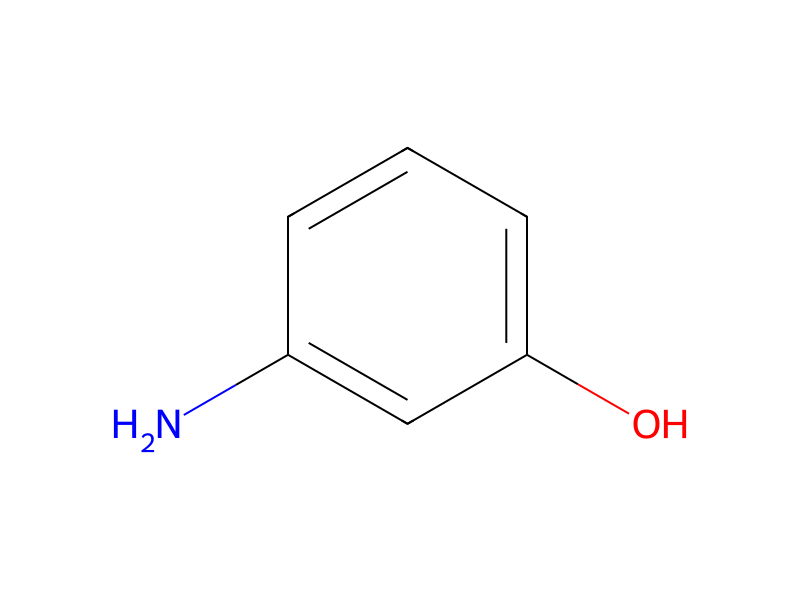
Reagents, catalysts & solvents 1

Procedure
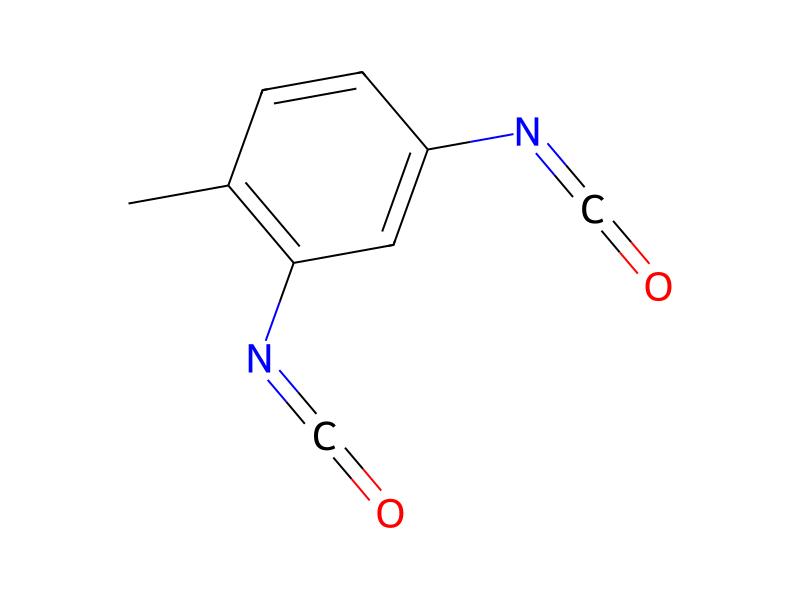
40 parts by weight of carbon black grafted with styrene "GP-E-3" (manufactured by Ryoyu Kogyo K. K.), which contains 40% by weight of styrene monomer, 30% by weight of polystyrene and 30% by weight of grafted carbon black, 1.5 parts by weight of charge control agent of negative charging type 3-methyl-5-nitroimidazole, 4.5 parts by weight of lauroyl peroxide, 9.0 parts by weight of tolylene diisocyanate "Coronate T-100" (mfd. by Nippon Polyurethane Industry Co., Ltd.) and 0.5 part by weight of phenyl isocyanate were added to a mixture of 50 parts by weight of styrene with 35 parts by weight of 2-ethylhexyl acrylate and 0.9 part by weight of divinylbenzene to prepare a polymerizable composition. The polymerizable composition was added to 800 g of a 4 wt. % solution of calcium phosphate in an aqueous colloid previously prepared in a 2-l separable glass flask in such an amount that the concentration of the polymerizable composition became 30 % by weight based on the total of the aqueous colloid solution and the polymerizable composition. The mixture was dispersed and emulsified on a TK Homomixer mfd. by Tokushu Kika Kogyo Co., Ltd. at 10,000 rpm at 5° C. for 2 min. A four neck glass lid was placed on the flask and fitted with a reflux condenser, a thermometer, a dropping funnel having a nitrogen-inlet tube and a stainless steel stirring rod. The flask was placed in an electric mantle. A mixed solution of 24.0 g of resorcinol, 3.0 g of m-aminophenol, 2.2 g of t-butyl alcohol, 0.5 g of 1,4-diazabicyclo[2.2.2]-octane and 40 g of deionized water was prepared and added dropwise into the flask through the dropping funnel while stirring over a period of 30 min. Then the temperature was elevated to 85° C. while continuing the stirring under nitrogen and the reaction was conducted for 10 h. After cooling the reaction mixture, the dispersant was dissolved by adding 10% aqueous hydrochloric acid solution, and the mixture was filtered. The residue was washed with water, dried at 45° C. for 12 hr under a reduced pressure of 20 mmHg, and classified by means of an air classifier to give an encapsulated toner having an average particle diameter of 9 μm wherein the shell comprises a resin having thermally dissociable urethane bonds. The glass transition point of the resin in the core material of the encapsulated toner and the softening point of the encapsulated toner were 32.0° C. and 129.5° C., respectively.
Workup
- customto prepare a polymerizable composition
- custompreviously prepared in a 2-l separable glass flask in such an amount that the concentration of the polymerizable composition
- additionThe mixture was dispersed
- customfitted with a reflux condenser
- additionadded dropwise into the flask through the dropping funnel
- customwas elevated to 85° C.
- waitthe reaction was conducted for 10 h
- temperatureAfter cooling the reaction mixture
- dissolutionthe dispersant was dissolved
- filtrationthe mixture was filtered
- washThe residue was washed with water
- customdried at 45° C. for 12 hr under a reduced pressure of 20 mmHg
- customto give an encapsulated toner
- customwere 32.0° C. and 129.5° C.
Sources & evidence
- ORD record
- ord-745390f1ad1346cabf82b62a14670b2a
- Source dataset
- uspto-grants-1994_03
- Patent number
- US05294490
Reaction notes
Loading…