4-Hydroxybenzyl Alcohol → (4-propoxyphenyl)methanol
Reaction equation

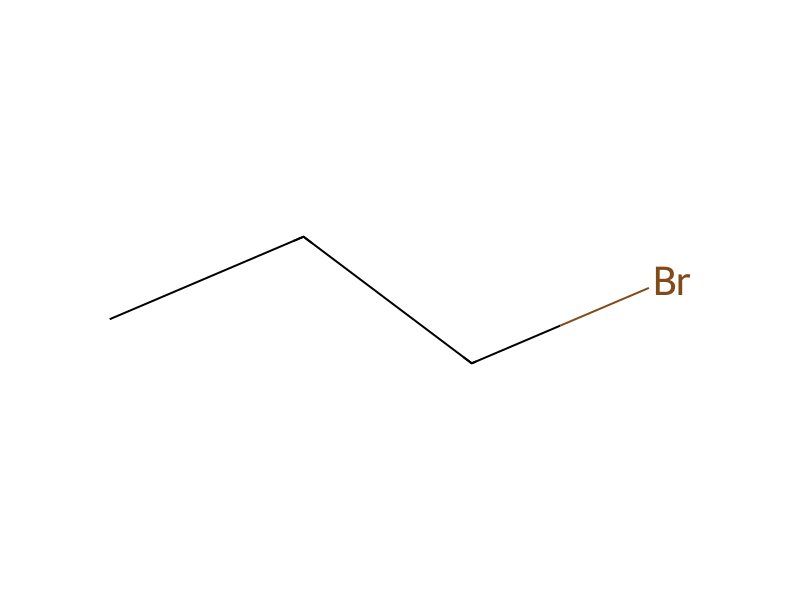
[OH:1][C:2]1[CH:9]=[CH:8][C:5]([CH2:6][OH:7])=[CH:4][CH:3]=1.[OH-].[K+].[CH3:12][CH2:13][CH2:14]Br.O>CS(C)=O>[CH2:12]([O:1][C:2]1[CH:9]=[CH:8][C:5]([CH2:6][OH:7])=[CH:4][CH:3]=1)[CH2:13][CH3:14]Participants
6
Reactant 4



Product 1

Reagents, catalysts & solvents 1

Procedure
4-hydroxybenzyl alcohol (12.4 g: 100.0 mmol) was dissolved in 100 ml of dimethylsulfoxide (DMSO), and an aqueous solution of potassium hydroxide (KOH/H2O: 6.6 g/15 ml) was added to the mixture. After the resultant mixture was dissolved homogeneously by stirring, n-propyl bromide (12.3 g:100.0 mmol) was added thereto, and the reaction was carried out at a room temperature for 24 hours. The reaction mixture was poured into 1 L of an iced water and a solid was formed by stirring. The resultant solid was collected by filtration, dried, and recrystallized from toluene to provide 15.8 g (95.2 mmol) of 4-n-propyloxybenzyl alcohol.
Workup
- customa solid was formed
- stirringby stirring
- filtrationThe resultant solid was collected by filtration
- customdried
- customrecrystallized from toluene
Sources & evidence
- ORD record
- ord-334376756be7480cb3b41485bfd07f2c
- Source dataset
- uspto-grants-2009_05
- Patent number
- US07534547B2
Reaction notes
Loading…