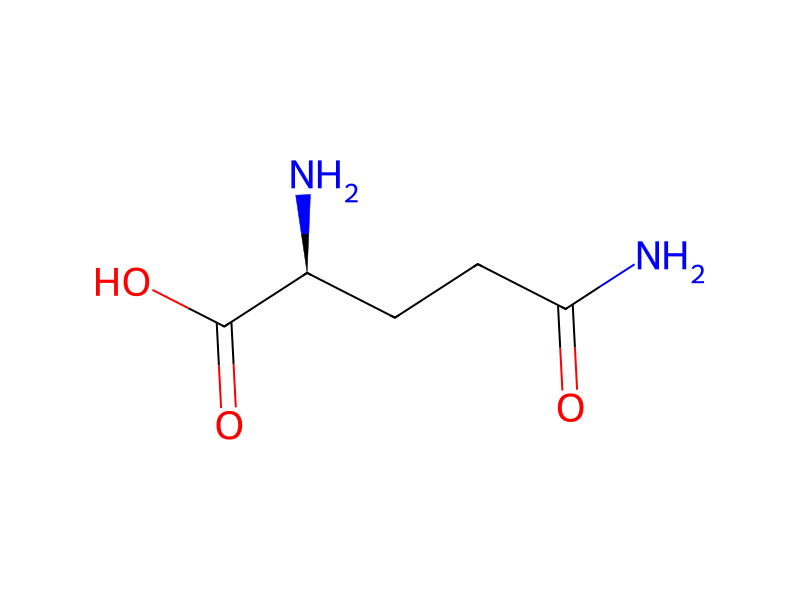
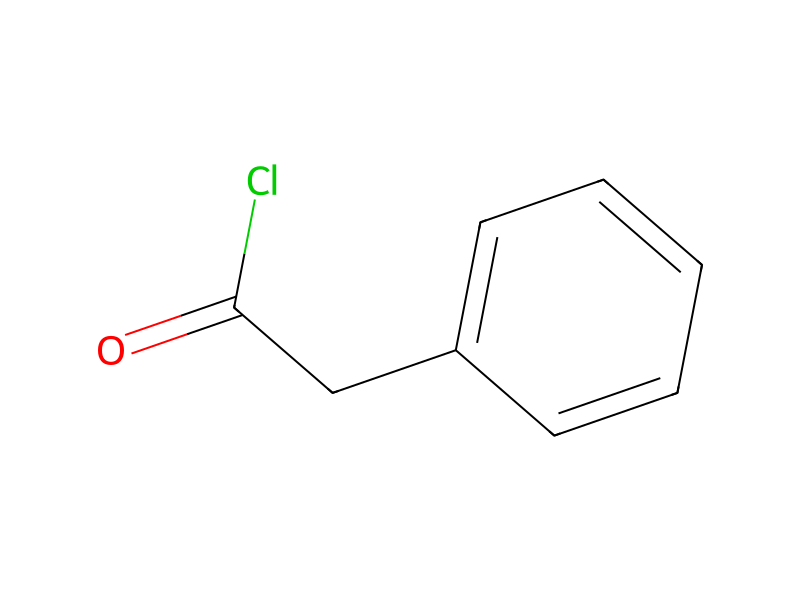
L-Glutamine → Phenylacetylglutamine
Reaction equation

C1(CC(N[C@H](C(=O)N)CCC(O)=O)=O)C=CC=CC=1.[C:20]1([CH2:26][C:27](Cl)=[O:28])[CH:25]=[CH:24][CH:23]=[CH:22][CH:21]=1.[NH2:30][C@H:31]([C:37]([OH:39])=[O:38])[CH2:32][CH2:33][C:34](=[O:36])[NH2:35]>>[C:20]1([CH2:26][C:27]([NH:30][C@H:31]([C:37]([OH:39])=[O:38])[CH2:32][CH2:33][C:34](=[O:36])[NH2:35])=[O:28])[CH:25]=[CH:24][CH:23]=[CH:22][CH:21]=1Participants
4


Procedure
Phenylacetylisoglutamine can be synthesized by the reaction of phenylacetyl chloride with L-glutamine to yield phenylacetylglutamine, with subsequent heating under vacuum at 160° C. to yield 3-phenylacetylamino-2,6-piperidinedione, which can then be treated with sodium hydroxide. Also, phenylacetylisoglutamine can be prepared by treatment of phenylacetic acid with N,N′-disuccinimidyl carbonate in acetonitrile followed by reaction with L-isoglutamine in the presence of NaHCO3 in a 1:1 acetonitrile/water mixture. However, the second synthesis requires L-isoglutamine, which is expensive, so the former route of synthesis is preferred on economic grounds.
Sources & evidence
- ORD record
- ord-8cbaa5388ad4447cbdaabc835e25347f
- Source dataset
- uspto-grants-2005_09
- Patent number
- US06943192B2
Reaction notes
Loading…