3-Hydroxyanthranilic Acid → Methyl 2-(4-fluorophenyl)benzoxazole-4-carboxylate
Reaction equation

[OH:1][C:2]1[CH:10]=[CH:9][CH:8]=[C:4]([C:5]([OH:7])=[O:6])[C:3]=1[NH2:11].[F:12][C:13]1[CH:21]=[CH:20][C:16]([C:17](Cl)=[O:18])=[CH:15][CH:14]=1.C(Cl)(=O)C(Cl)=O.CN([CH:31]=[O:32])C>C(Cl)Cl>[F:12][C:13]1[CH:21]=[CH:20][C:16]([C:17]2[O:1][C:2]3[C:3](=[C:4]([C:5]([OH:7])=[O:6])[CH:8]=[CH:9][CH:10]=3)[N:11]=2)=[CH:15][CH:14]=1.[F:12][C:13]1[CH:21]=[CH:20][C:16]([C:17]2[O:18][C:2]3[C:3](=[C:4]([C:5]([O:32][CH3:31])=[O:6])[CH:8]=[CH:9][CH:10]=3)[N:11]=2)=[CH:15][CH:14]=1Participants
Reactant 4



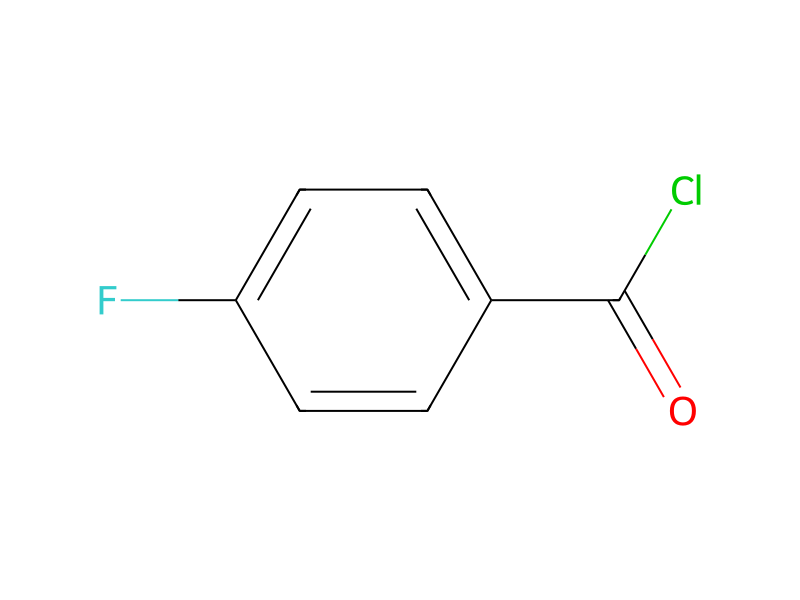
Product 2


Reagents, catalysts & solvents 1

Procedure
2-(4-fluorophenyl)benzoxazole-4-carboxylic acid was prepared from 3-hydroxyanthranilic acid and 4-fluorobenzoyl chloride as described in Step A of Example 1. The crude product was dissolved in methylene chloride (20 mL) and the resulting solution treated with oxalyl chloride (1 mL) and DMF (0.05 mL). After stirring at room temperature for 6 h, the reaction was quenched by the addition of methanol (10 mL) and stirred at room temperature for a further 71 h. The reaction was then re-concentrated and the resulting solid purified by column chromatography to afford a 26% yield of methyl 2-(4-fluorophenyl)benzoxazole-4-carboxylate as a white solid: 1H NMR (500 MHz, CDCl3) δ 8.36 (dd, J=14.7, 11.8 Hz, 2H), 8.03 (d, J=14.7 Hz, 1H), 7.78 (d, J=15.2 Hz, 1H), 7.42 (t, J=13.2 Hz, 1H), 7.18 (m, 2H), 4.06 (m, 3H).
Workup
- customthe reaction was quenched by the addition of methanol (10 mL)
- stirringstirred at room temperature for a further 71 h
- concentrationThe reaction was then re-concentrated
- customthe resulting solid purified by column chromatography
Sources & evidence
- ORD record
- ord-72214cb3875c45c395da1366f10bffc0
- Source dataset
- uspto-grants-2010_08
- Patent number
- US07781430B2
Reaction notes
Loading…