p-Anisoyl chloride → Methyl 2-(4-methoxyphenyl)-1,3-benzoxazole-7-carboxylate
Reaction equation

[NH2:1][C:2]1[CH:11]=[CH:10][CH:9]=[C:4]([C:5]([O:7][CH3:8])=[O:6])[C:3]=1[OH:12].[CH3:13][O:14][C:15]1[CH:23]=[CH:22][C:18]([C:19](Cl)=O)=[CH:17][CH:16]=1>S(Cl)(Cl)=O>[CH3:13][O:14][C:15]1[CH:23]=[CH:22][C:18]([C:19]2[O:12][C:3]3[C:4]([C:5]([O:7][CH3:8])=[O:6])=[CH:9][CH:10]=[CH:11][C:2]=3[N:1]=2)=[CH:17][CH:16]=1Participants
Reactant 2
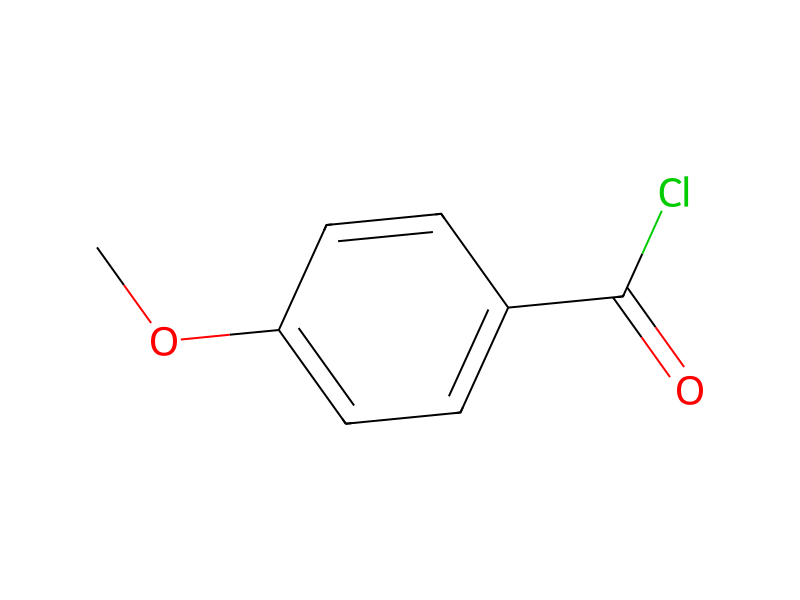

Product 1

Reagents, catalysts & solvents 1

Procedure
Methyl 2-(4-methoxyphenyl)benzoxazole-7-carboxylate was prepared from methyl 3-aminosalicylate and 4-methoxybenzoyl chloride as described in Step A of Example 1. The crude material was suspended in thionyl chloride (15 mL) and the mixture heated to reflux overnight. After this time the reaction was cooled and concentrated to a dark oil. This oil was treated with methanol and the solution stirred at room temperature for 1 h. Subsequent concentration afforded a dark brown solid which was purified by column chromatography to afford a 24% yield of methyl 2-(4-methoxyphenyl)benzoxazole-7-carboxylate as a yellow solid: 1H NMR (500 MHz, DMSO-d6) δ 8.19 (d, J=8.7 Hz, 2H), 8.04 (d, J=7.8 Hz, 1H), 7.91 (d, J=7.8 Hz, 1H), 7.51 (t, J=7.8 Hz, 1H), 7.20 (d, J=8.7 Hz, 2H), 3.99 (s, 3H); 3.88 (s, 3H); MS (ESI) m/z 284 [M+H]+.
Workup
- temperaturethe mixture heated
- temperatureto reflux overnight
- temperatureAfter this time the reaction was cooled
- concentrationconcentrated to a dark oil
- additionThis oil was treated with methanol
- concentrationSubsequent concentration
- customafforded a dark brown solid which
- customwas purified by column chromatography
Sources & evidence
- ORD record
- ord-8cea6d6d7084433a95d72bce55663298
- Source dataset
- uspto-grants-2010_08
- Patent number
- US07781430B2
Reaction notes
Loading…