Ammonium Chloride → HCID 58153490, compound
Reaction equation

Br[C:2]1[C:7]([N+:8]([O-:10])=[O:9])=[CH:6][C:5]([Cl:11])=[C:4]([O:12][CH2:13][CH2:14][CH2:15][CH:16]([CH3:18])[CH3:17])[N:3]=1.[Cu][C:20]#[N:21].[Cl-].[NH4+]>C(#N)C>[Cl:11][C:5]1[CH:6]=[C:7]([N+:8]([O-:10])=[O:9])[C:2]([C:20]#[N:21])=[N:3][C:4]=1[O:12][CH2:13][CH2:14][CH2:15][CH:16]([CH3:18])[CH3:17]Participants
Reactant 3


Product 1

Reagents, catalysts & solvents 1

Procedure
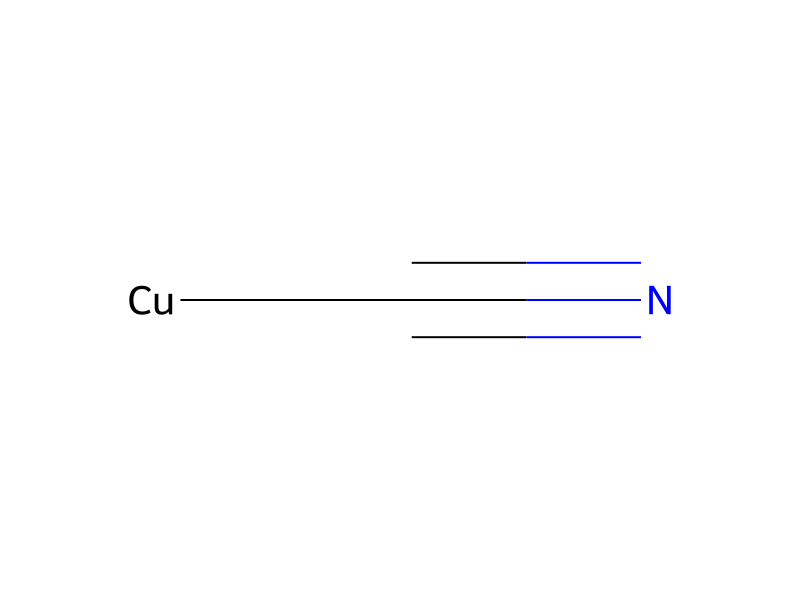
In a 10 ml single-necked round-bottomed flask equipped with an efficient condensor, 2-bromo-5-chloro-6-(4-methyl-pentyloxy)-3-nitro-pyridine (200 mg) is dissolved in dry acetonitrile (3.00 ml). To the reulting yellow solution, copper(I) cyanide (109 mg) is added. The resulting suspension is stirred under heating to reflux for 6 hours whereupon a brown solution is obtained. The progress of the transformation is followed by GC-MS. The mixture is allowed to reaxch ambient temperature. Saturated ammonium chloride solution (20 ml) along with some ice is then added and the mixture extracted with ether (2×20 ml). The combined organic phases are then dried over sodium sulfate, filtered and the solvent is removed in vacuo to give 150 mg of the title compound in the form of a yellow oil (89%).
Workup
- temperatureunder heating
- temperatureto reflux for 6 hours whereupon a brown solution
- customis obtained
- customto reaxch ambient temperature
- extractionthe mixture extracted with ether (2×20 ml)
- dry with materialThe combined organic phases are then dried over sodium sulfate
- filtrationfiltered
- customthe solvent is removed in vacuo
Sources & evidence
- ORD record
- ord-0d7aad0ce8f6479cb4995103c5923a39
- Source dataset
- uspto-grants-2015_08
- Patent number
- US09096525B2
Reaction notes
Loading…