Water → 4-[2-(Bromomethyl)-5-(trifluoromethyl)phenyl]pyridazine
Reaction equation

[N:1]1[CH:6]=[CH:5][C:4]([C:7]2[CH:12]=[C:11]([C:13]([F:16])([F:15])[F:14])[CH:10]=[CH:9][C:8]=2[CH2:17]O)=[CH:3][N:2]=1.P(Br)(Br)[Br:20].O>ClCCl>[Br:20][CH2:17][C:8]1[CH:9]=[CH:10][C:11]([C:13]([F:16])([F:15])[F:14])=[CH:12][C:7]=1[C:4]1[CH:5]=[CH:6][N:1]=[N:2][CH:3]=1Participants
5

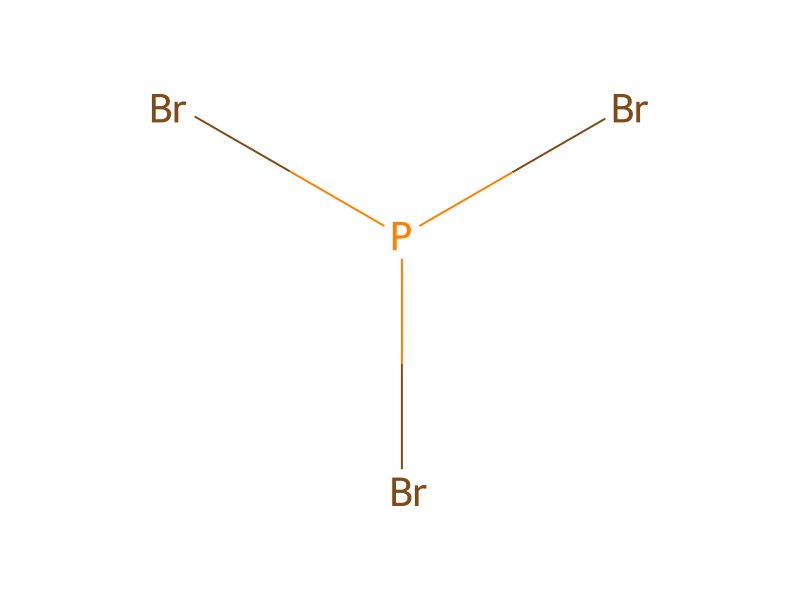



Conditions
- Temperature
- 0 °C
Procedure
[2-Pyridazin-4-yl-4-(trifluoromethyl)phenyl]methanol (Preparation 32, 46 mg, 0.18 mmol) was dissolved in dichloromethane (2 mL) and cooled to 0° C. Phosphorus tribromide (1.0 M in dichloromethane, 199 μL, 0.20 mmol) was added and the reaction stirred for 30 minutes. Water (2 mL) was added dropwise to the reaction at 0° C. before the organics were separated and dried using a phase separation cartridge. The organics were concentrated in vacuo to afford the title compound as a residue which was re-dissolved in THF (1 mL) and used without further purification.
Workup
- customorganics were separated
- customdried
- customa phase separation cartridge
- concentrationThe organics were concentrated in vacuo
Sources & evidence
- ORD record
- ord-cb1de29e138744bc9caddd0d685d29e9
- Source dataset
- uspto-grants-2015_08
- Patent number
- US09096558B2
Reaction notes
Loading…