Pyridine → 5-Chloro-3-iodo-1H-pyrrolo[2,3-b]pyridine
Reaction equation

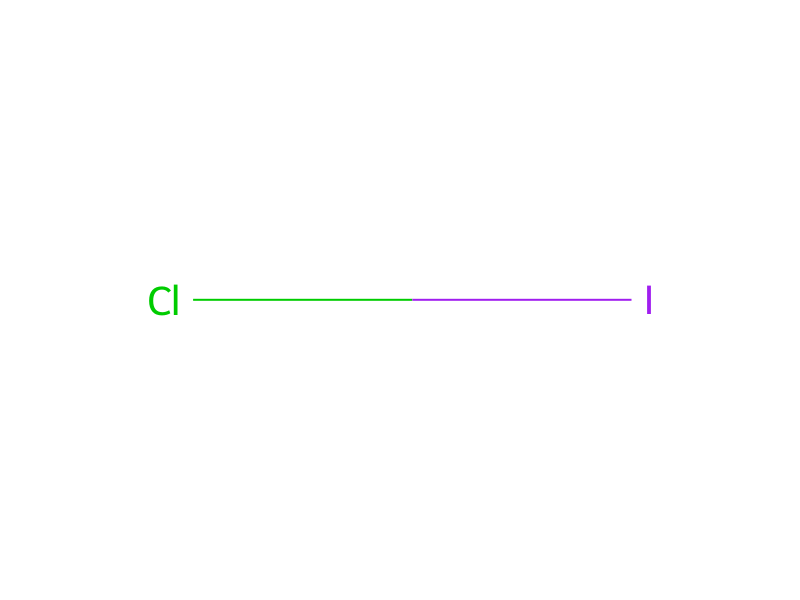
[Cl:1][C:2]1[CH:3]=[C:4]2[CH:10]=[CH:9][NH:8][C:5]2=[N:6][CH:7]=1.N1C=CC=CC=1.[I:17]Cl>ClCCl>[Cl:1][C:2]1[CH:3]=[C:4]2[C:10]([I:17])=[CH:9][NH:8][C:5]2=[N:6][CH:7]=1Participants
Reactant 3


Product 1

Reagents, catalysts & solvents 1

Procedure
To a solution of 5-chloro-1H-pyrrolo[2,3-b]pyridine (1, 15.00 g, 98.31 mmol) in 300 mL of dichloromethane under nitrogen, pyridine (7.951 mL, 98.31 mmol) and iodine monochloride (110 mL, 1.0 M in dichloromethane, 110 mmol) were added slowly over 20 minutes. The reaction was stirred at room temperature for 2 hours, then quenched with 100 mL of 1 M aqueous sodium thiosulfate pentahydrate. The layers were separated, solids collected from the aqueous layer by filtration and combined with the organic layer. The aqueous layer was extracted with ethyl acetate, organic layers were combined and washed with brine, then concentrated under vacuum. The resulting solid was washed with 20% ethyl acetate in hexane to provide the desired compound. 5-fluoro-3-iodo-1H-pyrrolo[2,3-b]pyridine is prepared similarly from 5-fluoro-1H-pyrrolo[2,3-b]pyridine.
Workup
- customquenched with 100 mL of 1 M aqueous sodium thiosulfate pentahydrate
- customThe layers were separated
- filtrationsolids collected from the aqueous layer by filtration
- extractionThe aqueous layer was extracted with ethyl acetate, organic layers
- washwashed with brine
- concentrationconcentrated under vacuum
- washThe resulting solid was washed with 20% ethyl acetate in hexane
Sources & evidence
- ORD record
- ord-8061cae26e264945a3468a0ed4a26165
- Source dataset
- uspto-grants-2015_08
- Patent number
- US09096593B2
Reaction notes
Loading…