Phenol → BPA phosphate
Reaction equation

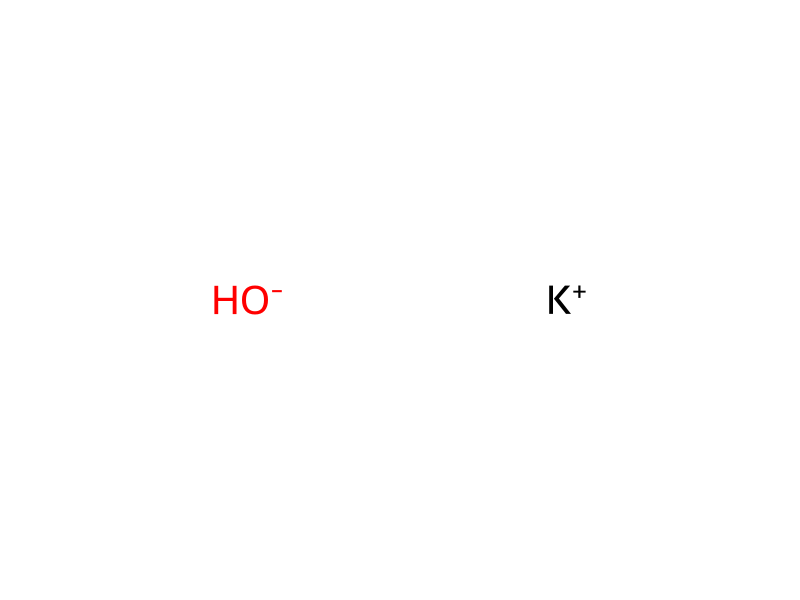
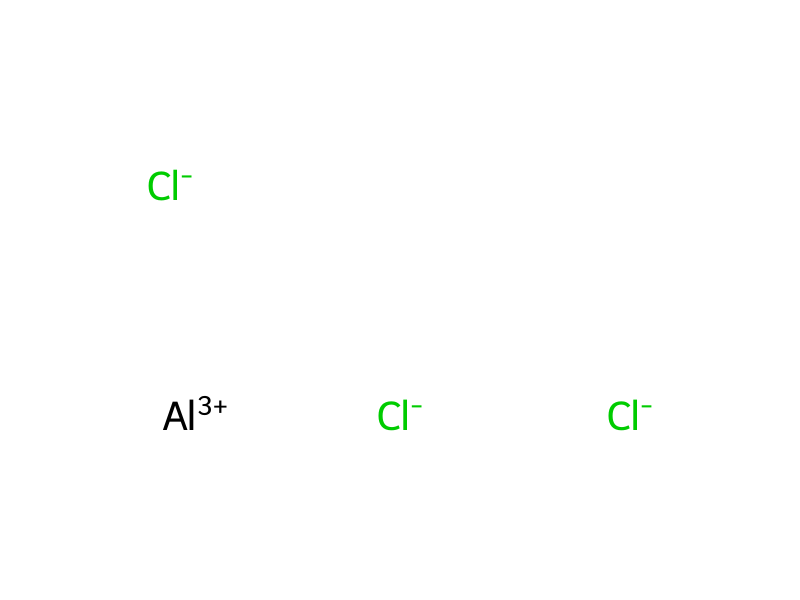
[CH3:1][C:2]([C:11]1[CH:12]=[CH:13][C:14]([OH:17])=[CH:15][CH:16]=1)([C:4]1[CH:5]=[CH:6][C:7]([OH:10])=[CH:8][CH:9]=1)[CH3:3].C1([O:24][P:25](Cl)(Cl)=[O:26])C=CC=CC=1.[Cl-].[Al+3].[Cl-].[Cl-].[OH-:33].[K+].C1([OH:41])C=CC=CC=1>>[CH3:3][C:2]([C:4]1[CH:5]=[CH:6][C:7]([OH:10])=[CH:8][CH:9]=1)([C:11]1[CH:12]=[CH:13][C:14]([OH:17])=[CH:15][CH:16]=1)[CH3:1].[P:25]([O-:26])([O-:41])([O-:24])=[O:33]Participants



Conditions
- Temperature
- 120 °C
Procedure
24.81 g (0.11 mol) of BPA, 25.00 g (0.12 mol) of phenyldichlorophosphate, and 0.22 g (1.64 mmol) of aluminum chloride were taken in a cylindrical glass reactor fitted with an overhead stirrer, a water condenser with nitrogen outlet and a nitrogen inlet. The nitrogen outlet was immersed in a beaker containing KOH solution to absorb the evolved HCl. The reaction mixture was stirred at 90° C. for 2 hours and further at 120° C. for 4 hours. A sample of the reaction mixture was drawn and 31P NMR spectrum was done to show that there was no phenyidichlorophosphate left; the conversion was nearly 75%. To the reaction mixture 4.49 g (0.05 mol) of phenol was added and the temperature was increased to 140° C. and stirred at that temperature for 4 hours. After confirming from the 31P NMR spectrum that there were no reactive P—Cl bonds, vacuum (0.01 mm Hg) was applied at 120° C. for 2 hours to remove excess phenol. The temperature was further increased to 140° C. and then to a maximum for 180° C. and the reaction mixture was held under vacuum for additional 4 hours. The reaction mixture was poured while it was in molten state onto aluminum foil to afford 36 g (yield ˜91%) a straw yellow, transparent solid poly-(BPA-phosphate).
Workup
- customfitted with an overhead stirrer, a water condenser with nitrogen outlet and a nitrogen inlet
- customto absorb the evolved HCl
- waitleft
- temperaturethe temperature was increased to 140° C.
- stirringstirred at that temperature for 4 hours
- waitwas applied at 120° C. for 2 hours
- customto remove excess phenol
- temperatureThe temperature was further increased to 140° C.
- waitto a maximum for 180° C. and the reaction mixture was held under vacuum for additional 4 hours
- additionThe reaction mixture was poured while it
Sources & evidence
- ORD record
- ord-eb27ec21563845408defb3a914903282
- Source dataset
- uspto-grants-2004_03
- Patent number
- US06713598B2
Reaction notes
Loading…